
Feb. CPI Preview: Oil Shock Is Coming, Will It Delay Rate Cuts?
 Aime Summary
The United States is about to release its February CPI data. The market’s focus is on how much of the recent surge in oil prices—driven by escalating tensions in the Middle East—will feed into inflation.
However, the sharp rise in oil prices only began in March, meaning its impact on February inflation should be limited.
Specifically, markets expect U.S. CPI to rise 2.4% year-over-year in February and 0.3% month-over-month.
For next week’s Federal Reserve rate decision, the outcome is unlikely to change regardless of the CPI reading. The Fed is widely expected to keep rates unchanged.
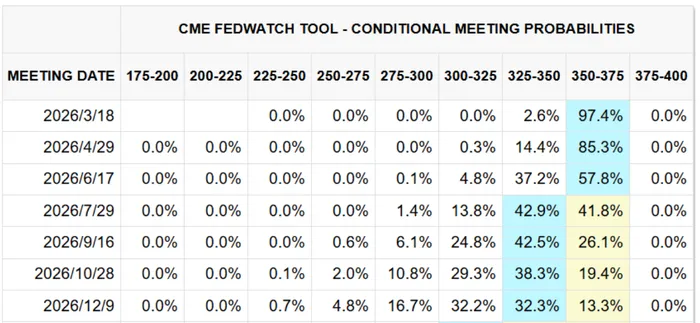
February’s nonfarm payroll report came in far weaker than expected. If CPI also declines, it could bring forward expectations for the Fed’s first rate cut.
However, if inflation slows only gradually—especially considering that rising oil prices have yet to be reflected in the data—it could further reinforce the Fed’s wait-and-see stance.
What Are Investment Banks Saying?
Major investment banks generally highlight the upward pressure from rising energy prices on CPI. The impact is already beginning to appear in February and is expected to fully materialize in March.
Several banks have also warned that core goods prices are rebounding while service inflation remains elevated, suggesting the Fed’s final push to bring inflation fully under control—the so-called “last mile” of disinflation—remains challenging.
February CPI Is Not the Real Test — March Will Be
The real test for U.S. inflation will arrive in March.
A Citigroup report shows that as of March 8, the average U.S. retail gasoline price had already risen about 17% compared with the end of February.
If gasoline prices rise 15% in March, Citi estimates that the CPI energy component could increase about 7% month-over-month.
Meanwhile, Bank of America estimates that every 10% rise in oil prices could lift PCE inflation by roughly 10 basis points.
Second-Round Effects of Oil Prices
The second wave of inflationary impact from higher oil prices could show up in airfares and core goods.
Rising oil prices push up jet fuel costs, prompting airlines to raise ticket prices in order to protect profit margins. Citi expects airfares to rise 10% to 15% year-over-year by mid-year.
In addition, most industrial goods rely on oil as a key input, meaning higher oil prices directly push up producer prices (PPI). Citi expects upside risks for core goods prices in the second quarter.
Bank of America offers a longer historical perspective. After studying 50 years of data, the bank concluded that only “significant and sustained” oil price spikes tend to trigger a prolonged inflation cycle.
Current market expectations suggest short-term inflation pressure but longer-term stability.
Bank of America therefore believes the Federal Reserve will likely remain on hold in the near term.
If the oil market stabilizes quickly, the Fed may look through short-term energy price volatility. However, if oil prices remain elevated for an extended period, the U.S. economy could face stagflation risks, and the timeline for rate cuts could be indefinitely delayed.

Senior Research Analyst at Ainvest, formerly with Tiger Brokers for two years. Over 10 years of U.S. stock trading experience and 8 years in Futures and Forex. Graduate of University of South Wales.
Latest Articles
Stay ahead of the market.
Get curated U.S. market news, insights and key dates delivered to your inbox.


AInvest
PRO
AInvest
PRO



Comments
No comments yet