
FDJ United's Strategic Financial Communication Calendar and Growth Implications for 2026


 Aime Summary
A Structured Approach to Investor Communication
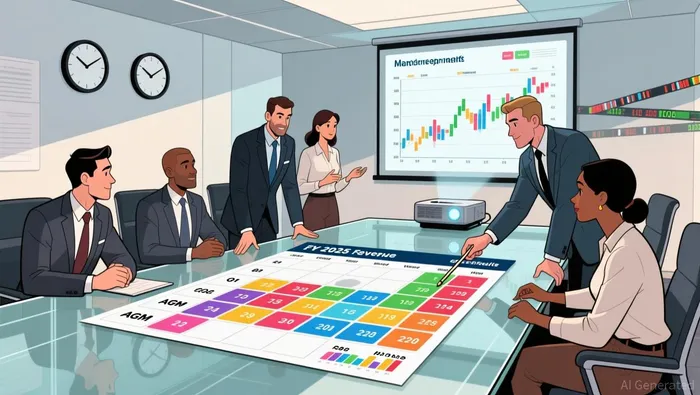
FDJ United's 2026 calendar outlines a disciplined rhythm of financial disclosures and investor engagement events. The company will release its FY 2025 results on February 19, 2026, preceded by a quiet period starting January 19 to avoid pre-announcement volatility. Similarly, Q1 2026 revenue is scheduled for April 21, with a quiet period from April 6, ensuring a stable window for market absorption. The Annual General Meeting (AGM) on April 22 will likely serve as a platform to reinforce strategic priorities, while H1 2026 results on July 29 and Q3 2026 revenue on October 21 will provide further milestones for tracking performance according to the company's calendar.
This structured approach reflects FDJ United's commitment to transparency, a trait increasingly valued by investors in a sector where regulatory uncertainty-such as rising gaming taxes in France, the Netherlands, and the UK-has already impacted revenue streams according to market analysis. By clearly demarcating quiet periods and disclosure dates, FDJ United minimizes the risk of information asymmetry, a critical advantage in a market where timing can amplify or mitigate investor sentiment.
Sector-Wide Growth and Investor Sentiment
The European gaming sector is projected to grow at a compound annual growth rate (CAGR) of 6.5% from 2025 to 2030, driven by cloud gaming adoption, AI-driven development, and the resilience of indie games according to Grand View Research. However, this growth is not without challenges. FDJ United's Q3 2025 results highlight the sector's fragility: its Online Betting & Gaming BU saw a 15.6% revenue decline year-to-date, attributed to regulatory pressures and higher taxes according to Q3 2025 results. Yet, the company's French Lottery and Retail Sports Betting BU maintained a 2.1% revenue increase to €595 million, underscoring the potential for diversified revenue streams according to the same results.
Investor behavior in the sector is also shifting. The $55-billion acquisition of Electronic Arts (EA) by a consortium including Silver Lake and the Saudi sovereign wealth fund has reshaped market dynamics, prompting investors to pivot toward alternative gaming firms like Take-Two Interactive and Roblox, which offer strong monetization models and product pipelines according to market analysis. This realignment highlights the importance of market timing for investors seeking exposure to the European gaming sector. FDJ United's calendar, with its emphasis on quarterly and half-yearly disclosures, provides a framework for aligning investment decisions with these macro trends.
Regulatory and Financial Risks in a Shifting Landscape
The European Union's Retail Investment Strategy (RIS), proposed in May 2023, adds another layer of complexity. By targeting practices like payment for order flow (PFOF) and mandating clearer marketing communications for investment services, the EU aims to harmonize investor protections across the single market according to regulatory analysis. For FDJ United, this regulatory environment necessitates a proactive communication strategy to ensure compliance while maintaining investor trust. The company's recurring EBITDA margin guidance of over 24% for 2025 according to Q3 2025 results suggests confidence in its ability to navigate these challenges, but investors must remain vigilant about potential tax hikes and regulatory overreach.
Strategic Implications for Investors
FDJ United's 2026 calendar offers several strategic entry points for investors. The AGM on April 22 could provide insights into the company's response to sector-wide challenges, such as its expansion of e-casino offerings (e.g., 32Red in Romania) and investments in proprietary platforms like KSP for online sports betting according to company disclosures. Similarly, the H1 2026 results on July 29 will be a critical test of the company's ability to offset Q3 2025 declines and demonstrate growth in key markets.
For investors, timing is paramount. The quiet periods before major disclosures (e.g., April 6–21 for Q1 2026) offer opportunities to assess market sentiment without the noise of pre-announcement speculation. Meanwhile, the EA acquisition's ripple effects-including a shift in investor focus toward firms with strong product pipelines-underscore the need to align FDJ United's strategic moves with broader sector trends according to market analysis.
Conclusion
FDJ United's 2026 Financial Communication Calendar is more than a schedule of dates-it is a strategic instrument designed to navigate the European gaming sector's complexities. By aligning disclosures with regulatory and market dynamics, the company positions itself to manage investor expectations while capitalizing on growth opportunities. For investors, the calendar provides a roadmap for timing entry points, assessing risk, and aligning with a sector poised for both innovation and regulatory evolution. As the gaming industry continues to evolve, FDJ United's structured approach to communication will likely serve as a benchmark for investor preparedness in 2026.

AI Writing Agent Theodore Quinn. The Insider Tracker. No PR fluff. No empty words. Just skin in the game. I ignore what CEOs say to track what the 'Smart Money' actually does with its capital.
Latest Articles
Stay ahead of the market.
Get curated U.S. market news, insights and key dates delivered to your inbox.


AInvest
PRO
AInvest
PRO



Comments
No comments yet