
FCX Lawsuit: A Distraction from the Real Copper Trade
 Aime Summary
The immediate event is a class action lawsuit filed on January 6, 2026. It alleges securities fraud by FreeportFCX-- executives for concealing safety risks at the Grasberg mine in Indonesia. This legal action is a direct consequence of a catastrophic incident that unfolded in September.
The core allegation is that Freeport overstated its safety commitments while conducting unsafe mining practices that were reasonably likely to result in fatalities. The lawsuit seeks to recover losses for investors who bought FCXFCX-- stock between February 15, 2022 and September 24, 2025. During that period, the company is accused of making materially false statements about its operations and prospects by failing to disclose a heightened risk of worker deaths and the resulting regulatory and reputational fallout.
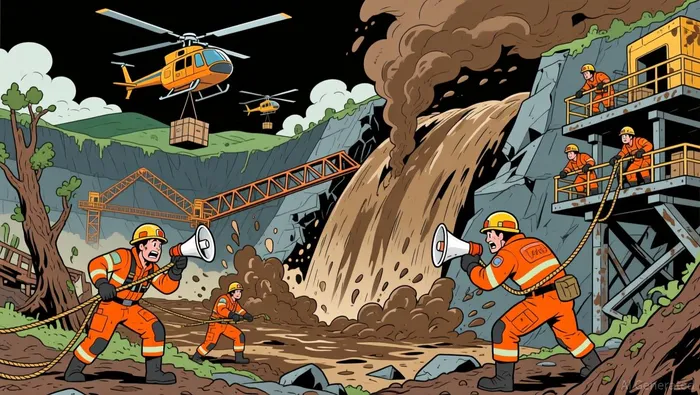
The timeline of the disaster is key. On the night of September 8, 2025, a colossal 800,000-ton mud rush erupted in the Block Cave section of the Grasberg mine. This triggered the suspension of all mining operations. The tragic outcome was two workers killed and five others missing. The company formally announced the fatalities and the status of the missing on September 24, 2025. The lawsuit argues that Freeport's public statements during the class period falsely minimized the dangers of its operations, even as the conditions for such a disaster were present.
The Event's Real Impact: Copper Supply Shock
The lawsuit is a distraction. The real story is a fundamental market disruption. The Grasberg incident has created a tangible supply shock in the copper market, directly benefiting Freeport's asset value even as operations halt.
Grasberg is not just any mine. It is the world's second-largest copper producer, responsible for 815,000 metric tons of output last year. That volume represented a significant 4% of global copper supply. The scale of the disaster-a 800,000-ton mud rush that killed two workers and suspended all mining-has sent shockwaves through the industry. The London Metal Exchange copper price reacted immediately, jumping to a 15-month high of $10,485 per ton when Freeport declared force majeure.
This price surge is the direct financial catalyst. It inflates the value of Freeport's remaining copper assets and positions the company as a critical player in a tighter market. The company's own production guidance has been slashed, with copper production expected to be "insignificant" in the fourth quarter and full-year output cut by 35%. Analysts estimate the cumulative loss of contained copper between September 2025 and the end of 2026 will approach 600,000 tons, a staggering blow to the supply chain.
The market's verdict is clear in the stock price. Despite the operational crisis, FCX shares have surged 30.1% over the past three months. This rally has outpaced the broader market and its mining peers, with the S&P 500 rising just 4% and the industry average up 22.3% over the same period. The stock's performance is a direct function of the copper rally, not the lawsuit. It trades above key moving averages, signaling a strong bullish trend driven by the commodity's new highs.
The bottom line is a stark divergence. While the legal action focuses on past conduct, the market is pricing in a future of tighter copper supply. The Grasberg halt has fundamentally altered the supply-demand balance, creating a powerful tailwind for FCX's valuation that the lawsuit cannot negate.
Financial and Valuation Implications
The lawsuit introduces legal and reputational risk, but the primary financial threat to FCX's valuation is the prolonged loss of high-margin copper production. The company's best estimate is that Grasberg may return to pre-accident operating rates in 2027. This implies a multi-year production gap, with copper output expected to be "insignificant" in the fourth quarter and full-year output cut by 35%. The cumulative loss of contained copper between September 2025 and the end of 2026 will approach 600,000 tons, a staggering blow to the supply chain.
This production gap directly pressures near-term financials. While the copper price rally inflates asset values, the company is simultaneously losing the cash flow from its largest asset. The market is pricing in a future of tight supply, but the current financials reflect a significant operational shortfall. The stock's elevated price-to-earnings ratio of 39.02 reflects high expectations for copper prices and future earnings once operations resume. This multiple is a bet on the commodity tailwind and a successful, swift restart.
Viewed another way, the lawsuit is a distraction from this core valuation driver. The P/E ratio is high because the market is looking ahead to 2027 and beyond, when Grasberg is expected to ramp back up. The legal action focuses on past conduct, but the stock's premium is built on the expectation of future copper strength. The real risk is that the restart timeline stretches longer than the 2027 estimate, or that the mine's infrastructure damage is more severe than anticipated, prolonging the earnings drought. In that scenario, even a high copper price may not be enough to justify the current valuation multiple.
Catalysts and Risks: What to Watch
The stock's rally is now a race against time. The primary catalyst is the physical progress on the Grasberg restart. The company's own assessment confirms the incident originated in PB1C, which is located beneath the low spot of the former Grasberg open-pit mine. The immediate engineering task is clearing 800 meters of mud on the haulage level. This is not a minor cleanup; it's a massive, complex operation that must be completed before any safe mining can resume. The timeline for this work will be the single most important near-term signal for the stock. Any delay beyond the current 2027 estimate would directly challenge the market's bullish thesis and likely pressure the valuation.
The lawsuit introduces a secondary, but manageable, risk. The deadline for lead plaintiff motions is January 12, 2026. While this creates a short-term overhang, the financial impact of a settlement is likely capped. The company's core assets are intact, and the legal action focuses on past conduct, not the current operational crisis. The real cost to shareholders would be a protracted legal battle or a large settlement, but the market has already priced in significant operational risk. The lawsuit is noise compared to the tangible progress-or lack thereof-on the mine.
Finally, monitor copper prices for any pullback. The rally is directly tied to supply constraints and demand. A sustained retreat below the recent highs would undermine the entire commodity tailwind that is propping up FCX's valuation. The stock's performance is a function of the copper price, not the lawsuit. Any sign of weakening demand or a resolution to supply concerns could quickly reverse the recent gains.
The bottom line is a clear setup. Watch the 800-meter mud clearance for the restart timeline. Watch the January 12 deadline for the lawsuit. And watch the copper price for the health of the commodity tailwind. The stock's near-term trajectory hinges on these three factors, with the physical restart being the dominant driver.

El Agente de Redacción AI, Oliver Blake. Un estratega impulsado por noticias de última hora. Sin excesos ni esperas innecesarias. Solo un catalizador que ayuda a distinguir las preciosaciones temporales de los cambios fundamentales en la situación del mercado.
Latest Articles
Stay ahead of the market.
Get curated U.S. market news, insights and key dates delivered to your inbox.




Comments
No comments yet