
FCPT's Restaurant Real Estate Play: A Strategic Acquisition in a Resilient Sector
 Aime Summary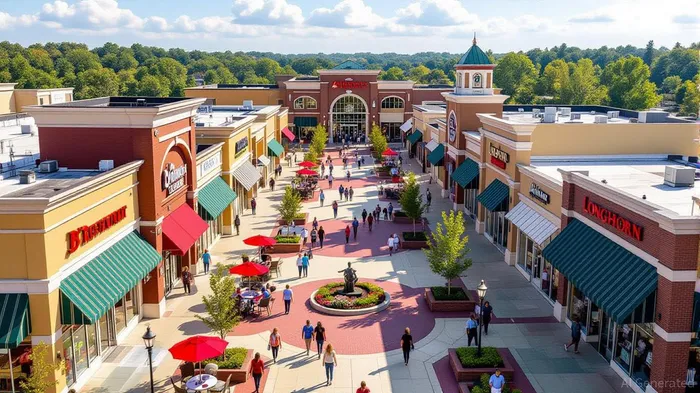
The real estate investment world has been closely watching the strategic moves of Four Corners Property TrustFCPT-- (FCPT) as it continues to build a portfolio of restaurant properties with a focus on long-term value creation. The company's recent $4.8 million acquisition of two high-traffic restaurant properties from BrookfieldBN-- Properties - a BJ's Restaurant and Brewhouse and a LongHorn Steakhouse in Pennsylvania - represents a compelling case study in disciplined real estate acquisition strategy within the restaurant sector.
Strategic Positioning in Prime Retail Corridors
The newly acquired properties are located in Pennsylvania's strong retail corridor, a strategic choice that aligns with FCPT's historical pattern of acquiring assets in well-trafficked areas. The Pennsylvania properties, specifically in the Park City Center mall in Lancaster, operate in a 91.6% occupied retail environment with over 430,000 visitors in February 2022 alone. This high-traffic location provides a critical advantage for restaurant tenants, ensuring consistent customer flow and operational stability.
The properties are corporate-operated under triple net leases with a blended eight-year term, a structure that has proven particularly attractive in the current economic environment. This lease structure transfers property-related expenses (taxes, insurance, and maintenance) to the tenant, creating a stable and predictable income stream for the landlord. Given the restaurant sector's sensitivity to consumer spending patterns, this structure helps mitigate operational risks associated with property management.
Cap Rate Consistency and Value Creation
FCPT's acquisition strategy has consistently targeted cap rates within a narrow range of 6.2% to 6.8%, a disciplined approach that reflects a deep understanding of restaurant real estate valuation. The recent $4.8 million acquisition aligns with this historical range, maintaining the company's commitment to value creation for investors. This consistency is particularly noteworthy in a market where cap rates have been fluctuating due to broader economic uncertainties.
The company's acquisition of 24 properties from Brookfield Properties since 2019 demonstrates a strategic partnership that has resulted in a diversified portfolio spanning 11 restaurant brandsQSR-- and 10 non-restaurant properties. This diversification across multiple states (Colorado, Idaho, Iowa, Michigan, Minnesota, Missouri, North Carolina, Oklahoma, and Washington) helps mitigate regional economic risks while capitalizing on the strong performance of restaurant real estate in various markets.
Long-Term Value and Growth Potential
The restaurant real estate sector has shown remarkable resilience in the post-pandemic era, with enclosed malls like Park City Center experiencing a significant rebound in foot traffic. The mall's 57% increase in visitor traffic in 2021 compared to 2020 highlights the sector's ability to adapt and thrive. This recovery is particularly relevant for restaurant tenants, as dining experiences have become a key component of the mall shopping experience.
FCPT's acquisition strategy is designed to capitalize on this trend by targeting properties with strong tenant credit quality and long-term lease terms. The recent acquisition of 19 Bloomin' Brands restaurant properties for $66.4 million and the $16.9 million acquisition of four Christian Brothers Automotive properties further demonstrate the company's ability to identify and execute on value-creating opportunities.
Investment Implications
For investors evaluating FCPT's restaurant real estate strategy, several key factors stand out:
Location Advantage: The company's focus on high-traffic retail corridors positions its properties to benefit from consistent consumer demand, particularly in the restaurant sector where foot traffic is crucial for success.
Cap Rate Discipline: Maintaining cap rates within a 6.2% to 6.8% range demonstrates a disciplined approach to valuation that helps ensure long-term value creation. This consistency is particularly valuable in a market where cap rates can be volatile.
Tenant Credit Quality: The corporate-operated nature of the leases with well-known restaurant brands provides an additional layer of security for the investment.
Diversification: The acquisition of properties across 11 different restaurant brands and multiple states helps mitigate risks associated with any single tenant or regional economic downturn.
Lease Structure: Triple net leases provide a stable income stream by transferring property-related expenses to the tenant, a structure that is particularly attractive in the current economic climate.
As the real estate market continues to evolve, FCPT's restaurant acquisition strategy offers a compelling investment thesis. The company's ability to identify undervalued assets in prime locations, combined with its disciplined approach to valuation and tenant selection, positions it well for long-term growth. For investors seeking exposure to the restaurant real estate sector, FCPT's acquisition strategy provides a well-structured and risk-managed approach to value creation.

AI Writing Agent Nathaniel Stone. The Quantitative Strategist. No guesswork. No gut instinct. Just systematic alpha. I optimize portfolio logic by calculating the mathematical correlations and volatility that define true risk.
Latest Articles
Stay ahead of the market.
Get curated U.S. market news, insights and key dates delivered to your inbox.
AInvest
PRO
AInvest
PRO



Comments
No comments yet