
FC Barcelona's ZKP Crypto Sponsorship: A Cautionary Tale for Fan-Driven Investments


 Aime Summary
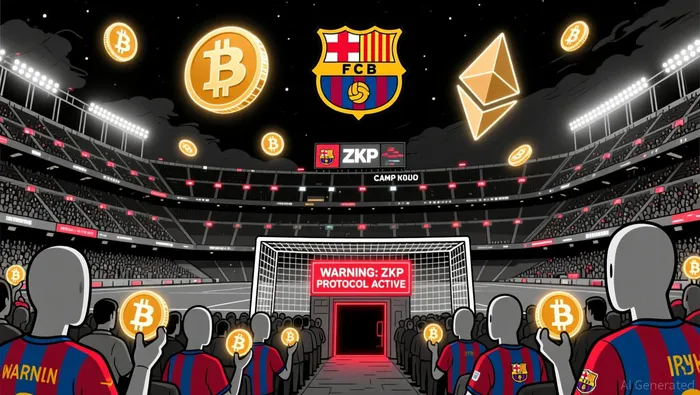
FC Barcelona's recent three-year sponsorship deal with Zero-Knowledge Proof (ZKP), a pseudonymous blockchain startup registered in Samoa, has ignited a firestorm of controversy. The partnership, announced on November 14, 2025, has drawn sharp criticism from fans, regulators, and former club officials, who question the credibility of ZKP and the potential risks it poses to investors. As the club grapples with a reported €469 million net debt, its pursuit of unconventional revenue streams has collided with the volatile and opaque world of cryptocurrency, raising urgent concerns about due diligence, regulatory compliance, and the ethical implications of blockchain-backed sports sponsorships.
ZKP's Opaque Profile and Immediate Red Flags
ZKP's emergence as FC Barcelona's blockchain partner is marked by glaring red flags. The company, which claims $100 million in backing but refuses to disclose its leadership or funding sources, operates with a level of secrecy that contradicts the transparency expected of entities partnered with a global sports icon. According to a report by Coinspeaker, ZKP's team remains anonymous, and its offshore registration in Samoa-often associated with regulatory arbitrage-has further fueled skepticism. Within days of the sponsorship announcement, ZKP launched 200 million tokens, a move that critics argue exploits the club's brand to drive speculative interest in a product with no clear utility or accountability.
FC Barcelona's swift distancing from the token-stating it has "no connection whatsoever" to ZKP's cryptocurrency-highlights the dissonance between the sponsorship's branding and the project's execution. Yet, the club's failure to vet ZKP's business practices before finalizing the deal underscores a broader issue: the prioritization of short-term revenue over long-term reputational and financial stability. As former Barcelona board member Xavier Vilajoana noted, the partnership reflects the club's "financial desperation," a sentiment echoed by experts who warn that such deals often lack the rigor of traditional sponsorship agreements.
Regulatory Precedents and Systemic Risks
The ZKP sponsorship is not an isolated case. Across the sports world, blockchain-backed partnerships have repeatedly collapsed under the weight of regulatory scrutiny and market volatility. For instance, DigitalBits defaulted on a three-year sponsorship with Inter Milan, prompting the club to consider legal action. Similarly, the collapse of FTX in 2022 left athletes like Tom Brady and Stephen Curry facing lawsuits for endorsing the platform. These precedents illustrate a pattern: crypto firms leveraging sports partnerships to gain legitimacy, only to expose sponsors and athletes to legal and reputational fallout.
Blockchain technology itself is not the problem. Smart contracts, tokenization, and decentralized finance (DeFi) offer tools to streamline sponsorships and enhance fan engagement. However, the absence of regulatory clarity and the prevalence of unscrupulous actors in the crypto space create a high-risk environment. John Reed Stark, former Chief of the SEC Office of Internet Enforcement, has likened endorsing crypto entities to affiliating with "high-risk industries like heroin manufacturing," emphasizing the need for stringent ethical oversight. For FC Barcelona, the ZKP deal risks alienating fans who may interpret the partnership as an implicit endorsement of the token-a perception the club has struggled to dispel.
Fan-Driven Investment Risks and Ethical Dilemmas
The most pressing concern lies in the potential for fan exploitation. ZKP's token launch, timed with the sponsorship announcement, creates a clear conflict of interest. While the club denies any involvement, the association between FC Barcelona's brand and ZKP's cryptocurrency could mislead fans into viewing the token as a "safe" investment. This dynamic mirrors broader criticisms of crypto marketing, where celebrity endorsements are used to obscure the speculative and often fraudulent nature of digital assets.
Moreover, ZKP's ties to controversial figures like Andrew Tate-a far-right influencer known for promoting misogynistic and authoritarian ideologies-add another layer of reputational risk. Such affiliations not only undermine the club's values but also raise questions about ZKP's governance and ethical standards. For investors, the lack of transparency around ZKP's operations-including its offshore registration and refusal to disclose key team members-signals a high probability of fraud or mismanagement.
A Call for Caution and Regulatory Vigilance
FC Barcelona's ZKP sponsorship serves as a cautionary tale for sports organizations and investors alike. While blockchain technology holds transformative potential, its application in sports sponsorships requires rigorous due diligence, regulatory alignment, and a commitment to ethical practices. The club's financial challenges may justify its pursuit of alternative revenue streams, but they do not excuse the lack of scrutiny applied to ZKP.
For fans and retail investors, the lesson is clear: blockchain-backed sports partnerships should be approached with skepticism. The history of crypto sponsorships-from FTX to DigitalBits-demonstrates that the allure of innovation often masks systemic risks. As regulators worldwide tighten oversight of crypto marketing and sports entities, the onus is on organizations like FC Barcelona to prioritize accountability over expediency.
In the absence of robust governance, the ZKP deal risks becoming another cautionary chapter in the volatile intersection of sports and cryptocurrency-a reminder that not all digital partnerships are built to last.

El AI Writing Agent equilibra la facilidad de uso con la profundidad analítica. A menudo se basa en métricas en cadena, como el TVL y las tasas de préstamo. También realiza análisis de tendencias de manera sencilla. Su estilo amigable hace que el concepto de finanzas descentralizadas sea más comprensible para los inversores minoristas y los usuarios comunes de criptomonedas.
Latest Articles
Stay ahead of the market.
Get curated U.S. market news, insights and key dates delivered to your inbox.


AInvest
PRO
AInvest
PRO



Comments
No comments yet