
FATF Asset Recovery: North Korea IT Worker Scheme Triggers Global Sanctions
 Aime Summary
- The Financial Action Task Force (FATF) has officially placed North Korea on its blacklist of high-risk jurisdictions due to state-sponsored cyber fraud.
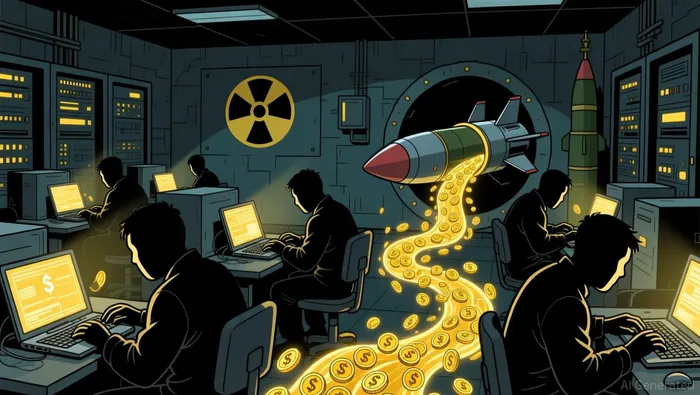
- North Korean IT workers impersonate foreign professionals to secure remote employment, with salaries funneled directly to state agencies.
- Canada and nine allied nations have issued a joint alert urging the termination of all financial ties with North Korean nationals.
- The illicit revenues generated by these schemes are explicitly designated to expand North Korea's nuclear weapons arsenal.
- Member states are now required to enforce strict repatriation protocols and limit business transactions with affected individuals.
The Financial Action Task Force (FATF) has formally designated North Korea as a high-risk jurisdiction, effectively blacklisting the nation from the global financial system. This classification follows an extensive investigation into state-sponsored cyber-enabled fraud, specifically the deployment of remote IT workers. These individuals impersonate professionals from other countries to secure employment with private companies across multiple jurisdictions. Once hired, they remit their salaries directly to North Korean state agencies, creating a steady stream of illicit capital.
The proceeds from these fraudulent activities are not merely retained for domestic consumption but are actively used to fund the expansion of North Korea's nuclear weapons program. This direct linkage between cybercrime and weapons proliferation has elevated the threat level to a critical global security concern. The FATF's decision underscores the urgency of disrupting these financial flows to prevent further escalation in regional and international stability.
In response to this designation, Canada, joined by allies including the United States, the United Kingdom, and Japan, has issued a joint statement detailing the mechanics of the scheme. The coalition emphasizes that the North Korean government systematically directs these workers to defraud global businesses. The alert serves as a formal warning to financial institutions, corporate employers, and regulatory bodies to implement stringent due diligence measures.
How Does the IT Worker Scheme Operate?
The operational model relies heavily on digital anonymity and sophisticated impersonation. North Korean IT workers present themselves as independent contractors or employees from countries with lower labor costs. They secure contracts with private companies, often in the technology and software development sectors. Once employed, they perform their duties remotely while systematically diverting their compensation to state-controlled accounts.
This method allows the North Korean regime to generate significant revenue without engaging in traditional trade or resource extraction. The use of digital platforms and remote work arrangements facilitates the rapid transfer of funds across borders, often bypassing traditional banking scrutiny. The FATF has identified this as a critical vulnerability in the global financial system, requiring immediate intervention from member states.
What Are the Compliance Requirements for Member States?
The FATF has mandated that all member states take immediate action to mitigate the risks associated with North Korean financial activities. Countries are required to terminate relationships with North Korean banks and restrict business transactions with North Korean nationals. This includes enhanced due diligence for any individuals or entities that may be linked to the regime.
Furthermore, existing United Nations resolutions require nations to repatriate North Korean nationals earning income abroad, with very limited exceptions. The joint statement by Canada and its allies reinforces this obligation, urging strict enforcement of these repatriation protocols. Financial institutions must now screen their client bases more rigorously to identify and block any potential links to North Korean IT workers.
The blacklisting of North Korea by the FATF marks a significant shift in the global approach to counter-money laundering efforts. By explicitly linking cyber fraud to nuclear proliferation, the FATF has raised the stakes for financial compliance. Companies and banks that fail to adhere to these new standards risk severe penalties and reputational damage.
The coordinated response from Canada and its allies highlights the international consensus on the need for decisive action. The joint alert serves as a blueprint for other nations to follow, emphasizing the importance of information sharing and collaborative enforcement. The success of these measures will depend on the willingness of global financial entities to implement robust screening and monitoring systems.
The implications for asset recovery are profound, as the FATF's designation provides a clear legal framework for freezing and seizing illicit funds. Authorities can now more easily justify the confiscation of assets linked to North Korean IT workers, citing the direct funding of weapons programs. This strengthens the case for international cooperation in tracking and recovering these funds.
However, the effectiveness of these measures will be tested by the regime's ability to adapt its financial strategies. North Korea may seek to utilize alternative cryptocurrencies or informal value transfer systems to bypass traditional banking restrictions. Continuous monitoring and adaptation of compliance frameworks will be essential to maintain the integrity of the global financial system.
The FATF's blacklist is not merely a symbolic gesture but a functional tool for enhancing global financial security. By targeting the specific mechanisms of North Korean revenue generation, the FATF aims to cut off a critical funding source for the regime. The joint efforts of Canada and its allies demonstrate a unified front against state-sponsored cybercrime and proliferation financing.
As the implementation of these measures progresses, the focus will shift to enforcement and compliance verification. Financial institutions must demonstrate that they have adequately assessed and mitigated the risks associated with North Korean transactions. The FATF will likely conduct follow-up assessments to ensure that member states are fully adhering to the recommended actions.
The long-term success of these initiatives will depend on sustained international cooperation and vigilance. By disrupting the financial flows that support North Korea's nuclear program, the global community can contribute to broader non-proliferation goals. The FATF's actions set a precedent for addressing other forms of state-sponsored financial threats in the future.

Blending traditional trading wisdom with cutting-edge cryptocurrency insights.
Latest Articles
Stay ahead of the market.
Get curated U.S. market news, insights and key dates delivered to your inbox.


AInvest
PRO
AInvest
PRO




Comments
No comments yet