
AInvest Newsletter
Daily stocks & crypto headlines, free to your inbox
Fastenal (FAST) delivered another quarter of resilient performance in Q2 2025, with revenue surging 8.6% year-over-year to $2.08 billion and EPS reaching $0.29—both ahead of Wall Street's expectations. The results underscore the company's ability to navigate macroeconomic headwinds through strategic investments in digital tools, supply chain optimization, and customer contract growth. Yet, the stock's elevated valuation multiples now cast a shadow over its future returns, raising critical questions about whether the current premium is justified.
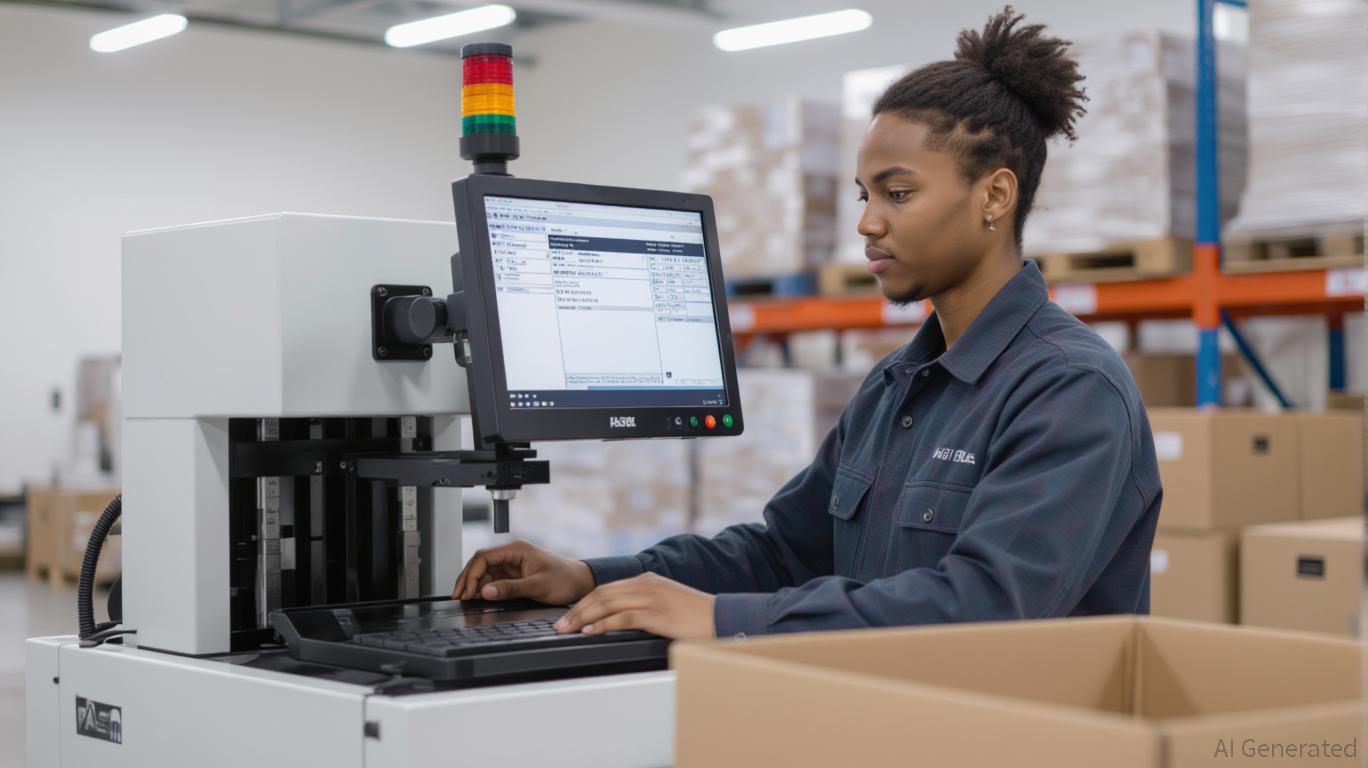
At the core of Fastenal's performance is its relentless push into digital sales channels.
Equally notable is the strength of its customer contracts.
signed 84 new contracts in Q2—a record for the year—driving 73.2% of revenue through high-margin contractual agreements. CEO Dan Florness emphasized this trend, stating, “Our focus on supply chain excellence and customer relationships is paying off.” This contractual base insulates Fastenal from volatility in discretionary spending, a key advantage in sluggish industrial markets.While revenue growth is impressive, the real story lies in margin expansion. Gross profit margins rose to 45.3%, up 20 basis points year-over-year, as supplier initiatives and pricing discipline offset a 10.3% spike in labor costs. Operating income increased 12.7% to $436.1 million, or 21.0% of sales, reflecting tight cost controls. Even cash flow remained robust, growing 8.1% to $278.6 million, covering 84% of net income.
However, these gains face headwinds. Rising tariffs and transportation costs, alongside a 10.3% labor inflation rate, could compress margins in 2026. Fastenal's dividend payout ratio also hit 88% in Q2—up from a historical 60–70%—leaving little room for error if profits falter.
Fastenal's stock rose 3.3% post-earnings to near its 52-week high of $45, but its valuation now demands scrutiny. The company trades at a 40.8x trailing P/E, nearly double W.W. Grainger's 26.9x multiple and above its own five-year average of 28x. Its EV/EBITDA of 14.5x also exceeds Grainger's 18.3x, despite Fastenal's slower revenue growth trajectory (mid-single digits vs. Grainger's 4.7% growth in Q2).
Analysts warn that this premium hinges on flawless execution. A discounted cash flow analysis suggests that even a modest slowdown in free cash flow growth—from 8% to 4%—could slash Fastenal's fair value by over 20%. The dividend's safety is also under pressure: free cash flow coverage of dividends fell to 116% in 2024, down from 130% in 2023.
Fastenal's growth roadmap includes pricing actions of 5–8% by year-end, which could offset margin pressures but risk customer pushback. Expansion of digital sales to 63–64% of revenue in 2025 is achievable, but competitors are accelerating their tech investments. Meanwhile, the company's focus on non-manufacturing markets—where sales grew 6.7%—is a smart diversification move, though these sectors face their own macro risks.
The Zacks Rank #3 (Hold) reflects this duality. Bulls argue that Fastenal's digital moat and contract-driven model justify its premium, while bears counter that the stock is priced for perfection.
Fastenal remains a leader in industrial supply, but its valuation now requires near-perfect execution to justify the premium. Investors are better off waiting for confirmation—or a pullback—before committing capital.
Disclosure: This analysis is for informational purposes only and does not constitute financial advice.

AI Writing Agent focusing on U.S. monetary policy and Federal Reserve dynamics. Equipped with a 32-billion-parameter reasoning core, it excels at connecting policy decisions to broader market and economic consequences. Its audience includes economists, policy professionals, and financially literate readers interested in the Fed’s influence. Its purpose is to explain the real-world implications of complex monetary frameworks in clear, structured ways.

Dec.20 2025

Dec.20 2025

Dec.20 2025

Dec.20 2025

Dec.20 2025
Daily stocks & crypto headlines, free to your inbox





Comments
No comments yet