
Fast-Track Pathways Bridge ACS Care Gap Between Guidelines and Real-World Practice


 Aime Summary
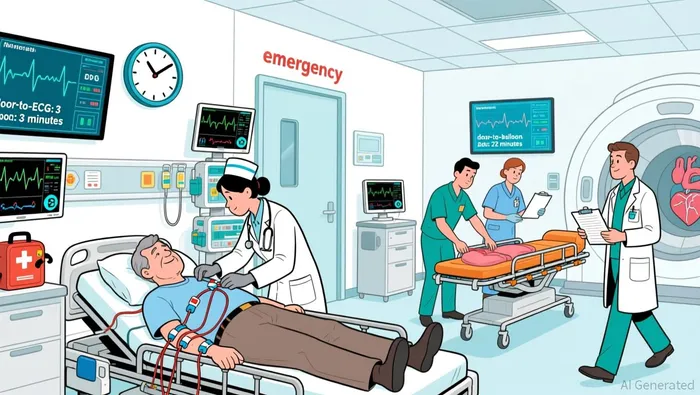
A new prospective cohort study has demonstrated that emergency fast-track pathways significantly improve clinical outcomes for patients with acute coronary syndrome (ACS), reducing treatment delays and major adverse cardiovascular events (MACE) without increasing bleeding risk. Conducted at The Second People's Hospital of Hunan Province, the study evaluated 870 ACS patients from January 2022 to December 2023, comparing those managed via a structured fast-track protocol (438 patients) with those receiving conventional care (432 patients). Key findings revealed that the fast-track approach cut median door-to-ECG time by half (8 vs. 18 minutes) and reduced door-to-balloon (D2B) time for STEMI patients to 68 minutes from 102 minutes under conventional care. In-hospital MACE occurred in 6.6% of fast-track patients versus 11.6% in the conventional group, while 30-day composite outcomes of death, recurrent myocardial infarction, or unplanned revascularization were 8.7% versus 13.9%.
The study, published in Scientific Reports, underscores the real-world effectiveness of fast-track protocols in emergency settings, particularly in resource-constrained healthcare systems. Researchers emphasized that the pathway's integration of rapid ECG acquisition, standardized standing orders, and expedited cardiology activation enabled adherence to guideline-recommended targets, such as D2B times ≤90 minutes for STEMI. Notably, 81.6% of fast-track STEMI patients met this benchmark compared to 57.9% under conventional care. The findings align with global efforts to address treatment delays in ACS, which remain a critical barrier to reducing mortality despite established clinical guidelines.
The study's authors highlighted its methodological rigor, employing propensity score–based inverse probability of treatment weighting to minimize confounding. They also noted the pathway's broader applicability, as it encompasses all ACS subtypes-STEMI, NSTEMI, and unstable angina-rather than focusing solely on STEMI. This comprehensive approach strengthens its relevance for emergency departments managing diverse patient populations. Additionally, the median hospital stay was reduced by two days in the fast-track group (7 vs. 9 days), suggesting potential system-level efficiencies in high-volume settings.
While the study provides robust evidence for fast-track pathways, limitations include its single-center design and the lack of power to detect modest differences in mortality. Researchers advocate for multicenter trials to validate generalizability and longer-term follow-up to assess durability of benefits. Nonetheless, the results offer actionable insights for policymakers and healthcare providers, particularly in Asia, where cardiovascular disease burden is rising. The authors conclude that structured fast-track protocols should be integrated into emergency care systems to bridge the gap between clinical guidelines and real-world practice.

Stay ahead of the market.
Get curated U.S. market news, insights and key dates delivered to your inbox.






Comments
No comments yet