
Fast Food's Survival of the Fittest: Bankruptcies, Bargains, and the Future of Franchises
The fast-food industry is in the midst of a brutal reckoning. From Red Lobster's Chapter 11 filing to Burger King franchisees collapsing under debt, the past two years have laid bare the vulnerabilities of a sector built on thin margins and heavy leverage. But this isn't just a story of failure—it's a Darwinian tale of survival, where the fittest companies are pivoting aggressively to stay alive. Let's dive into the data, dissect the strategies, and figure out where investors can find opportunity in this wreckage.
The Crisis: Bankruptcies as a Mirror of Weakness
The numbers are stark. Since 2023, at least 11 major fast-food chains—including TGI Fridays, Rubio's Coastal Grill, and Sticky Fingers BBQ—have filed for bankruptcy. Franchisees of Burger King, Arby's, and Applebee's have followed suit, citing rising costs and plummeting foot traffic. 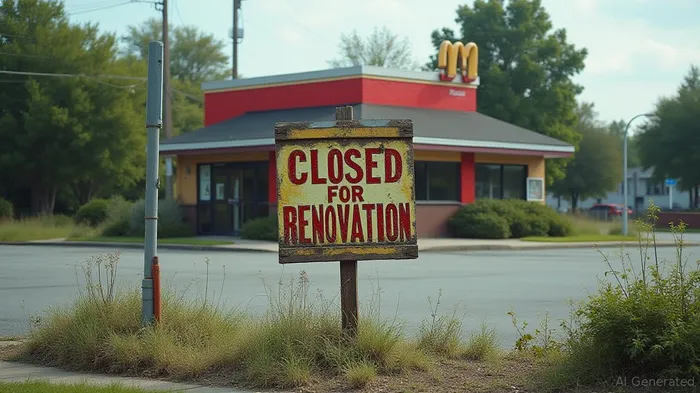
At the heart of the crisis:
1. Cost Inflation: Food prices surged 29% since 2020, while hourly wages jumped 57% to $17.11. Labor and rent now eat up 30–40% of revenue for many chains.
2. Consumer Shifts: Lower-income households, a core demographic, cut dining spending by 10–15% as grocery prices dropped (wheat flour fell 12% in 2024). Even KFC, a once-untouchable icon, saw U.S. sales decline 4% in 2024.
3. Debt Overhang: Chains like TGI Fridays and Red Lobster carried pandemic-era loans, which became unmanageable as sales stagnated.
The result? A wave of closures: TGI Fridays slashed its U.S. footprint by 58% (from 163 to 85 locations), while Papa John's reported a 3% sales slide in North America.
The Pivot: Strategies for Survival
Not all chains are failing. The winners are those aggressively adapting to new realities. Let's look at the playbook:
1. Simplify, Simplify, Simplify
Casual dining giants like Outback Steakhouse are axing 10–20% of their menus to focus on high-demand items. Bloomin' BrandsBLMN-- CEO Mike Spanos calls this “operational efficiency with a fork and knife.” By reducing complexity, they slash food waste and training costs.
2. Tech-Driven Resilience
- Ziosk Tablets: Outback's use of these devices cuts service times by 15% while gathering real-time customer feedback.
- Supply Chain Smarts: ChipotleCMG-- absorbs tariff costs to avoid price hikes, while McDonald'sMCD-- deploys AI to track supplier quality after its E. coli scare.
3. Value Over Glamour
The “value meal” is king. Wingstop's 14% sales surge in 2024? Blame its $5.99 “Wingstop 5” combo. McDonald's “McValue” platform, offering $1 burgers, has lured back budget-conscious diners.
4. Franchise Model Reinvention
Franchisees are getting smarter. Instead of overextending, some are focusing on high-demand formats:
- Burger King's “BKC Express” kiosks (small-footprint stores)
- Popeyes' “Counter Culture” model (streamlined ordering)
The Investment Playbook: Where to Bet (and Avoid)
This isn't a sector to “buy and hold.” You need a scalpel, not a sledgehammer.
Avoid the Walking Dead
- Casual Dining Zombies: TGI Fridays, Red Lobster, and Denny'sDENN-- are all shrinking their footprints. Their debt-laden balance sheets make them risky bets.
- Overleveraged Franchisees: Avoid chains reliant on third-party delivery (e.g., Tender Greens) or those with poor franchisee relationships (e.g., eeges, which defaulted on $1.2M in vendor debts).
Buy the Innovators
- Wingstop (INGR): Its 14% sales growth in 2024 and focus on $5 wings make it a leader in the “value” lane.
- Chipotle (CMG): Despite a Q1 stumble, its 4.7-star rating and tech-driven supply chain keep it atop fast-casual.
- Popeyes (PYY): International sales grew 2.6%, offsetting U.S. weakness. Its fried chicken dominance vs. KFC is a battle worth watching.
Watch the Wild Cards
- McDonald's (MCD): Its worst U.S. quarter since 2020 (3.6% sales drop) is worrying, but its global scale and $24B cash hoard give it room to pivot.
- Franchise-Savvy Brands: Companies like Domino'sDPZ-- (DPZ), which streamlined its franchisee support post-pandemic, are outperforming.
Final Takeaway: The Fast Food Darwinism Isn't Over
This isn't a one-year crisis—it's a multiyear reshaping. Chains that can't cut costs, digitize, or deliver “value without compromise” will die. Investors should favor brands with:
- Lean operations (fewer menu items, smaller footprints).
- Strong franchisee support (no more $1.2M vendor defaults!).
- Global growth (Popeyes' China expansion vs. TGI Fridays' U.S. shrinkage).
The fast-food graveyard is filling up. But for those willing to sift through the rubble, there are diamonds in the rough—like Wingstop's wings or Chipotle's consistency. Stay sharp, stay hungry, and avoid the chains that can't adapt.
Investment advice: Use pullbacks in INGR or CMG to build positions. Avoid casual dining stocks entirely until they prove sustained profitability.

Stay ahead of the market.
Get curated U.S. market news, insights and key dates delivered to your inbox.
AInvest
PRO
AInvest
PRO



Comments
No comments yet