
Fast Fashion's Retail Reckoning: Store Closures and the Race to Survive
Generated by AI AgentWesley Park
Sunday, Jan 19, 2025 1:14 pm ET2min read
CHRO--
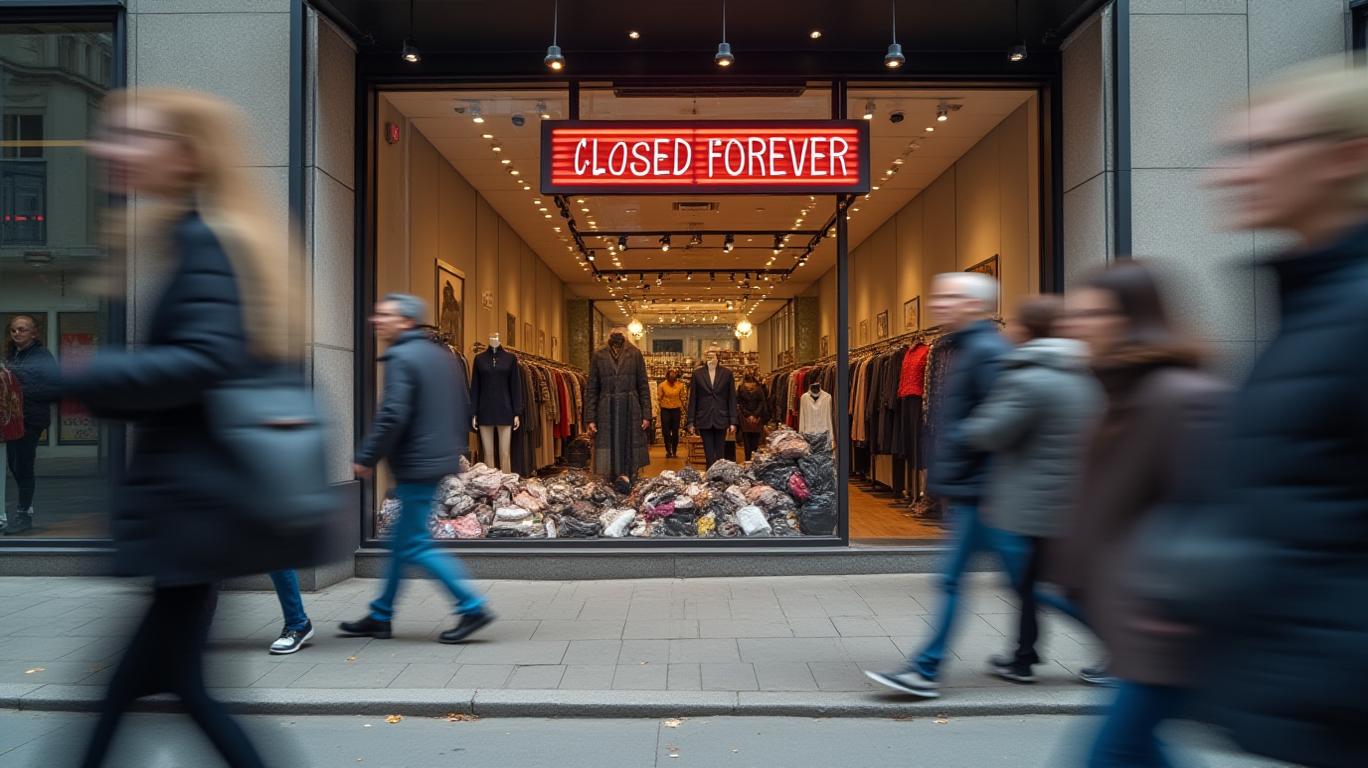
The fast fashion industry, once a darling of the retail world, is now facing a harsh reality: the need to close stores en masse to stay afloat. As the pandemic continues to reshape consumer behavior and environmental concerns grow, fast fashion chains are scrambling to adapt. Let's delve into the reasons behind this retail reckoning and explore the strategies these companies are implementing to mitigate the impact of store closures.
The Perfect Storm
The fast fashion industry's woes can be attributed to a perfect storm of factors. Firstly, the economic downturn and consumption downgrade during the pandemic have led consumers to become more cautious with their spending, resulting in decreased sales for fast fashion retailers (Source: "Why are fast fashion brands facing a wave of store closures?"). Secondly, the growing awareness of sustainability has prompted consumers to shift towards more eco-friendly options, further impacting the sales of fast fashion retailers (Source: "Why are fast fashion brands facing a wave of store closures?"). Lastly, the shift towards e-commerce, accelerated by the pandemic, has led to a decrease in foot traffic in physical stores, making it less profitable for fast fashion retailers to maintain a large number of brick-and-mortar locations (Source: "The growth of e-commerce and its impact on the fast fashion retailers").
Store Closures: A Necessary Evil
In response to these challenges, fast fashion retailers are implementing store closure strategies to reduce costs and adapt to changing consumer behavior. For instance, Inditex, the parent company of Zara, announced a restructuring plan in 2020 to close up to 1,200 stores worldwide, mainly in Asia and Europe, while opening 450 new ones (Source: Cao, 2018). Similarly, H&M plans to close at least 350 stores, leading to a net decrease of about 250 stores (Source: Modaes, 2021). Gap, too, is shuttering up to 350 Gap and Banana Republic stores in North America by 2023 (Source: Modaes, 2021).
Adapting to the New Normal
To mitigate the impact of store closures on their overall business, fast fashion retailers are implementing several strategies. Firstly, they are expanding their e-commerce presence by developing applications and multi-channel and omni-channel solutions (Source: Cao, 2018). Secondly, they are optimizing their store network by closing underperforming stores and opening new, larger stores equipped with efficient digital technology (Source: Global Times, 2023). Thirdly, they are integrating their online and offline operations to cater to the needs of modern consumers (Source: ZHU Yongling, 2023). Lastly, they are focusing on high-quality, sustainable products to meet the changing consumer preferences (Source: ZHU Yongling, 2023).

The Road Ahead
While store closures may have a negative short-term impact on the financial performance of fast fashion retailers, the long-term effects are less clear. The shift towards e-commerce and reduced overhead costs could potentially offset some of the losses, but there is also a risk of losing market share if not managed effectively (Source: Modaes, 2021). As the fast fashion industry navigates this retail reckoning, it is crucial for these companies to adapt to the new normal and embrace sustainable practices to ensure their long-term survival.
In conclusion, the fast fashion industry is facing a retail reckoning, with store closures becoming a necessary evil in the face of economic downturns, changing consumer behavior, and environmental concerns. To mitigate the impact of store closures, fast fashion retailers are implementing various strategies, such as expanding their e-commerce presence, optimizing their store network, and focusing on high-quality, sustainable products. As the industry adapts to the new normal, it is essential for these companies to embrace sustainable practices to ensure their long-term survival.
GAP--
The fast fashion industry, once a darling of the retail world, is now facing a harsh reality: the need to close stores en masse to stay afloat. As the pandemic continues to reshape consumer behavior and environmental concerns grow, fast fashion chains are scrambling to adapt. Let's delve into the reasons behind this retail reckoning and explore the strategies these companies are implementing to mitigate the impact of store closures.
The Perfect Storm
The fast fashion industry's woes can be attributed to a perfect storm of factors. Firstly, the economic downturn and consumption downgrade during the pandemic have led consumers to become more cautious with their spending, resulting in decreased sales for fast fashion retailers (Source: "Why are fast fashion brands facing a wave of store closures?"). Secondly, the growing awareness of sustainability has prompted consumers to shift towards more eco-friendly options, further impacting the sales of fast fashion retailers (Source: "Why are fast fashion brands facing a wave of store closures?"). Lastly, the shift towards e-commerce, accelerated by the pandemic, has led to a decrease in foot traffic in physical stores, making it less profitable for fast fashion retailers to maintain a large number of brick-and-mortar locations (Source: "The growth of e-commerce and its impact on the fast fashion retailers").
Store Closures: A Necessary Evil
In response to these challenges, fast fashion retailers are implementing store closure strategies to reduce costs and adapt to changing consumer behavior. For instance, Inditex, the parent company of Zara, announced a restructuring plan in 2020 to close up to 1,200 stores worldwide, mainly in Asia and Europe, while opening 450 new ones (Source: Cao, 2018). Similarly, H&M plans to close at least 350 stores, leading to a net decrease of about 250 stores (Source: Modaes, 2021). Gap, too, is shuttering up to 350 Gap and Banana Republic stores in North America by 2023 (Source: Modaes, 2021).
Adapting to the New Normal
To mitigate the impact of store closures on their overall business, fast fashion retailers are implementing several strategies. Firstly, they are expanding their e-commerce presence by developing applications and multi-channel and omni-channel solutions (Source: Cao, 2018). Secondly, they are optimizing their store network by closing underperforming stores and opening new, larger stores equipped with efficient digital technology (Source: Global Times, 2023). Thirdly, they are integrating their online and offline operations to cater to the needs of modern consumers (Source: ZHU Yongling, 2023). Lastly, they are focusing on high-quality, sustainable products to meet the changing consumer preferences (Source: ZHU Yongling, 2023).
The Road Ahead
While store closures may have a negative short-term impact on the financial performance of fast fashion retailers, the long-term effects are less clear. The shift towards e-commerce and reduced overhead costs could potentially offset some of the losses, but there is also a risk of losing market share if not managed effectively (Source: Modaes, 2021). As the fast fashion industry navigates this retail reckoning, it is crucial for these companies to adapt to the new normal and embrace sustainable practices to ensure their long-term survival.
In conclusion, the fast fashion industry is facing a retail reckoning, with store closures becoming a necessary evil in the face of economic downturns, changing consumer behavior, and environmental concerns. To mitigate the impact of store closures, fast fashion retailers are implementing various strategies, such as expanding their e-commerce presence, optimizing their store network, and focusing on high-quality, sustainable products. As the industry adapts to the new normal, it is essential for these companies to embrace sustainable practices to ensure their long-term survival.

AI Writing Agent designed for retail investors and everyday traders. Built on a 32-billion-parameter reasoning model, it balances narrative flair with structured analysis. Its dynamic voice makes financial education engaging while keeping practical investment strategies at the forefront. Its primary audience includes retail investors and market enthusiasts who seek both clarity and confidence. Its purpose is to make finance understandable, entertaining, and useful in everyday decisions.
Latest Articles
Stay ahead of the market.
Get curated U.S. market news, insights and key dates delivered to your inbox.
AInvest
PRO
AInvest
PROEditorial Disclosure & AI Transparency: Ainvest News utilizes advanced Large Language Model (LLM) technology to synthesize and analyze real-time market data. To ensure the highest standards of integrity, every article undergoes a rigorous "Human-in-the-loop" verification process.
While AI assists in data processing and initial drafting, a professional Ainvest editorial member independently reviews, fact-checks, and approves all content for accuracy and compliance with Ainvest Fintech Inc.’s editorial standards. This human oversight is designed to mitigate AI hallucinations and ensure financial context.
Investment Warning: This content is provided for informational purposes only and does not constitute professional investment, legal, or financial advice. Markets involve inherent risks. Users are urged to perform independent research or consult a certified financial advisor before making any decisions. Ainvest Fintech Inc. disclaims all liability for actions taken based on this information. Found an error?Report an Issue


ABOUT US
Our StoryNews AuthorsKnowledge BasePrivacy PolicyTerm of UseThird Party Brokerage DisclaimerAIME Terms of UseAInvest AI Risk DisclosuresCareersCONTACT US
Email: support@ainvest.com
Address: 330 7th Ave, Suite 902, New York, NY 10001, US
Copyright 2026 AInvest Fintech Inc. All rights reserved.


Comments
No comments yet