
Farmers Almanac Winter Forecast Highlights Cold, Snowy Season for Northern US in 2025-2026
 Aime Summary
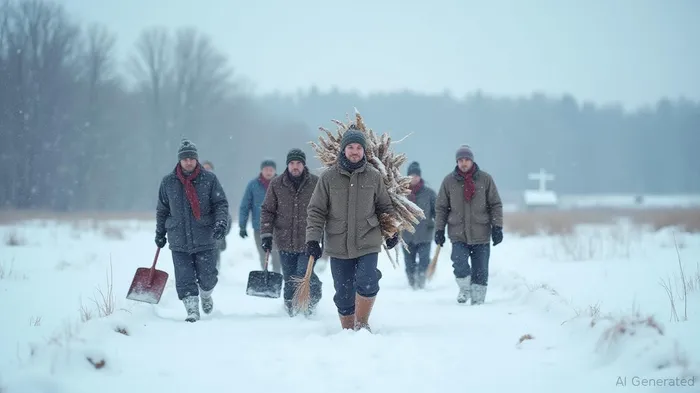
The Farmers’ Almanac has unveiled its winter forecast for the 2025–2026 season, suggesting that much of the United States may experience a winter marked by "chill, snow, repeat." This prediction, based on a formula honed over 200 years, forecasts significant weather events starting as early as September, well before the official winter kick-off in December.
Analysts predict that the coldest temperatures will extend from the Northern Plains to New England, with northwestern states such as Idaho and Washington also bracing for severe cold. New England is anticipated to face frequent snowstorms. Meanwhile, the Atlantic Coast could see a mix of wintry conditions, combining snow and rain. The Great Lakes, Ohio Valley, and North Central regions are predicted to enjoy a classic winter wonderland, alongside mountains in the Pacific Northwest that are forecasted to receive substantial snow totals.
The Southeastern United States might experience average temperatures with periods of rain, and occasional snowfall may occur in northern and Appalachian areas. The Mid-Atlantic states could witness moderate snow, especially at higher elevations. In the more western territories, Texas and the Southern Plains are expected to navigate a wetter-than-usual winter, featuring cold rain, sporadic freezing precipitation, and isolated snow occurrences in northern locations. Moreover, the Southwest is forecasted to undergo a wet season with temperatures near the average.
The Farmers' Almanac further anticipates notable cold snaps in mid-January and mid-February, potentially prolonging chilly conditions well into 2026.
Regarding the almanac's accuracy, its forecasts are derived from a proprietary method developed over many years. The publication employs an equation that incorporates solar activity cycles, lunar movements, tidal actions, and specific stratospheric winds. Sandi Duncan, an editor, referred to the methodology, emphasizing lunar cycles and historical weather correlations. Despite the tradition backing these predictions, it contrasts with contemporary meteorology, which utilizes satellite data and real-time analytical models to forecast weather conditions.
The Farmers’ Almanac's approach extends beyond immediate weather forecasting, considering the unpredictable global climate pattern changes, which make precise long-term location-specific forecasts challenging to affirmAFRM--.
As the U.S. braces for what could be an eventful winter, the Farmers' Almanac maintains its stance of delivering projections that, although sometimes at variance with scientific meteorology, have intrigued and guided nature enthusiasts and planners for over two centuries.

Stay ahead of the market.
Get curated U.S. market news, insights and key dates delivered to your inbox.


AInvest
PRO
AInvest
PRO



Comments
No comments yet