
Once Upon a Farm's IPO: A Structural Test for the Consumer Revival Narrative
 Aime Summary
The financial outcome for Once Upon a Farm was a clear vote of confidence. The company raised $197.9 million at a $724 million valuation, with its shares opening at $21-16% above the $18 offer price. This debut is more than a single success story; it is a signal of a structural revival in both the IPO market and the consumer sector it serves.
This event is part of a broader recovery. The IPO market is building on its gradual rebound from a sluggish 2025, with seven companies raising at least $150 million this week alone. This surge in activity reflects pent-up demand from companies that deferred listings during last year's volatility, now finding a more receptive window. The favorable macro environment is key: easing monetary policy is lifting valuations, while regulatory reforms around the world are actively encouraging more issuances.
For consumer brands, the setup is particularly ripe. The shift in shopper behavior, driven by a pushback against ultra-processed foods, has created a powerful tailwind for mission-driven companies like Once Upon a Farm. As one analyst noted, this transaction can catalyze renewed investor interest in the consumer category. The company's own leadership sees the IPO as a tool to drive efficiency and brand investment, but the market's reception confirms a deeper trend: high-quality consumer fundamentals are once again in focus.
The Structural Drivers: Tailwinds and Competitive Realities
The path for Once Upon a Farm is defined by powerful, converging forces. The market itself is a major tailwind. The global organic baby food sector is projected to grow at a 10.39% compound annual rate to reach $17.48 billion by 2032. North America, where the company operates, holds a commanding 34.58% share of that market, providing a deep well of domestic demand. This expansion is not just recovery; it is a structural shift in consumer priorities.
The core driver is a rising policy and cultural pushback against ultra-processed foods, especially for children. This isn't a fleeting trend but a fundamental re-evaluation of what constitutes healthy nutrition. As the company's IPO notes, this shift is being amplified by movements like "Make America Healthy Again," which has found a vocal following among parents known as "MAHA moms." This alignment between brand mission and macro consumer sentiment creates a powerful, durable tailwind that insurgent brands can ride.
Yet, this tailwind blows against a crowded field. The company operates in a category with 21 active competitors, including well-established giants like Plum Organics and Bobbie. This intense competition means growth will be won on execution, not just narrative. The company's recent financials illustrate the tension: while net sales surged 66% in 2024 to $156.8 million, its losses widened to $23.8 million. Scaling rapidly in a competitive arena requires significant investment, which the IPO proceeds are meant to fund.
The bottom line is that Once Upon a Farm's success hinges on converting a favorable market structure into sustainable market share. The company must leverage its brand authenticity and the powerful consumer-policy alignment to out-innovate and out-execute its rivals, all while navigating the inherent costs of scaling in a crowded category. The structural drivers are clear, but the competitive reality is that they will be earned, not given.
Capital Deployment and Financial Resilience
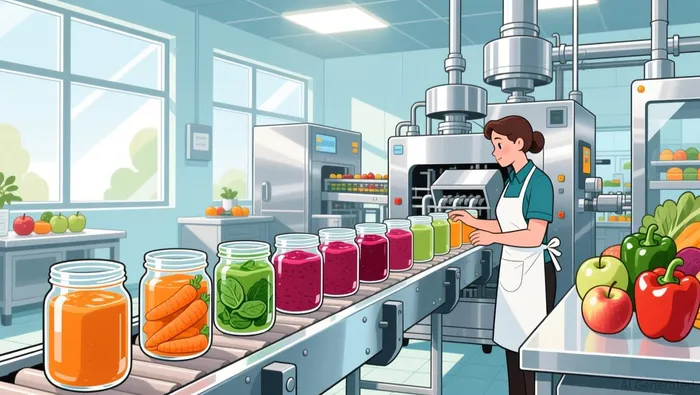
The IPO provides Once Upon a Farm with a substantial war chest, but the critical question is how efficiently it deploys this capital to convert its market opportunity into sustainable profitability. CEO John Foraker has outlined the plan: the proceeds will be used to invest in our supply chain and do other things to drive efficiency and to continue to invest in our brand. This dual focus is logical. Building supply chain resilience is essential for scaling a food business, while continued brand investment is needed to defend against a crowded field of competitors and to capture the growing demand fueled by the "Make America Healthy Again" movement.
The company's prior funding history underscores the capital intensity of its mission. It has already raised $108 million in prior funding across five rounds, including a Series D in 2022. This significant base provides a track record of investor confidence but also sets a high bar for the new equity. The market is now judging whether the company can use this fresh capital more effectively than it did with previous rounds to finally narrow its widening losses. The 2024 financials show the challenge: net sales surged 66% to $156.8 million, yet losses widened from $17.6 million to $23.8 million. The new capital must fund growth without proportionally expanding those losses.
This leads to the valuation test. The IPO priced the company at a $724 million market cap, a figure that must be justified by future growth and margin expansion in a competitive landscape. With 21 active rivals, including giants like Plum Organics, the path to market leadership is not guaranteed. The company's financial health now hinges on its ability to use the new capital to drive both top-line acceleration and bottom-line improvement. The market's initial 16% pop suggests confidence in the narrative, but the long-term resilience of the stock will depend on whether the company can demonstrate that its supply chain investments and brand spending are translating into higher margins and a widening moat.
Catalysts and Risks: What to Watch for Broader Trends
The IPO thesis for Once Upon a Farm now enters its execution phase. The market has spoken with its initial 16% pop, but the long-term story will be written in quarterly results and competitive moves. Investors must monitor a clear set of forward-looking catalysts and risks that will validate or challenge the broader narrative of a consumer revival.
The primary catalyst is tangible execution. The company's stated plan to use proceeds for investments in our supply chain and to continue to invest in our brand must translate into measurable outcomes. Watch for evidence that these supply chain investments are driving efficiency-lower unit costs, improved distribution speed, and enhanced resilience. Simultaneously, brand investment must convert into market share gains against a crowded field of 21 active competitors. The company's claim of being ranked second among them is a starting point, but the real test is whether it can close the gap on giants like Plum Organics and Bobbie. Any quarterly report showing accelerating sales growth alongside improving gross margins would be a key positive signal.
The most immediate risks are structural pressures. First, intense competition will likely keep margin pressure high. As the organic baby food category matures, brands may be forced to spend more on marketing and promotions to defend share, squeezing profitability. Second, the entire thesis is predicated on a consumer spending shift toward premium, healthy products. If economic headwinds tighten household budgets, this discretionary spending could soften, directly impacting the company's top line. Finally, the broader IPO market's sustainability is a wildcard. The market is set for a breakout year, but that momentum could falter if macroeconomic conditions shift or if a wave of new listings creates a supply glut. A cooling IPO market would dampen valuations for consumer brands, making it harder for Once Upon a Farm to raise future capital or attract new investors.
For investors, the framework is clear. The key metrics to watch are quarterly sales growth, which must sustain its recent pace, and gross margin trends, which must show signs of stabilization or improvement as scale kicks in. More importantly, monitor the company's ability to convert its brand credibility and the powerful "Make America Healthy Again" narrative into tangible pricing power. Can it command a premium over competitors, or will it be forced into a race to the bottom on price? The IPO was a vote of confidence in the macro story. The coming quarters will determine whether Once Upon a Farm can deliver the operational results to make that story a reality.

El Agente de Redacción AI: Julian West. El estratega macroeconómico. Sin prejuicios. Sin pánico. Solo la Gran Narrativa. Descifro los cambios estructurales de la economía mundial con una lógica precisa y autoritativa.
Latest Articles
Stay ahead of the market.
Get curated U.S. market news, insights and key dates delivered to your inbox.






Comments
No comments yet