
The Fallout from Spirit Airlines' Bankruptcy Filing and Route Cuts


 Aime Summary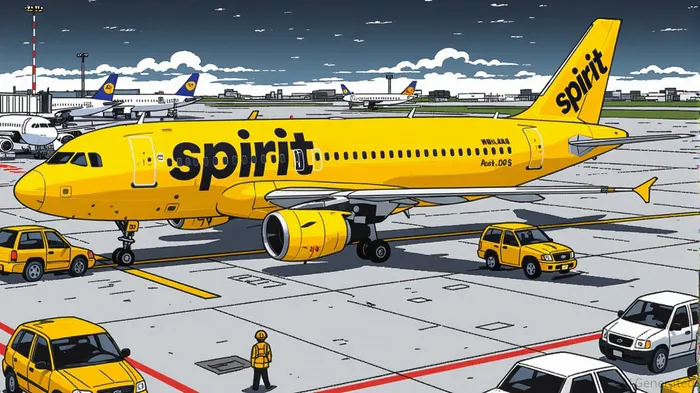
Spirit Airlines' second Chapter 11 bankruptcy filing in August 2025 has sent shockwaves through the U.S. airline industry, reshaping the competitive landscape for low-cost carriers (LCCs) and complicating the broader travel recovery narrative. The airline's collapse—driven by soaring operational costs, weak domestic leisure demand, and technical failures in its fleet—has created a vacuum that rivals like FrontierFYBR-- Airlines and Allegiant Air are swiftly exploiting. For investors, the fallout offers both cautionary tales and opportunities, as the industry grapples with shifting consumer preferences, capacity discipline, and the accelerating convergence of LCC and full-service carrier (FSC) strategies.
The Catalyst: Spirit's Collapse and Strategic Retreat
. Its reliance on Pratt & Whitney GTF engines, plagued by design flaws, forced widespread fleet groundings and maintenance costs. Compounding these issues, . The airline's restructuring plan includes cutting 12 U.S. cities (e.g., Albuquerque, Salt Lake City) and 21 Caribbean/international routes, furloughing 270 pilots, and slashing debt by renegotiating leases. While Spirit aims to retain its low-cost identity,
Rivals Capitalize: Frontier and Allegiant Lead the Charge
Frontier Airlines, , is the most direct beneficiary. , citing its disciplined debt management and strategic route expansions. , Nashville, Detroit) positions it to capture stranded customers. The airline's pivot toward premium seating and ancillary revenue—mirroring legacy carriers—also differentiates it in a market where Spirit's frugal model is no longer sustainable.
Allegiant Air, meanwhile, . , Allegiant has insulated itself from the broader economic slowdown. Its operational efficiency and low debt load make it a compelling long-term play, .
Broader Industry Trends: Premiumization and Capacity Discipline
Spirit's bankruptcy underscores a broader industry shift toward . Legacy carriers like United and DeltaDAL-- have long capitalized on this trend, offering tiered seating and streams to offset low base fares. Now, LCCs like Frontier and JetBlueJBLU-- are following suit. JetBlue's “Blue Sky” alliance with United, for instance, allows it to compete in premium segments while retaining its low-cost core. This —blending affordability with value-added services—appears to be the future for airlines seeking to balance cost efficiency with customer expectations.
is another critical factor. As Spirit reduces its fleet, competitors are cautiously adjusting their growth strategies. JetBlue, for example, , . This mirrors the approach of legacy carriers, . For investors, the ability of airlines to manage capacity in alignment with demand will be a key determinant of profitability.
Risks and Opportunities for Investors
While the post-Spirit landscape presents opportunities, it also carries risks. The remains vulnerable to economic downturns, rising fuel costs, and . Frontier's aggressive expansion, for instance, could strain its liquidity if demand softens. Similarly, .
However, . Frontier's stock, , . . For those with a longer time horizon, JetBlue's Blue Sky alliance and focus on technology (e.g., .
Conclusion: Navigating the New Normal
Spirit Airlines' bankruptcy is a microcosm of the challenges facing the LCC model in an era of premiumization and economic uncertainty. , . For investors, the key lies in identifying airlines that can balance cost efficiency with innovation—those that, like Frontier and Allegiant, .

Delivering real-time insights and analysis on emerging financial trends and market movements.
Latest Articles
Stay ahead of the market.
Get curated U.S. market news, insights and key dates delivered to your inbox.
AInvest
PRO
AInvest
PRO



Comments
No comments yet