
The Fallout from the Radioactive Shrimp Recall: Implications for Global Seafood Supply Chains and Food Safety Stocks


 Aime Summary
The 2025 radioactive shrimp recall, triggered by Cesium-137 contamination in shipments from Indonesian firm PT. Bahari Makmur Sejati (BMS Foods), has exposed critical vulnerabilities in global seafood supply chains and reshaped investor strategies in the food safety sector. While the U.S. Food and Drug Administration (FDA) confirmed contamination levels at 68.48 Bq/kg-below its Derived Intervention Level of 1200 Bq/kg-the incident sparked widespread recalls, regulatory scrutiny, and a reevaluation of supply chain resilience. For investors, the fallout underscores the growing importance of technology-driven food safety solutions and the need for proactive risk management in an increasingly interconnected global market.
Supply Chain Vulnerabilities and Regulatory Reactions
The contamination, traced to industrial activity near BMS Foods' facilities in Indonesia, revealed systemic gaps in import oversight and quality control. The FDA's addition of BMS Foods to its import alert list effectively barred its products from U.S. markets, while
major retailers like Walmart and Southwind Foods initiated expanded recalls affecting 18 U.S. states and over 83,000 units of frozen shrimp. This incident highlighted the fragility of global seafood imports, with
over 80% of U.S. shrimp sourced internationally.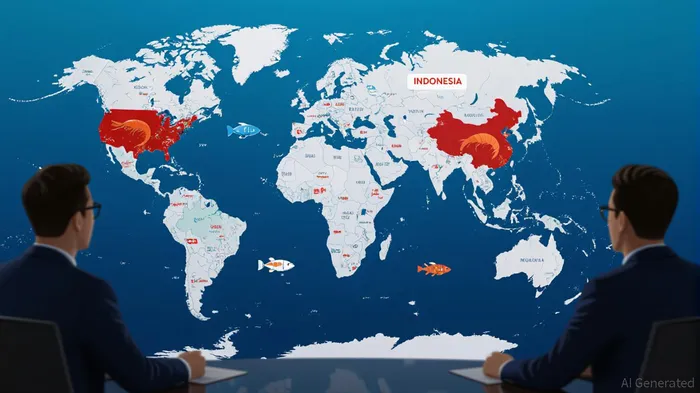
Regulatory bodies have since intensified scrutiny, with the FDA and U.S. Customs and Border Protection (CBP) collaborating to prevent contaminated shipments. However, the recall also amplified concerns about the economic strain on domestic producers, who face competition from lower-priced imports and rising production costs
according to a Forbes analysis. As noted by Forbes, the incident has reignited debates about tariffs and the need for stricter regulations to protect both public health and domestic industries
according to Food Safety News.
Investor Preparedness and Market Trends
The radioactive shrimp recall has accelerated investor interest in food safety stocks, particularly those leveraging artificial intelligence (AI) and advanced traceability systems.
According to a report by Food Safety News, food recalls in Q3 2025 surged by 1.4% compared to Q2, with the volume of affected units rising by 75.8%. This trend has driven demand for companies that prioritize proactive contamination detection and supply chain transparency.
Investors are increasingly favoring firms that integrate AI-driven solutions, such as predictive analytics and real-time monitoring, to mitigate risks. For instance, startups like Clearsense Technologies and Strayos have gained traction by offering cloud-based platforms for contamination prevention and high-accuracy quality inspections
according to Food Safety News. The AI in food safety market is projected to grow at a 30.9% CAGR, reaching $13.7 billion by 2030, as companies adopt technologies to reduce waste, enhance compliance, and improve operational efficiency
according to Food Dive.
Market leaders like WalmartWMT-- have demonstrated resilience post-recall, with
its stock price rising 13% in 2025 despite the incident. This underscores the importance of brand reputation and robust crisis management in maintaining investor confidence. Meanwhile, companies that fail to address supply chain vulnerabilities face reputational and financial risks, as seen in the expanded recalls by Southwind Foods and AquaStar
according to CMD CLabs analysis.
Strategic Implications for Investors
The radioactive shrimp recall serves as a cautionary tale for investors, emphasizing the need to balance cost efficiency with stringent safety protocols. As highlighted by Consumer Reports, the incident has heightened consumer awareness of food safety, with
only 55% of Americans expressing confidence in the U.S. food supply. This shift in consumer sentiment favors companies that prioritize transparency and compliance, particularly those adopting blockchain-based traceability systems to track products from farm to table
according to Food Industry Executive.
Moreover, the incident has prompted regulatory agencies to prioritize large-scale recalls over frequent smaller ones, necessitating stronger risk management strategies. For example, the FDA's emphasis on GS1 Standards for traceability has become a benchmark for supply chain resilience, enabling faster and more targeted recalls
according to Risk and Insurance. Investors should prioritize firms that align with these standards and demonstrate a commitment to innovation, such as those investing in gamma spectroscopy and AOAC-compliant testing protocols to detect rare contaminants like Cs-137
according to Food Safety News.
Conclusion
The 2025 radioactive shrimp recall has redefined the landscape for global seafood supply chains and food safety investments. While the incident exposed critical weaknesses in import oversight, it also catalyzed a shift toward technology-driven solutions and regulatory reforms. For investors, the key takeaway is clear: preparedness in the food safety sector requires a dual focus on cutting-edge innovation and robust compliance frameworks. As the market evolves, companies that embrace AI, traceability, and proactive risk management will be best positioned to navigate the complexities of a globalized food system.

Stay ahead of the market.
Get curated U.S. market news, insights and key dates delivered to your inbox.
AInvest
PRO
AInvest
PRO



Comments
No comments yet