
The Fallout from Marriott's Termination of Sonder Partnership and Its Implications for the Hospitality and Short-Term Rental Sectors


 Aime Summary
A Strategic Shift with Systemic Implications
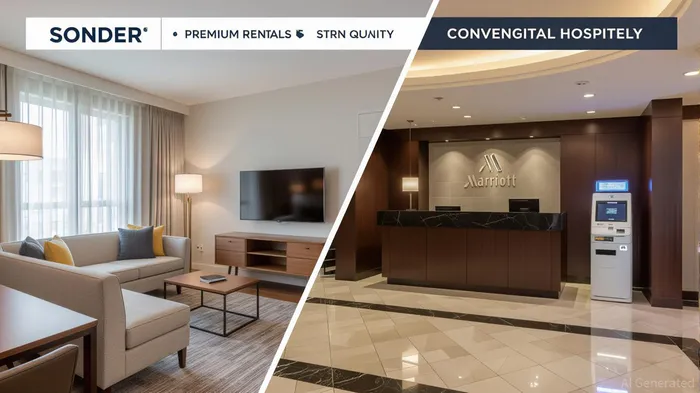
Marriott's termination of its $146 million liquidity-boosting agreement with Sonder has recalibrated its 2025 growth projections. The company now anticipates net rooms growth of 4.5%, down from a prior forecast of nearly 5%, according to a StockTitan update. Sonder's properties, once poised to add over 9,000 units to Marriott's system by 2024, are no longer affiliated with the Bonvoy loyalty program or available for new bookings through Marriott channels, as reported in a TradingView report. This move underscores the fragility of hybrid models that blend traditional hospitality with STR platforms, particularly in an environment where regulatory scrutiny and market saturation are intensifying, as noted in a IGMS analysis.
For Sonder, the fallout is stark. Its valuation has plummeted from $2.2 billion at its 2021 public offering to a mere $6.79 million, according to the same TradingView report, reflecting investor skepticism about its ability to sustain operations without the financial and brand support of a major hotelier. The termination also highlights broader risks for STR companies reliant on partnerships with established players, as defaults or strategic pivots can swiftly erode value.
Post-Pandemic Market Trends: Demand, Supply, and Regulatory Headwinds
The STR sector's post-pandemic trajectory has been shaped by divergent regional trends. While demand for short-term rentals grew by 7.0% year-over-year in 2025, supply expanded only modestly (4.7%), creating a favorable environment for pricing power, according to a Yahoo Finance analysis. Urban markets, which lagged during the pandemic, are now rebounding faster than rural or resort areas, driven by returning business travelers and remote workers seeking city-centric stays, as noted in a StayFi report. However, oversaturation remains a pressing concern in major tourist hubs. For instance, Dallas has seen a surge in Airbnb listings without commensurate demand, leading to lower occupancy rates for hosts, according to a Mashvisor report.
Regulatory changes are further complicating the landscape. Cities like New York and Los Angeles have imposed strict limits on STRs, with New York's Local Law 18 reducing listings by 92% in a single year, as reported in a StockTitan update. While this has improved occupancy rates for compliant hosts, it also signals a shift toward a more regulated, less speculative market. Investors must now weigh the trade-offs between high-growth, unregulated markets and those with tighter controls but healthier competitive dynamics.
Investor Sentiment and Strategic Adjustments
The termination of the Marriott-Sonder partnership has prompted strategic recalibrations across the sector. For Marriott, the move may free up resources to explore alternative urban STR opportunities, such as converting underutilized office buildings into accommodations, as noted in a Truvi blog. Competitors, meanwhile, are closely monitoring how large corporations navigate the STR space, with some likely to accelerate their own hybrid models.
For investors, the fallout presents both risks and opportunities. In oversaturated markets like Dallas, hosts must differentiate through amenities, professional photography, and dynamic pricing to remain competitive, according to the Yahoo Finance analysis. Conversely, undersupplied markets such as Winter Haven, Florida, and Indianapolis offer untapped potential, with demand outpacing supply and allowing for premium pricing, as reported in the Mashvisor report. The rise of AI-driven property management tools and sustainable stays also represents a long-term growth vector, as travelers increasingly prioritize unique, eco-friendly experiences, as noted in the IGMS analysis.
Assessing the Balance Sheet: Risks and Resilience
While the Sonder-Marrriott split underscores the volatility of STR partnerships, it also highlights the sector's adaptability. Marriott's revised growth projections, though modest, reflect a more cautious approach to expansion in an uncertain economic climate. For Sonder, the challenge will be to restructure its operations and regain investor confidence-a task complicated by its dwindling liquidity and regulatory hurdles in key markets, according to a PR Newswire release.
Investors should focus on three key areas:
1. Location-Specific Opportunities: Prioritize markets with undersupplied demand, such as mid-sized cities and rural destinations, where STRs can command higher occupancy and pricing.
2. Technology Integration: Support platforms leveraging AI for dynamic pricing, guest personalization, and operational efficiency, which can mitigate risks in oversaturated markets.
3. Regulatory Agility: Favor companies that proactively adapt to evolving regulations, ensuring compliance while maintaining competitive pricing.
Conclusion
The termination of Marriott's partnership with Sonder is a cautionary tale of financial fragility in the STR sector, but it also illuminates pathways for innovation and resilience. As the post-pandemic market continues to evolve, investors who balance strategic foresight with agility-targeting undersupplied markets, embracing technology, and navigating regulatory shifts-will be best positioned to capitalize on the sector's long-term potential.

Delivering real-time insights and analysis on emerging financial trends and market movements.
Latest Articles
Stay ahead of the market.
Get curated U.S. market news, insights and key dates delivered to your inbox.
AInvest
PRO
AInvest
PRO



Comments
No comments yet