
The Fall of Value City Furniture: A Cautionary Tale for Retail Investors


 Aime Summary
The Unraveling of Value City Furniture
according to reports. The decision to liquidate dozens of stores across states like North Carolina, Tennessee, and Florida reflects a desperate attempt to streamline operations and focus on "long-term growth priorities," as stated by COO . However, this strategy appears reactive rather than proactive. according to research.
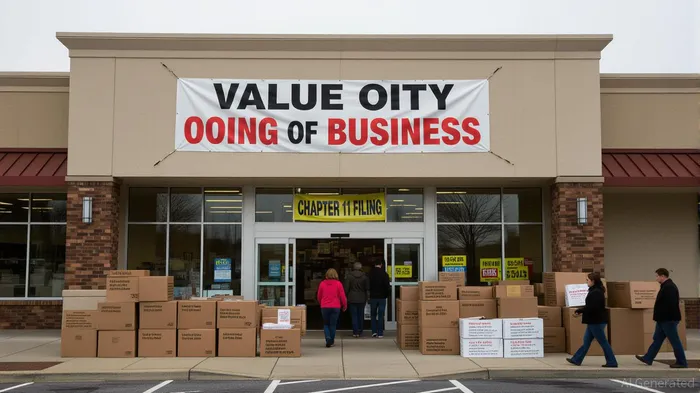
The timing of Value City's collapse aligns with broader retail sector challenges. For instance, the U.S. , driven by inflation and economic uncertainty. Gen Z, in particular, , signaling a generational shift in purchasing behavior according to analysis. Value City's failure to adapt to these trends-such as by enhancing online shopping experiences or integrating embedded financial services-left it vulnerable to competitors who embraced digital transformation.
Retail Sector Resilience: Lessons from the Survivors
In contrast to Value City's struggles, companies like Kingbull, an electric bicycle manufacturer, exemplify resilience through strategic adaptation. Kingbull's expansion into the U.S. market in 2025 was accompanied by investments in after-sales support and product accessibility, directly addressing consumer demand for e-mobility solutions. This approach mirrors successful retail strategies that prioritize customer retention through seamless service and value-added offerings.
Similarly, the Canadian market's growth-driven by fintech partnerships-demonstrates how integrating financial tools into retail platforms can enhance operational efficiency and customer loyalty according to industry reports. For instance, SMEs leveraging embedded invoicing and payroll software have seen improved cash flow management, a critical factor in avoiding insolvency. Value City's absence of such innovations likely exacerbated its financial strain, as it failed to offer flexible payment options or loyalty programs that could have retained price-sensitive shoppers.
Common Bankruptcy Signals in the Retail Sector
Value City's case is not an outlier. The 2025 retail bankruptcy landscape is littered with well-known names, including Forever 21, Party City, and Rite Aid according to analysis. These failures share common signals: high debt loads, inability to compete with e-commerce giants, and outdated operational models. For example, , attributed to legacy builds and tariff costs. While ECD is diversifying its product line and cutting costs, its mixed financial performance underscores the difficulty of pivoting in a volatile market.
The key distinction between ECD and Value City lies in their strategic responses. ECD's cost-containment plan and product diversification-such as collaborations on modern Defender builds-aim to stabilize its financial position according to financial reports. In contrast, Value City's reliance on liquidation sales and store closures suggests a lack of long-term vision, leaving it exposed to further erosion of brand value.
Implications for Retail Investors
For investors, Value City's collapse serves as a stark reminder of the importance of due diligence in assessing retail sector risks. Key indicators to monitor include:
1. Debt-to-Equity Ratios: High leverage, as seen in Value City's $500 million liabilities, signals vulnerability during economic downturns according to reports.
2. Digital Adaptation: Companies failing to integrate e-commerce or embedded finance tools risk losing relevance to agile competitors according to industry analysis and according to financial reports.
3. Consumer Sentiment Shifts: Retailers must align with evolving priorities, such as affordability and sustainability, to retain market share according to market research.
Investors should also consider the broader macroeconomic context. The U.S. , compared to 7–9% for e-commerce according to forecasts, highlights the accelerating shift toward digital channels. Brands that fail to invest in omnichannel strategies-like Value City-will likely face similar fates.
Conclusion
Value City Furniture's bankruptcy is a microcosm of the retail sector's 2025 challenges. While economic headwinds and consumer behavior shifts are universal, the company's inability to innovate and adapt made it a prime candidate for collapse. In contrast, firms like Kingbull and ECD demonstrate that resilience is achievable through strategic reinvention, cost discipline, and customer-centric innovation. For investors, the lesson is clear: in an era of rapid change, survival hinges not on legacy models but on the agility to embrace new paradigms.

Delivering real-time insights and analysis on emerging financial trends and market movements.
Latest Articles
Stay ahead of the market.
Get curated U.S. market news, insights and key dates delivered to your inbox.


AInvest
PRO
AInvest
PRO



Comments
No comments yet