
The Fall of K&W Cafeterias: A Case Study in Retail Resilience and Risk
 Aime Summary
Retail Sector Vulnerabilities in the Post-Pandemic Era
The retail sector in 2025 remains under siege from a cocktail of macroeconomic and structural risks. High interest rates, persistent inflation, and weak consumer sentiment have constrained discretionary spending, while operational costs have surged to unsustainable levels. According to a report by Coface, non-food retail EBITDA margins have contracted , reflecting margin pressures driven by rising overhead and structural shifts in consumer behavior. Meanwhile, the sector faces a deluge of store closures, , driven by private equity-driven liquidations and the relentless rise of e-commerce.
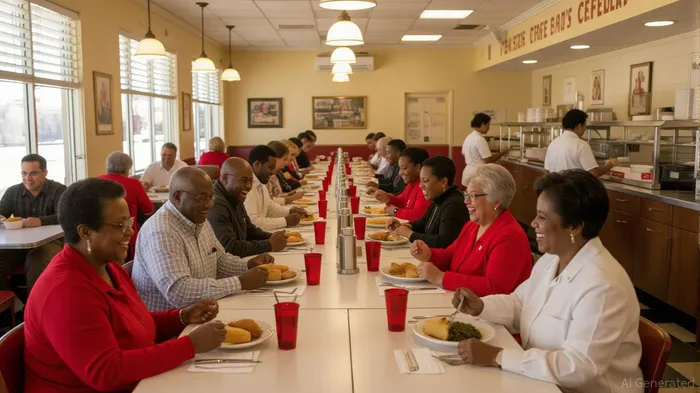
K&W Cafeterias' closure aligns with these broader trends. The chain, which filed for Chapter 11 bankruptcy in 2020, struggled to adapt to the pandemic's accelerated shift toward digital convenience and value-driven consumption. Its reliance on older demographics-whose spending habits were disproportionately disrupted by health and safety concerns-left it exposed to . As one analyst noted, "The pandemic acted as a catalyst, but the underlying issues-aging customer bases, inflexible business models, and rising costs-had been festering for years" according to financial experts.
ERM Failures and Financial Risk Mismanagement
The collapse of K&W Cafeterias underscores the critical role of Enterprise Risk Management (ERM) in navigating retail sector volatility. Despite its long history, the chain appears to have lacked a mature ERM framework capable of addressing the interconnected risks of demographic shifts, supply chain disruptions, and financial leverage. A 2025 report on risk oversight revealed , yet only 32% rated their ERM processes as "mature" or "robust." For K&W, this gap proved fatal.
Financial metrics further illuminate the chain's vulnerabilities. Post-bankruptcy filings revealed unsustainable debt levels and a failure to restructure effectively, compounded by the high fixed costs of its cafeteria model. Unlike discount retailers or essential goods providers-sub-sectors that have shown resilience in 2025 due to their alignment with affordability-driven consumer behavior-K&W's value proposition became increasingly misaligned with market realities according to .
Implications for Investors
For investors in brick-and-mortar and consumer discretionary assets, K&W's story serves as a cautionary tale. Traditional financial risk metrics, such as beta and idiosyncratic risk, remain relevant, but they must be supplemented with dynamic ERM frameworks that account for non-traditional risks like AI-driven disruptions, cybersecurity threats, and geopolitical volatility according to . The integration of real-time data analytics and scenario planning is no longer optional but essential for identifying early warning signs of distress.
Moreover, the rise of e-commerce and the second-hand market has fragmented retail's value chain, forcing investors to reassess the viability of physical footprints. As noted in a Deloitte analysis, "The survival of retail brands now hinges on their ability to blend omnichannel strategies with hyper-personalization, while managing the capital-intensive demands of brick-and-mortar operations" according to .
Conclusion
The fall of K&W Cafeterias is not an isolated event but a microcosm of the retail sector's broader struggles. It highlights the perils of clinging to legacy models in an era defined by digital disruption, economic uncertainty, and shifting consumer priorities. For investors, the lesson is clear: resilience in retail requires more than financial discipline-it demands a proactive, adaptive approach to risk management that anticipates, rather than reacts to, the forces reshaping the industry.

Delivering real-time insights and analysis on emerging financial trends and market movements.
Latest Articles
Stay ahead of the market.
Get curated U.S. market news, insights and key dates delivered to your inbox.






Comments
No comments yet