
The Fall of American Signature: A Cautionary Tale for Retail Investors


 Aime Summary
Store Closures and Liquidity Pressures: A Perfect Storm
American Signature's recent store closures-spanning Tennessee, Michigan, and potentially Florida-highlight a company struggling to adapt to a rapidly changing market. According to a report by , the chain has quietly shuttered locations in Novi, Ann Arbor, and Lansing, Michigan, while liquidation sales offering up to 50% discounts on items like wall art and lamps signal a desperate attempt to offload inventory. These closures, initially framed as a strategic "optimization" of its store portfolio, have instead expanded beyond the company's publicized plans, raising questions about its ability to manage its physical footprint.
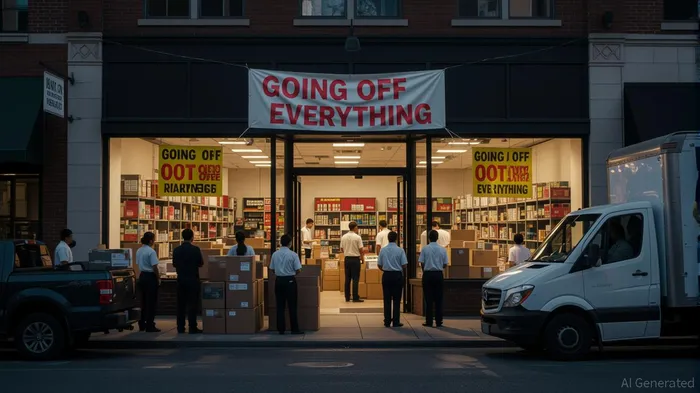 The lack of transparency compounds the problem. Despite widespread employee confirmations of permanent closures, American Signature has remained silent on the matter, declining to respond to inquiries from local media and trade outlets. This opacity is a red flag for investors, as it suggests a lack of control over operations and a potential inability to communicate effectively with stakeholders.
Financial Metrics: A Credit Profile in Freefall
While detailed Q3 2025 debt figures remain undisclosed, the company's credit risk profile tells a troubling story. Data from Martini.ai indicates , . This volatility reflects the broader challenges of a business model reliant on brick-and-mortar sales in an era where e-commerce giants like Ashley Furniture and IKEA dominate.
The company's credit rating, currently B2, has seen only marginal improvements despite strategic moves such as exiting the Nashville market to focus on "stronger regions". While a 2024 upgrade to B2 offered temporary optimism, the recent spike in default probability suggests that these measures have failed to address underlying liquidity issues. The absence of leverage ratios like debt-to-equity further obscures the true extent of its financial strain, leaving investors in the dark about its capacity to service obligations.
Lessons for Retail Investors: Liquidity as a Lifeline
American Signature's plight offers critical lessons for investors. First, liquidity is not just a financial metric-it is a lifeline. The company's reliance on physical stores, coupled with its inability to pivot quickly to digital channels, has left it vulnerable to cash flow crunches. Second, should be monitored closely. A rising default probability, even in the absence of immediate insolvency, signals deteriorating confidence from creditors and analysts.
For the retail sector as a whole, American Signature's struggles are a harbinger. As inflation, , and shifting consumer preferences continue to disrupt traditional models, companies that fail to innovate or consolidate risk becoming cautionary tales. Investors must prioritize firms with agile supply chains, robust online presence, and transparent governance-qualities American Signature appears to lack.
Conclusion: A Cautionary Tale
The unraveling of American Signature Furniture is not an isolated incident but a symptom of deeper systemic issues in retail. Its store closures, liquidity pressures, and opaque communication serve as a warning: in an era of rapid digital transformation, even established brands can falter if they fail to adapt. For investors, the takeaway is clear-liquidity is king, and the ability to navigate macroeconomic headwinds is non-negotiable.

Delivering real-time insights and analysis on emerging financial trends and market movements.
Latest Articles
Stay ahead of the market.
Get curated U.S. market news, insights and key dates delivered to your inbox.


AInvest
PRO
AInvest
PRO



Comments
No comments yet