
Falcon 9 Rocket Launches X-37B Spaceplane to Demonstrate Laser Communications and Quantum Navigation
ByAinvest
Saturday, Aug 23, 2025 4:43 pm ET2min read
BA--
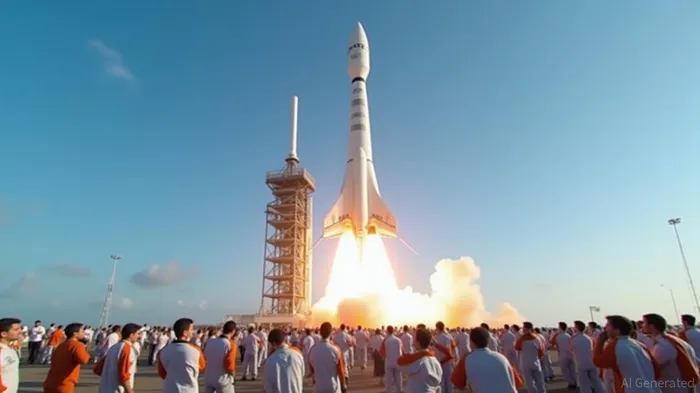
The launch occurred from Pad 39A at NASA's Kennedy Space Center (KSC) in Florida, with the Falcon 9 rocket carrying the Boeing-built X-37B spaceplane. The mission, designated as Orbital Test Vehicle 8 (OTV-8), is the eighth flight for the X-37B and the sixth flight for the Falcon 9 booster (B1092), which previously launched various missions such as NROL-69, CRS-32, GPS III-7, and Starlink groups 12-13 and 10-34. The booster is expected to return to the Space Coast for recovery at SpaceX's Landing Zone-2, located at Cape Canaveral Space Force Station.
The primary objectives of OTV-8 include testing a laser communications system and a quantum inertial sensor. The laser communications system is designed to support heavier data loads and tougher security safeguards compared to traditional radio communications. The quantum inertial sensor aims to measure the inertia of nearby atoms to help inform the space plane's navigational position on orbit, without reliance on existing satellite infrastructure.
This mission is part of the USSF's ongoing effort to modernize space-based defense systems and aligns with the broader U.S. strategy to reduce reliance on foreign supply chains. The USSF's Golden Dome initiative, which aims to modernize space-based defense systems, is a key focus area for the mission.
Rocket Lab, a key player in the U.S. space supply chain, has also been making significant strides in semiconductor innovation and national security technologies. Recently, Rocket Lab secured $23.9 million under the CHIPS Act to scale U.S. production of radiation-hardened semiconductors for national security missions. The company's acquisition of Geost, an electro-optical payload provider, further enhances its infrared sensor capabilities, aligning with Trump-era goals to reduce foreign supply chain reliance [2].
As the space industry continues to evolve, investments in advanced technologies like those demonstrated by the X-37B mission are critical for maintaining U.S. technological dominance and national security. The strategic alignment of companies like SpaceX and Rocket Lab with national security priorities, coupled with their financial and operational progress, positions them as high-growth opportunities in the aerospace and defense sectors.
References:
[1] https://www.space.com/space-exploration/launches-spacecraft/watch-spacex-launch-us-space-forces-classified-x-37b-space-plane-august-21
[2] https://www.ainvest.com/news/rocket-lab-strategic-expansion-semiconductor-manufacturing-national-security-tech-cornerstone-space-supply-chain-security-high-growth-potential-2508/
[3] https://spaceflightnow.com/2025/08/20/live-coverage-spacex-to-launch-x-37b-military-spaceplane-on-falcon-9-rocket-from-the-kennedy-space-center/
SpaceX launched a Falcon 9 rocket carrying the X-37B spaceplane on the USSF-36 mission, marking the eighth mission for the program. The launch was part of the National Security Space Launch Phase 2 contract, managed by the U.S. Space Force's Space Systems Command. The mission aims to demonstrate laser communications and quantum navigation capabilities for the Space Force.
In a significant milestone for the U.S. Space Force (USSF), SpaceX successfully launched the X-37B spaceplane on the USSF-36 mission, marking the eighth mission for the program. The launch, which took place on Thursday, Aug. 21, at 11:50 p.m. EDT (0350 GMT, Aug. 22), was part of the National Security Space Launch Phase 2 contract, managed by the USSF's Space Systems Command. The mission aims to demonstrate advanced technologies, including laser communications and quantum navigation capabilities, crucial for national security.The launch occurred from Pad 39A at NASA's Kennedy Space Center (KSC) in Florida, with the Falcon 9 rocket carrying the Boeing-built X-37B spaceplane. The mission, designated as Orbital Test Vehicle 8 (OTV-8), is the eighth flight for the X-37B and the sixth flight for the Falcon 9 booster (B1092), which previously launched various missions such as NROL-69, CRS-32, GPS III-7, and Starlink groups 12-13 and 10-34. The booster is expected to return to the Space Coast for recovery at SpaceX's Landing Zone-2, located at Cape Canaveral Space Force Station.
The primary objectives of OTV-8 include testing a laser communications system and a quantum inertial sensor. The laser communications system is designed to support heavier data loads and tougher security safeguards compared to traditional radio communications. The quantum inertial sensor aims to measure the inertia of nearby atoms to help inform the space plane's navigational position on orbit, without reliance on existing satellite infrastructure.
This mission is part of the USSF's ongoing effort to modernize space-based defense systems and aligns with the broader U.S. strategy to reduce reliance on foreign supply chains. The USSF's Golden Dome initiative, which aims to modernize space-based defense systems, is a key focus area for the mission.
Rocket Lab, a key player in the U.S. space supply chain, has also been making significant strides in semiconductor innovation and national security technologies. Recently, Rocket Lab secured $23.9 million under the CHIPS Act to scale U.S. production of radiation-hardened semiconductors for national security missions. The company's acquisition of Geost, an electro-optical payload provider, further enhances its infrared sensor capabilities, aligning with Trump-era goals to reduce foreign supply chain reliance [2].
As the space industry continues to evolve, investments in advanced technologies like those demonstrated by the X-37B mission are critical for maintaining U.S. technological dominance and national security. The strategic alignment of companies like SpaceX and Rocket Lab with national security priorities, coupled with their financial and operational progress, positions them as high-growth opportunities in the aerospace and defense sectors.
References:
[1] https://www.space.com/space-exploration/launches-spacecraft/watch-spacex-launch-us-space-forces-classified-x-37b-space-plane-august-21
[2] https://www.ainvest.com/news/rocket-lab-strategic-expansion-semiconductor-manufacturing-national-security-tech-cornerstone-space-supply-chain-security-high-growth-potential-2508/
[3] https://spaceflightnow.com/2025/08/20/live-coverage-spacex-to-launch-x-37b-military-spaceplane-on-falcon-9-rocket-from-the-kennedy-space-center/
Stay ahead of the market.
Get curated U.S. market news, insights and key dates delivered to your inbox.
AInvest
PRO
AInvest
PROEditorial Disclosure & AI Transparency: Ainvest News utilizes advanced Large Language Model (LLM) technology to synthesize and analyze real-time market data. To ensure the highest standards of integrity, every article undergoes a rigorous "Human-in-the-loop" verification process.
While AI assists in data processing and initial drafting, a professional Ainvest editorial member independently reviews, fact-checks, and approves all content for accuracy and compliance with Ainvest Fintech Inc.’s editorial standards. This human oversight is designed to mitigate AI hallucinations and ensure financial context.
Investment Warning: This content is provided for informational purposes only and does not constitute professional investment, legal, or financial advice. Markets involve inherent risks. Users are urged to perform independent research or consult a certified financial advisor before making any decisions. Ainvest Fintech Inc. disclaims all liability for actions taken based on this information. Found an error?Report an Issue




Comments
No comments yet