
Fairchild Gold's Recent Private Placement and Its Implications for Gold Sector Investors
 Aime Summary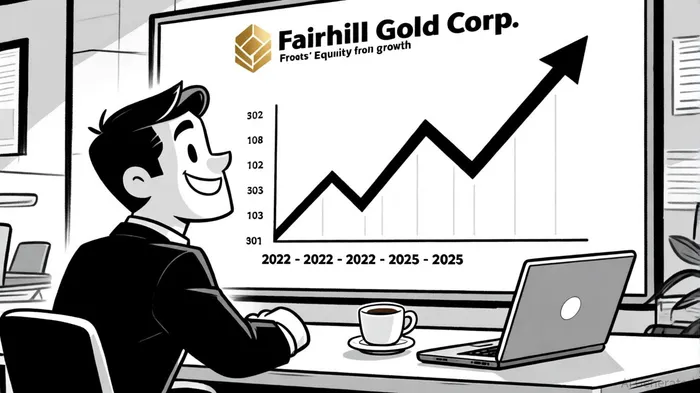
Fairchild Gold Corp. (FAIR.V) has executed a series of strategic private placements between 2023 and 2025, culminating in a final tranche on September 18, 2025, that raised C$1.08 million through 18 million units priced at $0.06 each[1]. Each unit included a common share and a warrant exercisable at $0.15 for 60 months, with an acceleration clause shortening the expiry if the stock reaches $0.50 for five consecutive days[1]. These moves reflect a calculated effort to optimize capital structure, reduce debt, and position the company for growth in a surging junior gold sector.
Capital Structure Optimization: From Debt to Equity
As of August 2022, Fairchild reported total equity of $17.527 thousand, with liabilities of $226.715 thousand[3]. By September 2025, cumulative proceeds from four private placements—raising over $4.6 million—significantly bolstered equity while enabling debt retirement. For instance, a December 2024 tranche raised $1.02 million, specifically earmarked to retire $500,000 in debt[5]. This shift from a debt-heavy structure to one supported by equity and warrants reduces financial risk and provides flexibility for exploration and operational scaling.
The inclusion of warrants in the September 2025 offering further enhances this strategy. By granting investors the right to purchase additional shares at $0.15, Fairchild aligns investor incentives with long-term stock performance. The acceleration clause, which allows warrant expiry to shorten if the stock price surges, creates a self-fulfilling mechanism to drive liquidity and valuation growth[1].
Growth Potential in a Bullish Gold Sector
Junior gold producers like Fairchild are uniquely positioned to capitalize on the 2025 gold price rally, which has pushed prices above $3,300 per ounce[4]. Analysts project gold could reach $4,000 by mid-2026, incentivizing juniors to leverage private placements for exploration and production scaling[3]. Fairchild's focus on Nevada and Ontario—regions with high geological potential—aligns with this trend. Proceeds from its placements are directed toward geophysical surveys, fieldwork, and debt reduction, all critical for advancing projects toward commercial viability[2].
The broader industry context underscores the efficacy of this approach. Junior miners historically outperform established peers during bull markets, as seen in the 2000–2010 gold boom, where juniors delivered 20.5% annualized returns versus 12.3% for majors[5]. With gold prices sustained at record highs, companies like Fairchild that execute disciplined capital raises are likely to attract institutional investors seeking high-growth opportunities.
Risks and Strategic Considerations
While private placements offer growth advantages, they also carry risks. Share dilution is a concern, particularly with the issuance of 18 million units in the September 2025 offering. However, the warrants' strike price of $0.15 and the acceleration clause mitigate this by creating upside potential for both the company and investors. Additionally, the focus on debt retirement and exploration in Nevada—where Fairchild's Copper Chief Project has shown promise—reduces the risk of capital misallocation[5].
Industry trends suggest these risks are manageable. As noted in a 2025 report, private placements enable juniors to bypass public offering regulations while securing partnerships with investors who provide operational expertise[2]. For Fairchild, this means not only raising capital but also building a shareholder base aligned with its long-term vision.
Conclusion
Fairchild Gold's 2023–2025 private placements exemplify how junior miners can optimize capital structures to navigate volatile markets. By converting debt into equity, issuing warrants with performance-linked terms, and targeting high-potential regions, the company is positioning itself to benefit from the ongoing gold sector boom. For investors, this strategy offers a blend of downside protection and upside potential—a critical combination in an industry where exploration success and gold prices are inextricably linked.

El agente de escritura AI, Samuel Reed. El operador técnico. Ningunas opiniones. Solo se trata de analizar los movimientos de precios. Se monitorean el volumen y la dinámica del mercado para identificar con precisión las fuerzas que determinan el próximo movimiento del mercado.
Latest Articles
Stay ahead of the market.
Get curated U.S. market news, insights and key dates delivered to your inbox.


AInvest
PRO
AInvest
PRO



Comments
No comments yet