
FAIR Act Reintroduced to Protect Bitcoin Holders from Government Seizures
The Fifth Amendment Integrity Restoration Act of 2023, commonly known as the FAIR Act, has been reintroduced in Congress with the aim of protecting Bitcoin holders from potential government overreach. This legislation is particularly relevant given the U.S. Government's stated intention to use civil asset forfeiture as a key strategy in building its Strategic Bitcoin Reserve. Without the FAIR Act, many individuals could face the seizure and forfeiture of their Bitcoin holdings with little to no legal recourse.
Civil asset forfeiture has long been a contentious issue, with critics arguing that it allows law enforcement agencies to seize citizens' assets without due process. This practice has been used to enrich law enforcement agencies, leading to numerous instances of abuse. For example, police have seized a Vietnam veteran’s van for serving as a “container” for marijuana, or attempted to appropriate a man’s life savings over a seat belt violation. The American Civil Liberties Union (ACLU) has highlighted that civil asset forfeiture creates a financial incentive for law enforcement to seize property without due process, a concern that is exacerbated when applied to Bitcoin due to its scarcity and value appreciation over time.
The FAIR Act seeks to address these issues by revising federal laws governing civil asset forfeiture to ensure that proceedings follow due process as mandated by the Fifth Amendment. One of the key changes proposed by the FAIR Act is raising the evidentiary standard from “preponderance” of evidence to “clear and convincing evidence.” This increase in the burden of proof requires the government to provide stronger evidence to enforce a forfeiture. Additionally, the Act mandates that enforcing agencies establish a substantial connection between the property and the offense, as well as demonstrate that the owner of the seized property used it with intent to facilitate the offense or was willfully blind to its use in connection with the offense. This is particularly important for Bitcoin, as it prevents the government from seizing legally acquired Bitcoin based on its past use in illegal activities, such as sanctions evasion or darknet markets, without the owner's knowledge.
The FAIR Act also addresses the issue of legal representation for property owners who are financially unable to obtain it. The Act requires the government to appoint a counsel to such individuals, ensuring that they have the necessary legal support to contest the forfeiture of their assets. This provision is crucial as it reverses the burden of proof, requiring the government to make a case against the property owner rather than the owner having to prove their innocence.
Senators Cory Booker and Rand Paul, who introduced the Bill, have emphasized the importance of the FAIR Act in protecting citizens' property rights. Booker stated that civil asset forfeiture allows federal law enforcement to seize property without charging or convicting individuals of a crime, often leading to law enforcement's profit. Paul added that the government should never have the power to seize property without due process, and the FAIR Act is a critical step toward restoring fairness and accountability.
For those advocating for the establishment of the Strategic Bitcoin Reserve, the passing of the FAIR Act is essential. It ensures that the government's Bitcoin stack is not built on the abuse of its powers, providing a necessary safeguard for Bitcoin holders and promoting a fairer legal framework for civil asset forfeiture. 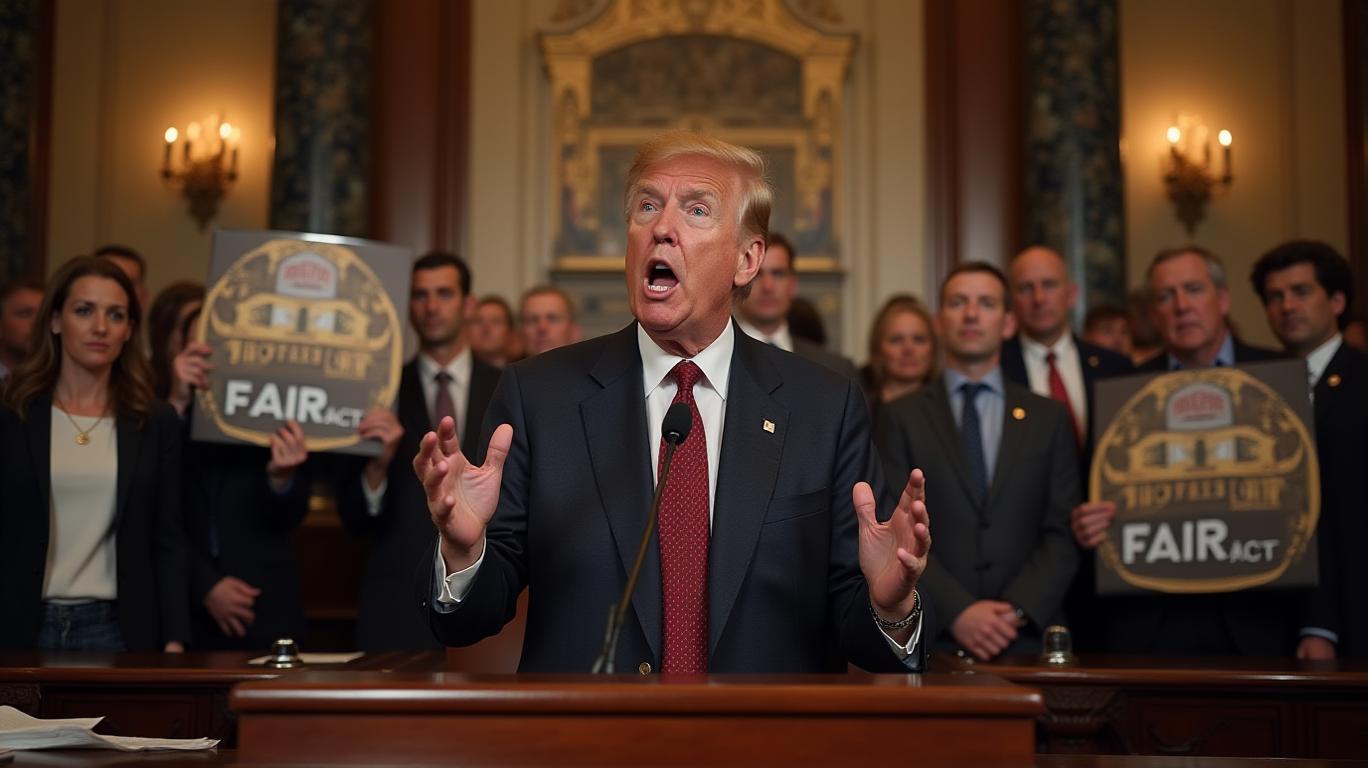

Stay ahead of the market.
Get curated U.S. market news, insights and key dates delivered to your inbox.






Comments
No comments yet