
U.S. Factory Orders Ex Transportation Drop 0.2% in January 2026: A Strategic Shift to Energy Equipment as Manufacturing Weakness Lingers
 Aime Summary
The U.S. manufacturing sector is facing renewed headwinds. In January 2026, new orders for manufactured durable goods excluding transportation fell by 0.2%, marking a softening in demand for key industrial goods. This decline, while modest, underscores a broader trend of fragility in the manufacturing complex, driven by persistent trade policy uncertainty, elevated tariffs, and the lingering effects of the 43-day federal government shutdown in late 2025. Against this backdrop, investors are increasingly turning their attention to sector rotation strategies, seeking to hedge against cyclical downturns in manufacturing by reallocating capital to energy equipment and services—a sector that has historically demonstrated resilience during industrial slowdowns.
The Manufacturing Malaise: A Structural Shift
The January 2026 data reflects a continuation of the challenges that have plagued the manufacturing sector since mid-2025. While non-transportation durable goods orders had shown a modest upward trend in late 2025, the 0.2% drop in January signals a potential inflection point. This decline follows a 2.2% contraction in October 2025, driven by a sharp 6.5% slump in transportation equipment orders. The broader manufacturing PMI, which had already hit a 14-month low in December 2025, further reinforces the sector's vulnerability.
The root causes of this weakness are multifaceted. The Trump administration's aggressive tariff policies, which have raised manufacturing costs and disrupted supply chains, remain a key drag. Additionally, the sector is grappling with the fallout from the AI-driven “power crunch,” as data center investments strain energy infrastructure. While these factors have spurred demand for energy solutions, they have also exacerbated manufacturing costs, squeezing margins in capital-intensive industries like automotive and machinery.
Energy Equipment: A Defensive Play in a Weak Cycle
Amid this turmoil, the energy equipment and services sector has emerged as a compelling alternative. Historical backtests from 2008 to 2025 reveal a consistent pattern: during manufacturing downturns, energy equipment ETFs outperform automotive and manufacturing indices. For example, in 2025, the Vanguard Energy ETF (VDE), Fidelity MSCI Energy Index ETF (FENY), and State Street Energy Select Sector SPDR ETF (XLE) gained 4.1%, 4.2%, and 4.8% year-to-date, respectively, outpacing the broader market. This outperformance is driven by structural demand for energy infrastructure, particularly in the context of the AI revolution and the global energy transition.
Key players in the sector, such as Schlumberger (SLB) and Baker HughesBKR-- (BKR), have further solidified their appeal. Schlumberger, trading at a 25% discount to intrinsic value, secured a five-year contract with Aramco for unconventional gas production, signaling long-term demand stability. Similarly, Baker Hughes, undervalued by 5%, delivered an 11% total return over the past 12 months. These firms benefit from recurring revenue models and inelastic demand, making them less susceptible to cyclical downturns than their manufacturing counterparts.
Automotive Exposure: A High-Risk Bet
In contrast, the automotive sector remains a high-risk proposition. Deloitte's 2026 Manufacturing Industry Outlook highlights that U.S. manufacturers, including automotive firms, faced a challenging 2025, with the ISM manufacturing PMI remaining below 50 for much of the year. The sector's reliance on global supply chains and exposure to trade policy shifts—exemplified by the Trump administration's tariffs—make it particularly vulnerable. For instance, 75% of manufacturers cited trade uncertainty as their top concern in 2025, and 32% of automotive firms planned to pass all tariff-related costs to consumers, eroding profit margins.
Moreover, the automotive industry's capital-intensive nature amplifies its sensitivity to interest rate fluctuations and economic volatility. While the One Big Beautiful Bill Act and revised trade deals with the UK and Vietnam offer potential catalysts for 2026, these gains are contingent on a fragile macroeconomic environment. In contrast to energy equipment's structural demand, automotive firms face a more uncertain outlook, with Deloitte projecting a prolonged period of margin compression and investment caution.
Strategic Allocation: Energy as a Hedge
The case for rotating into energy equipment and services is further strengthened by valuation metrics. As of January 2026, energy equipment firms trade at significant discounts to intrinsic value, offering asymmetric upside potential. For example, Schlumberger's 25% discount and Baker Hughes' 5% discount suggest undervaluation relative to their long-term earnings power. Additionally, government incentives for clean energy infrastructure—such as $386 billion in offshore wind and solar investments in 2025—provide a tailwind for the sector.
Investors seeking to hedge against manufacturing weakness should consider overweighting energy ETFs like VDE and XLE, which offer diversified exposure to the sector's key players. For those with a higher risk tolerance, individual stocks like SLB and BKRBKR-- present compelling opportunities, given their strong balance sheets and long-term contractual stability.
Conclusion: A Sector Rotation Play for 2026
The 0.2% drop in U.S. factory orders excluding transportation in January 2026 is a clear signal of ongoing manufacturing fragility. While the sector's challenges are well-documented, the energy equipment and services industry offers a compelling counterbalance. Historical performance, structural demand, and favorable valuations make this sector a strategic hedge against cyclical downturns. As the energy transition accelerates and AI-driven demand for power infrastructure grows, investors who reallocate capital to energy-related equities may find themselves well-positioned to navigate the uncertainties of 2026.
In a world where manufacturing weakness lingers, energy equipment is not just a defensive play—it's a forward-looking bet on the industries that will power the next decade.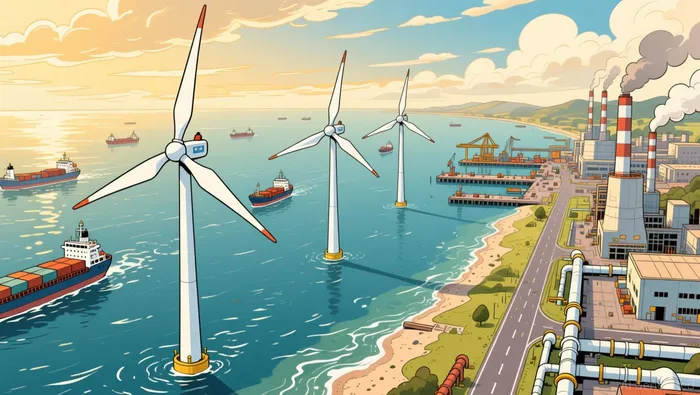

Stay ahead of the market.
Get curated U.S. market news, insights and key dates delivered to your inbox.
AInvest
PRO
AInvest
PRO



Comments
No comments yet