
Fabric Protocol Launches ROBO Token to Enable Robot Economy Coordination
 Aime Summary
- Fabric Protocol (ROBO) officially launched, introducing $ROBO as a core asset in the Robot Economy according to the guide.
- The protocol leverages blockchain to address challenges like winner-takes-all risk and lack of open infrastructure in AI and robotics as described.
- ROBO serves as a governance and utility token, offering real-world use cases such as robot identity verification and work bond staking according to the article.
The Fabric Protocol, a decentralized platform integrating AI and blockchain, has launched the ROBO token to coordinate and govern general-purpose robots. ROBO is designed to serve as a governance, utility, and settlement token in a decentralized ecosystem focused on robot coordination as detailed. This launch represents a foundational step in enabling secure, transparent interactions in the Robot Economy according to the report.
ROBO operates differently from traditional proof-of-stake models, as rewards are earned through verified work rather than passive token holding. 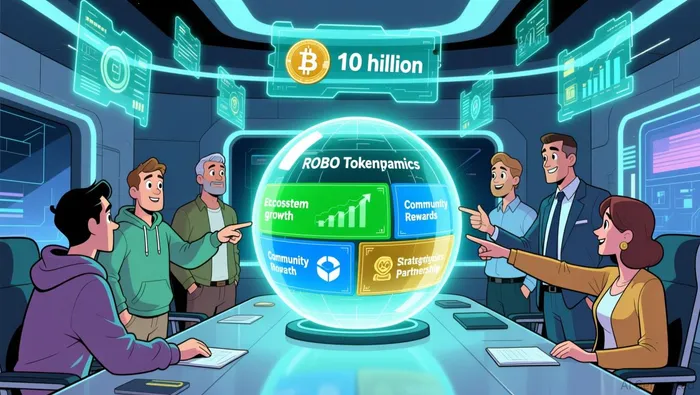 The tokenomics feature a total supply of 10 billion tokens, with a significant portion allocated to the ecosystem and community as outlined. ROBO is currently available for trading on platforms like MEXC and WEEX according to the guide.
What are the key features of Fabric Protocol and ROBO token?
Fabric Protocol aims to solve critical issues in the AI and robotics space, including winner-takes-all risk, lack of on-chain identity systems for robots, and the absence of open governance infrastructure according to the article. ROBO functions as the primary settlement currency and governance token within the ecosystem, enabling secure and transparent coordination of decentralized robotics as described. The token also serves as a work bond, ensuring accountability and trust in the system according to the report.
Why is the launch of Fabric Protocol significant for the Robot Economy?
The launch of Fabric Protocol marks a pivotal moment in the development of decentralized robotics infrastructure. By leveraging blockchain technology, the protocol creates a framework for secure and transparent robot coordination, reducing reliance on centralized entities according to the guide. The introduction of ROBO token enables a new economic model where robot interactions are governed by decentralized principles, fostering innovation and trust in the Robot Economy as detailed.
The potential for ROBO to enable widespread adoption of decentralized robotics infrastructure is significant. As the protocol expands, it could facilitate use cases such as automated manufacturing, intelligent supply chains, and personal AI assistants according to the report. The decentralized governance model allows stakeholders to participate in decision-making, ensuring the ecosystem remains open and accessible as outlined.
What are the risks or limitations associated with Fabric Protocol and ROBO token?
Despite its innovative approach, Fabric Protocol and ROBO face several risks and challenges. The regulatory landscape for AI and blockchain-based systems remains uncertain, which could impact the adoption of decentralized robotics infrastructure according to the article. Additionally, the success of the protocol depends on widespread participation and adoption, which may require significant time and effort as detailed.
Another limitation is the complexity of integrating AI and blockchain technologies in a scalable manner. While the protocol offers a framework for secure interactions, real-world implementation may encounter technical and operational challenges according to the guide. Furthermore, the long-term sustainability of the tokenomics model, including the distribution of rewards and governance rights, will be a critical factor in the ecosystem's success as outlined.
The launch of the Fabric Protocol and the ROBO token represents a significant step forward in the development of a decentralized Robot Economy. By addressing key challenges in the AI and robotics space, the protocol has the potential to transform how robots are coordinated, governed, and integrated into global infrastructure according to the report. As the ecosystem evolves, it will be important to monitor developments in regulation, technology, and market adoption to assess the long-term impact of this initiative as detailed.

Blending traditional trading wisdom with cutting-edge cryptocurrency insights.
Latest Articles
Stay ahead of the market.
Get curated U.S. market news, insights and key dates delivered to your inbox.


AInvest
PRO
AInvest
PRO



Comments
No comments yet