
FAA to Restrict Business Aviation at 12 Major U.S. Airports Amid Government Shutdown
 Aime Summary
The is set to impose restrictions on business aviation at 12 major U.S. airports in response to staffing shortages at air traffic control facilities caused by the ongoing government shutdown. These restrictions are intended to reduce pressure on air traffic controllers, many of whom have not been paid for weeks and are experiencing increased stress and fatigue. The National Business Aviation Association confirmed that the FAA’s plan effectively halts business aviation operations at the affected airports, including Atlanta, Dallas-Fort Worth, Denver, and O’Hare International in Chicago.
The move adds to a broader set of measures already in place to manage air traffic. Earlier in the week, the FAA instructed airlines to reduce their total flight capacity by 4% at 40 major airports, with reductions set to increase incrementally to 10% by November 14. Airlines have responded by canceling thousands of flights, . flights canceled between Friday and Sunday. Airports have also reported significant delays, .
The National Business Aviation Association emphasized that safety remains the top priority in business aviation. In a statement, NBAA CEO noted the association’s commitment to ensuring the safety of the National Airspace System and to helping business aviation operators understand and comply with the new restrictions. The FAA has not yet responded to requests for comment.
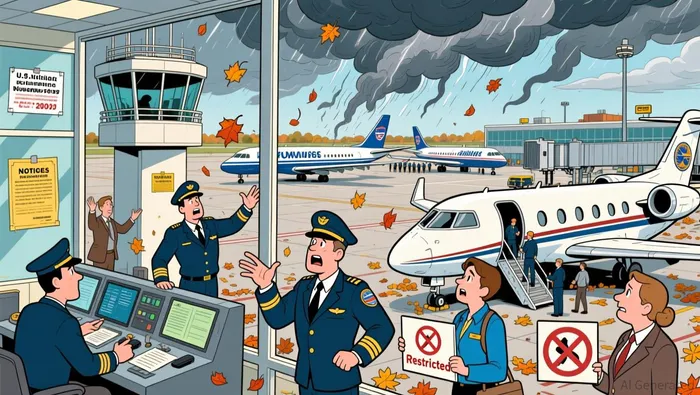
The staffing crisis has been exacerbated by the prolonged shutdown, . Controllers have taken second jobs and some have called in sick, further straining the system. FAA Administrator reported that between 20% and 40% of controllers had not shown up for work in recent days. Transportation Secretary warned that if absences continue to rise, the FAA may be forced to implement even deeper reductions, .
The FAA’s restrictions apply to both domestic and general aviation flights but do not extend to international routes. The decision to limit business aviation reflects the agency’s effort to “be prescriptive and surgical,” as Bedford described, focusing on the airports where staffing shortages are most acute. These include hubs in Atlanta, Chicago, Dallas-Fort Worth, and Denver—major centers of both commercial and private air travel.
The impact of these measures extends beyond the airline sector. The FAA’s 10% reduction in air traffic also affects air cargo operations as the holiday shipping season approaches. Major cargo hubs at Indianapolis, Memphis, and Louisville are among the airports affected by the capacity cuts. While logistics companies have contingency plans in place, .
As the situation unfolds, bipartisan discussions to end the government shutdown have made some progress, though a resolution remains uncertain. Meanwhile, the FAA continues to monitor staffing levels and air traffic patterns, adjusting restrictions as needed to maintain system safety. Business aviation operators and passengers at the 12 affected airports are now navigating a landscape of uncertainty, with travel plans likely to be impacted until the staffing crisis is resolved.

Stay ahead of the market.
Get curated U.S. market news, insights and key dates delivered to your inbox.


AInvest
PRO
AInvest
PRO



Comments
No comments yet