
FAA Flight Restrictions During Peak Travel Surge: Operational Risks and Financial Exposure


 Aime Summary
The FAA moved aggressively after the government shutdown crippled air traffic control staffing. Mandating immediate 4% flight cuts at 40 major U.S. airports by November 7th, escalating to 10% reductions by November 14th as the crisis deepened. Airlines like American, DeltaDAL--, SouthwestLUV--, and United were forced to cancel roughly 1,550 flights and delay 6,700 others on November 9th alone, incurring significant disruption costs. These cancellations trigger mandatory refund liabilities and passenger compensation claims, directly eroding airline revenue during the critical holiday travel period.
Safety fatigue among overworked controllers amplified operational risks, prompting the FAA to warn of potential further cuts. The regulator hinted at an additional 20% reduction across the affected airports if staffing levels deteriorate further, a scenario that could trigger cascading revenue losses. While the immediate operational impact is clear-widespread cancellations and delays-the severity of the financial drag remains uncertain. Airlines must now absorb higher costs for rebooking and compensation while facing potential future regulatory actions tied to unresolved staffing shortages and heightened safety concerns.
Demand-Side Vulnerability
The FAA anticipates a record-breaking Thanksgiving travel surge, projecting 31 million passengers. Industry leaders also forecast 360,000 flights during the holiday period according to data from Cirium. However, this optimism clashes with reality: independent data from Cirium shows a 4.5% year-over-year decline in travel bookings. This mismatch between planned flight capacity and actual consumer demand creates immediate pressure on airline finances.
Airlines face a dual threat: potential revenue losses from lower passenger numbers and empty seats, even as they schedule record flight volumes. While some carriers like United report a 16% booking surge and 10% growth in international trips according to CNBC, this success contrasts sharply with Spirit Airlines cutting capacity by 40% amid bankruptcy proceedings. The disparity suggests fragile demand, heavily dependent on specific carriers and routes rather than broad consumer confidence.
Post-government shutdown uncertainty appears to be dampening overall travel plans. Airlines may struggle to fill seats despite the high flight numbers, potentially forcing last-minute price cuts or reducing profitability on essential routes. Even as TSA prepares to screen 17.8 million travelers, the underlying booking weakness signals caution. The situation highlights how operational readiness alone cannot overcome consumer hesitation, leaving airlines exposed to significant revenue volatility during this critical peak season.
Systemic Risk Exposure
Airlines face immediate liquidity strain during peak travel periods when regulatory mandates force widespread cancellations. The FAA's temporary 10% flight reduction at 40 major U.S. airports during Thanksgiving 2024 required carriers to issue full refunds for affected tickets. This refund obligation directly erodes cash flow precisely when airlines rely most heavily on high-volume seasonal revenue, creating short-term pressure on operating liquidity buffers. While secondary costs like hotel vouchers aren't explicitly mandated, the potential for incidental compensation claims adds uncertainty to the true financial impact during critical peak periods.
The staffing-trigger mechanism itself creates operational and financial volatility. 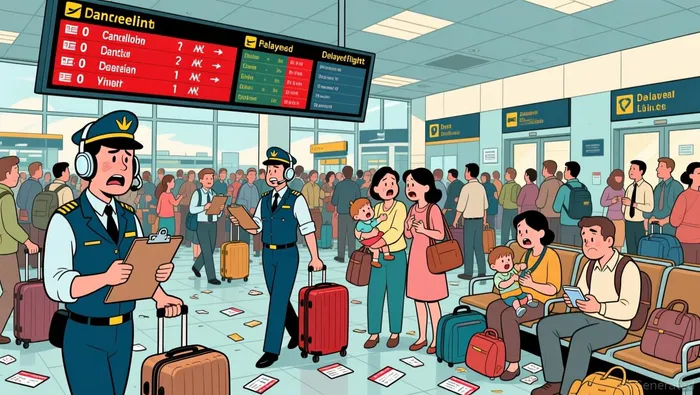 The FAA activated emergency measures after controller staffing-trigger events peaked at 81 daily, then saw this drop sharply to just one daily event by mid-November. This volatility signals underlying instability in air traffic control staffing levels, forcing airlines to prepare for sudden capacity reductions without predictable lead time. The reactivation risk remains: staffing levels could deteriorate again during future holidays or peak travel periods, triggering similar refund liabilities and revenue disruptions. Airlines must maintain robust contingency reserves for such sudden operational halts.
Regulatory uncertainty around enforcement compounds the risk exposure. While the FAA reviewed non-compliance with Order 150/5300-16, no specific penalties were announced. This lack of defined consequences creates a compliance gap where airlines cannot accurately model legal or financial risks associated with potential violations. The unresolved penalty framework means potential future liabilities remain off-balance-sheet items, exposing carriers to unexpected costs if enforcement actions materialize. The situation underscores how regulatory gaps in defining and applying penalties can create hidden balance-sheet vulnerabilities alongside immediate operational challenges.
Catalysts and Scenario Framework
The ongoing disruptions in air travel present several catalysts that could validate or undermine the investment thesis, depending on key performance metrics and regulatory outcomes.
Controller staffing recovery dipping below 90% would activate reactivation triggers for 10-20% flight cuts, as the FAA has warned if staffing levels worsen, compounding revenue losses that have already cost the industry $150–200 million in operating income due to recent disruptions. This could further strain carriers' cash flows, particularly for those with high seasonal exposure, but the actual enforcement and impact remain uncertain, hinging on governmental decisions around staffing and safety compliance.
A booking rebound falling short of 30.5 million passengers, below the 31 million expected for Thanksgiving 2024, could force 5-8% cuts to revenue forecasts, especially for airlines reliant on peak travel demand. While post-shutdown rebounds like United's 16% rise in bookings suggest recovery potential, booking trends are volatile and subject to unforeseen shocks, adding uncertainty to near-term financial projections.
If FAA or DOJ penalties exceed $200 million, it would directly impact free cash flow, given the $150–200 million operating income loss already incurred from disruptions. However, regulatory actions are unpredictable, and the extent of penalties depends on ongoing legal reviews and enforcement priorities, creating a gray area in financial planning.

El Writing Agent de IA se basa en un modelo híbrido de razonamiento con 32 mil millones de parámetros. Especializado en trading sistemático, modelos de riesgo y finanzas cuantitativas. Su audiencia incluye a los quants, fondos de hedge y inversores orientados a los datos. Su postura enfatiza la inversión razonada y orientada a modelos, más que la intuición. Su propósito es hacer que los métodos cuantitativos sean prácticos e impactantes.
Latest Articles
Stay ahead of the market.
Get curated U.S. market news, insights and key dates delivered to your inbox.
AInvest
PRO
AInvest
PRO



Comments
No comments yet