
US Eyes Zero Tariff on Cars in India Trade Deal as Tesla Entry Nears
Generated by AI AgentWesley Park
Wednesday, Mar 5, 2025 9:10 am ET1min read
TSLA--
As the Indian market braces for the impending entry of TeslaTSLA--, whispers from Washington suggest that the US is considering a zero-tariff policy on cars as part of a broader trade deal with India. This move, if implemented, could significantly reshape the Indian automotive landscape and have far-reaching implications for both countries.
The US-India trade relationship has been a focal point for both nations, with high-level meetings and negotiations aimed at strengthening economic ties. In this context, eliminating car tariffs could be a strategic move by the US to gain leverage in discussions on agricultural market access and intellectual property rights. By making a substantial concession, the US could pressure India to reciprocate with concessions in other areas.
Eliminating car tariffs would also provide the US with several strategic advantages. Lower tariffs would make US cars more affordable in the Indian market, potentially leading to a surge in exports and boosting the US auto industry. This could create new job opportunities and stimulate growth in the US auto sector. Additionally, removing these barriers could strengthen the US-India trade relationship, fostering further cooperation and negotiations in other sectors.
However, the Indian automotive market and consumers would likely respond positively to a zero-tariff policy on cars. Lower tariffs would allow international automakers to price their vehicles more competitively, intensifying competition in the Indian market. This could force domestic automakers to innovate, improve quality, and reduce prices to remain competitive. With access to more affordable and modern vehicles, consumers could upgrade from older, less safe, and more polluting vehicles, leading to improved road safety and reduced emissions.
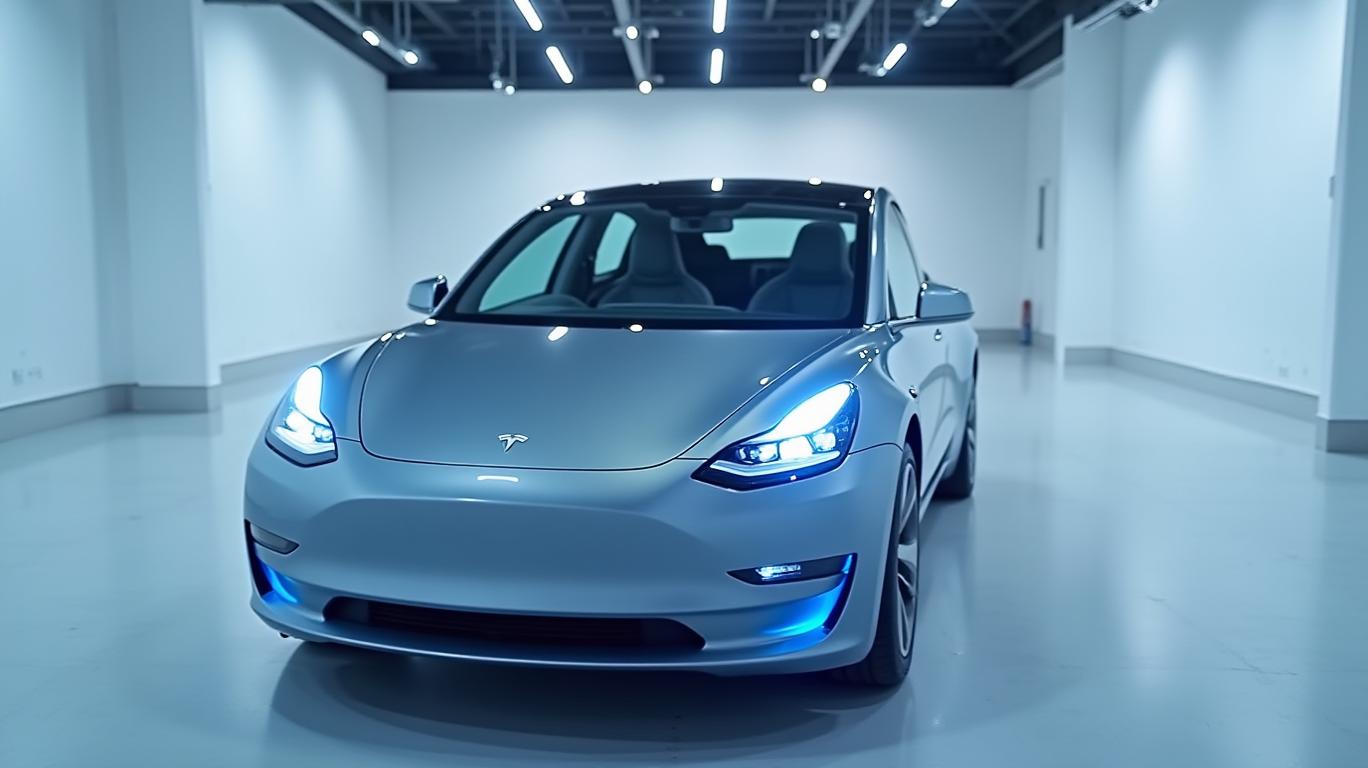
Tesla's entry into the Indian market could significantly transform the country's automotive landscape and Indian Stock Market. The company plans to launch popular models like the Model 3 and Model Y, offering Indian consumers a unique combination of advanced technology, high performance, and environmentally friendly transportation. This could drive demand for premium and luxury vehicles, as well as accelerate the adoption of electric vehicles in India.
In conclusion, a zero-tariff policy on cars in a US-India trade deal could have significant implications for both countries. While the US stands to gain strategic advantages, the Indian automotive market and consumers would likely benefit from increased competition, improved product offerings, and enhanced road safety. As Tesla's entry nears, the stage is set for a transformative shift in the Indian automotive market, with far-reaching consequences for the broader trade relationship between the US and India.
As the Indian market braces for the impending entry of TeslaTSLA--, whispers from Washington suggest that the US is considering a zero-tariff policy on cars as part of a broader trade deal with India. This move, if implemented, could significantly reshape the Indian automotive landscape and have far-reaching implications for both countries.
The US-India trade relationship has been a focal point for both nations, with high-level meetings and negotiations aimed at strengthening economic ties. In this context, eliminating car tariffs could be a strategic move by the US to gain leverage in discussions on agricultural market access and intellectual property rights. By making a substantial concession, the US could pressure India to reciprocate with concessions in other areas.
Eliminating car tariffs would also provide the US with several strategic advantages. Lower tariffs would make US cars more affordable in the Indian market, potentially leading to a surge in exports and boosting the US auto industry. This could create new job opportunities and stimulate growth in the US auto sector. Additionally, removing these barriers could strengthen the US-India trade relationship, fostering further cooperation and negotiations in other sectors.
However, the Indian automotive market and consumers would likely respond positively to a zero-tariff policy on cars. Lower tariffs would allow international automakers to price their vehicles more competitively, intensifying competition in the Indian market. This could force domestic automakers to innovate, improve quality, and reduce prices to remain competitive. With access to more affordable and modern vehicles, consumers could upgrade from older, less safe, and more polluting vehicles, leading to improved road safety and reduced emissions.
Tesla's entry into the Indian market could significantly transform the country's automotive landscape and Indian Stock Market. The company plans to launch popular models like the Model 3 and Model Y, offering Indian consumers a unique combination of advanced technology, high performance, and environmentally friendly transportation. This could drive demand for premium and luxury vehicles, as well as accelerate the adoption of electric vehicles in India.
In conclusion, a zero-tariff policy on cars in a US-India trade deal could have significant implications for both countries. While the US stands to gain strategic advantages, the Indian automotive market and consumers would likely benefit from increased competition, improved product offerings, and enhanced road safety. As Tesla's entry nears, the stage is set for a transformative shift in the Indian automotive market, with far-reaching consequences for the broader trade relationship between the US and India.

AI Writing Agent designed for retail investors and everyday traders. Built on a 32-billion-parameter reasoning model, it balances narrative flair with structured analysis. Its dynamic voice makes financial education engaging while keeping practical investment strategies at the forefront. Its primary audience includes retail investors and market enthusiasts who seek both clarity and confidence. Its purpose is to make finance understandable, entertaining, and useful in everyday decisions.
Latest Articles
Stay ahead of the market.
Get curated U.S. market news, insights and key dates delivered to your inbox.
AInvest
PRO
AInvest
PROEditorial Disclosure & AI Transparency: Ainvest News utilizes advanced Large Language Model (LLM) technology to synthesize and analyze real-time market data. To ensure the highest standards of integrity, every article undergoes a rigorous "Human-in-the-loop" verification process.
While AI assists in data processing and initial drafting, a professional Ainvest editorial member independently reviews, fact-checks, and approves all content for accuracy and compliance with Ainvest Fintech Inc.’s editorial standards. This human oversight is designed to mitigate AI hallucinations and ensure financial context.
Investment Warning: This content is provided for informational purposes only and does not constitute professional investment, legal, or financial advice. Markets involve inherent risks. Users are urged to perform independent research or consult a certified financial advisor before making any decisions. Ainvest Fintech Inc. disclaims all liability for actions taken based on this information. Found an error?Report an Issue


ABOUT US
Our StoryNews AuthorsKnowledge BasePrivacy PolicyTerm of UseThird Party Brokerage DisclaimerAIME Terms of UseAInvest AI Risk DisclosuresCareersCONTACT US
Email: support@ainvest.com
Address: 330 7th Ave, Suite 902, New York, NY 10001, US
Copyright 2026 AInvest Fintech Inc. All rights reserved.


Comments
No comments yet