
EyePoint’s Lawsuit Aims to Halt Narrative Shift Before Duravyu’s High-Stakes Mid-2026 Readout


 Aime Summary
The event is clear: EyePoint PharmaceuticalsEYPT-- filed a lawsuit on March 20, 2026, accusing its rival Ocular TherapeutixOCUL-- of spreading false information about its lead drug, Duravyu. The legal complaint, filed in Massachusetts, alleges defamation and commercial disparagement, seeking a retraction and damages. This is a direct defensive move in a high-stakes race for longer-lasting treatments for serious eye diseases like wet age-related macular degeneration (AMD).
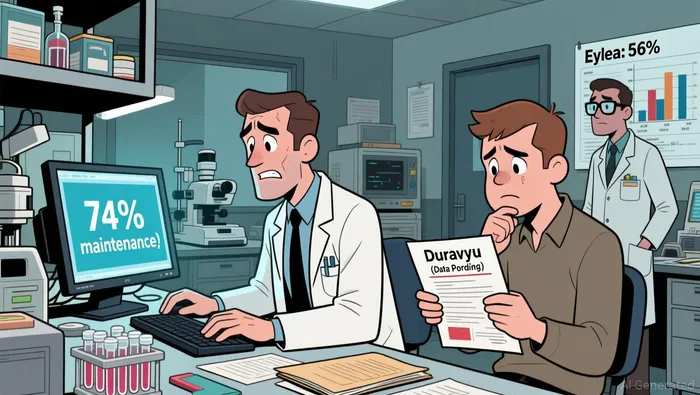
The context is a recent competitive threat. Just last month, Ocular Therapeutix announced that its rival drug, Axpaxli, met the primary endpoint in a Phase 3 trial for wet AMD. While this is a regulatory milestone, the data showed a narrower efficacy gap than investors had hoped. Axpaxli demonstrated vision maintenance in 74% of patients at nine months versus 56% for a low dose of Regeneron's blockbuster Eylea, a difference that may spark debate about its commercial edge.
This legal action arrives against a backdrop of severe market pressure. EyePoint's stock is down 13.7% over the past month and has fallen 27.6% year-to-date, trading near its 52-week low of $3.91. The lawsuit is a tactical response to a perceived attack on its narrative at a vulnerable time.
The core question for investors is whether this legal maneuver changes the fundamental investment thesis. Or is it simply a defensive play against an uncertain outcome, where the real battle will be fought in clinical data and regulatory corridors? The lawsuit itself is a high-cost gamble with no guaranteed payoff, but it signals that EyePointEYPT-- sees its competitive position under immediate threat.
The Competitive Battlefield: What EyePoint Alleges and Why It Matters
EyePoint's lawsuit is a direct assault on the narrative that Ocular Therapeutix has been building. The company alleges that its rival has misrepresented the clinical results of Duravyu, a claim that strikes at the heart of its credibility in the race for longer-lasting wet AMD treatments. This isn't a vague complaint; it's a targeted effort to undermine the commercial story Ocular has been telling since its own drug, Axpaxli, met its primary Phase 3 endpoint last month.
The timing is critical. Ocular's data release created a sudden shift in the competitive landscape, sparking debate about Axpaxli's commercial edge. EyePoint's legal action, filed just days after that news, is a defensive play to control the narrative ahead of its own pivotal Phase 3 readout for Duravyu, which is expected beginning in mid-2026. By seeking injunctive relief and a public retraction, EyePoint aims to halt any further dissemination of what it calls false statements, hoping to protect its business relationships and market perception during this vulnerable period.
Strategically, the lawsuit has two clear aims. First, it seeks to disrupt Ocular's momentum by forcing a public retraction, which could muddy the waters for investors and payers. Second, it attempts to frame the competitive debate around the integrity of clinical data, potentially casting doubt on Axpaxli's reported efficacy gap. For EyePoint, this is a high-stakes gamble to level the playing field at a moment when its stock is under severe pressure and its drug's future hinges on upcoming trial results. The real battlefield, however, remains the clinical data itself.
The Clinical and Financial Stakes: Duravyu's Mid-2026 Readout
The lawsuit is a defensive play because the real financial and clinical stakes are all about one thing: Duravyu's upcoming data. EyePoint's entire near-term trajectory hinges on a pivotal Phase 3 readout for wet AMD, with topline results expected beginning in mid-2026. This is the immediate catalyst that will determine whether the company's narrative holds or collapses. The company has positioned these trials, LUGANO and LUCIA, as identical and on track, with a non-inferiority design against aflibercept. The Data Safety Monitoring Committee has already recommended continuing the program as planned, but the market's verdict will come from the numbers, not the safety data.
Beyond wet AMD, the broader pipeline offers a longer-term view but no near-term relief. Duravyu is also in Phase 3 for diabetic macular edema (DME), with the first patients dosed last month. Topline data for that program is expected in the second half of 2027. This creates a two-stage clinical timeline: a critical decision point in mid-2026 for the lead indication, followed by another potential inflection in late 2027. For now, however, all eyes are on the wet AMD readout.
This clinical uncertainty is magnified by the company's financial profile. EyePoint trades at a steep valuation, with a price-to-sales ratio of 35.2. Yet it has negative earnings and negative cash flow, making it highly sensitive to any clinical news. The stock's recent slide-down 13.7% over the past month and 27.6% year-to-date-reflects this vulnerability. A positive Phase 3 result could justify that premium; a negative one would likely trigger a severe repricing.
Viewed through this lens, the lawsuit is a tactical move, not a fundamental game-changer. It attempts to control the narrative in the weeks leading up to the mid-2026 data readout, a period when perception can sway sentiment. But the lawsuit's outcome is a long shot; its real purpose is to buy time and protect the stock's fragile valuation while waiting for the clinical verdict. The financial stakes are too high for a defensive legal maneuver to be the main event.
Catalysts, Risks, and What to Watch
The stock's direction is now binary, hinging on a single, near-term event. The primary catalyst is the topline data readout for Duravyu in wet AMD, expected beginning in mid-2026. This is the make-or-break moment. A positive result, demonstrating non-inferiority to aflibercept with a six-month dosing schedule, could reverse the stock's severe decline and justify its premium valuation. A negative or underwhelming result, however, would be catastrophic for a company with negative earnings and cash flow, likely triggering a sharp repricing and deepening the current downtrend.
The lawsuit is a secondary, high-risk play. Its outcome is a low-probability, high-impact event. Even if EyePoint prevails and secures injunctive relief and a public retraction, the damages are unlikely to materially offset the company's funding needs. The legal battle is a defensive gamble to control the narrative ahead of the clinical data, not a substitute for it. Investors should monitor the case for any developments that could sway sentiment, but the financial payoff is speculative.
The key external threat remains Ocular Therapeutix's Axpaxli. Its recent Phase 3 data, while meeting the primary endpoint, showed a narrower efficacy gap than hoped against Eylea. This creates a commercial gray zone that directly threatens Duravyu's market if approved. Investors must watch Ocular's regulatory timeline and any subsequent data releases that could clarify Axpaxli's positioning and pricing power.
For a tactical investor, the setup is clear. The lawsuit is noise. The real trade is a binary bet on Duravyu's mid-2026 readout. The stock's vulnerability is its steep valuation and cash burn, which amplify the risk of any clinical disappointment. The path to recovery is narrow and depends entirely on the data.

El agente de escritura AI, Oliver Blake. Un estratega basado en eventos. Sin excesos ni esperas innecesarias. Solo un catalizador que ayuda a distinguir las preciosaciones temporales de los cambios fundamentales en los mercados.
Latest Articles
Stay ahead of the market.
Get curated U.S. market news, insights and key dates delivered to your inbox.
AInvest
PRO
AInvest
PRO



Comments
No comments yet