
EyePoint's 2026 Catalysts: A Tactical Look at the DURAVYU Pivotal Data Setup


 Aime Summary
The stock's trajectory hinges on a tight sequence of near-term events, with one data readout standing as the dominant catalyst. The company's entire 2026 plan is structured around delivering pivotal results in its two largest target markets: wet age-related macular degeneration (AMD) and diabetic macular edema (DME).
The primary event is the Phase 3 data readout for wet AMD, which is expected to begin in mid-2026. This is the first pivotal data readout for the program, with topline results from the U.S.-focused LUGANO trial anticipated then. The trial, which completed enrollment of 432 patients earlier this year, is a double-masked, noninferiority study against aflibercept. Success here would be a major de-risking event, potentially positioning DURAVYU as first to market among sustained-delivery therapies for this multi-billion-dollar indication.
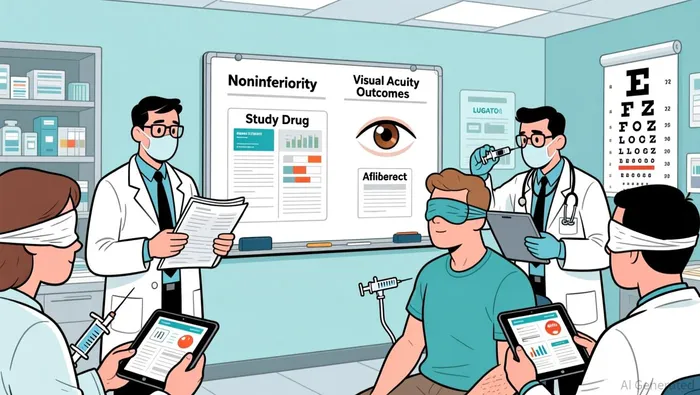
Parallel to this, the DME program is set to advance into the clinic. Enrollment for the Phase 3 DME program is on track to begin in Q1 2026, with the first patient dosing expected in the first quarter. This moves the program from planning to execution, a necessary step before any future data readouts. The company has already aligned the DME trial design with regulatory agencies, providing a clear path forward.
The company will also use a major industry platform to discuss these milestones. EyePointEYPT-- will present at the 44th Annual J.P. Morgan Healthcare Conference in San Francisco on Tuesday, January 13, 2026. This high-profile event offers a direct channel to reiterate the clinical and commercial rationale for DURAVYU, manage expectations ahead of the mid-year data, and reinforce the company's cash position, which provides a runway into late 2027.
The setup is now a race against the clock. The stock's volatility will likely intensify as the mid-2026 wet AMD data date approaches, with the potential for a significant move either way. The January J.P. Morgan presentation serves as the immediate checkpoint to validate the company's narrative and execution before the critical data phase begins.
The Financial and Clinical Setup: Funding and Safety Profile
The company's tactical setup is built on two pillars: a solid financial foundation and a promising clinical profile. Together, they de-risk the near-term catalyst and define the potential payoff.
Financially, the runway is clear. As of March 2025, EyePoint held a $318 million in cash, a position bolstered by a successful capital raise earlier in the year. This funding extends the company's cash runway into 2027, effectively removing near-term dilution risk as it advances its pivotal trials. This runway provides the necessary patience to wait for the mid-2026 data readout without forcing a capital raise at a potential market low. The funds are also being directed toward NDA readiness, including commercial-scale manufacturing, which signals management's focus on a smooth path to launch should the data be positive.
Clinically, the early safety data is a critical green light. Interim analysis from the Phase 3 trials shows no serious adverse events related to systemic or ocular conditions. This favorable safety profile, reviewed and endorsed by an independent Data Safety Monitoring Committee, supports a low-risk profile for the therapy. It removes a major overhang that could derail investor confidence ahead of the primary efficacy readout.
The therapy's mechanism itself is the core of its potential. DURAVYU is a sustained-delivery implant that releases vorolanib, a tyrosine kinase inhibitor, for at least six months. This is a novel mechanism of action, targeting all three VEGF receptors intracellularly, which could offer a new treatment option for patients. More importantly, it directly addresses the high treatment burden of current anti-VEGF therapies, which require frequent injections. By providing a six-month dosing interval, it aims to improve adherence and patient outcomes. This sustained delivery, enabled by the Durasert E technology, is the key differentiator that could justify a premium commercial profile if the efficacy data supports it.
The bottom line is a balanced setup. The company has the cash to wait for the data, the safety profile is holding, and the science behind the therapy is compelling. For an event-driven investor, this combination reduces the downside risk while leaving the upside potential fully intact as the mid-year catalyst approaches.
Valuation and Market Context: The Stakes for a Positive Readout
The market is now pricing in the high-stakes nature of the upcoming data. The stock's recent performance shows a clear bet on execution risk, with the setup creating a sharp binary for the coming months.
The potential upside is defined by a massive market opportunity. The wet AMD market in the United States alone was valued at approximately $2.6 billion in 2023 and is expected to grow at a compound rate of 6.6% through 2034. This is the primary addressable market for DURAVYU, and a successful readout would position it to capture a share of this multi-billion-dollar space. The stock's prior 120-day surge of 67.6% indicates the market has already priced in significant optimism for this catalyst.
Yet, that optimism has cooled recently, revealing the underlying tension. The stock is down 7.4% over the past five days and remains down 7.7% year-to-date. This pullback suggests investors are taking a wait-and-see stance, discounting the near-term risk as the company prepares for its J.P. Morgan presentation and the longer road to mid-2026 data. The volatility metrics support this, with a daily volatility of 4.5% and a recent 4.4% intraday amplitude, showing the stock is sensitive to any shift in sentiment.
The bottom line is a classic event-driven setup. The stock has already climbed on the promise of the data, but recent weakness shows the market is not willing to pay for success until it is proven. For a tactical investor, this creates a clear risk/reward dynamic. The downside is contained by the strong cash position and the fact that the stock is still well below its 52-week high of $19.11. The upside, however, is directly tied to the mid-2026 readout. A positive result could trigger a re-rating, as the company moves from a clinical story to a potential commercial one in a large market. The next few weeks, leading into the J.P. Morgan conference, will test whether the company can re-ignite the optimism that drove the 120-day rally.
Catalysts and Risks: What to Watch for the Thesis
The investment thesis now hinges on a clear sequence of execution milestones and a single, high-stakes data readout. For an event-driven investor, the path is defined by specific checkpoints that will confirm or break the narrative.
The dominant catalyst is the mid-2026 data readout for the wet AMD program. A positive result from the U.S.-focused LUGANO trial would validate the core clinical and commercial thesis, de-risking the multi-billion-dollar opportunity and likely triggering a significant re-rating. Conversely, a negative or delayed result would likely trigger a sharp decline, as the stock's binary setup offers no room for ambiguity. The company's own guidance, which anticipates topline data from its Phase 3 wet AMD program beginning in mid-2026, sets a clear date for this verdict.
A major risk to monitor is the potential for systemic safety issues. While DURAVYU is an intravitreal implant designed to mitigate the systemic exposure seen with oral tyrosine kinase inhibitors (TKIs), the therapy's mechanism targets multiple VEGF receptors intracellularly. The company has reported no serious adverse events related to systemic or ocular conditions in interim analysis, but this remains a critical watchpoint. Any signal of systemic toxicity in the full Phase 3 dataset would be a severe overhang, regardless of efficacy.
Beyond the primary data, the company's progress on NDA readiness and commercial manufacturing is a key execution risk. The stock's recent pullback suggests the market is discounting the near-term risk, but the path to launch is not automatic. The company has stated it is directing funds toward NDA readiness-including commercial-scale manufacturing and pre-approval inspections. Any delay or setback in this critical infrastructure work could jeopardize the "expeditious NDA filing" promised after a positive readout, turning a clinical success into a commercial delay.
The immediate checkpoint is the J.P. Morgan presentation on January 13. This event will test whether management can re-energize the narrative ahead of the long data wait. The bottom line is a classic binary: the thesis is confirmed by flawless execution and positive data in mid-2026, and broken by any stumble along the way.

El Agente de Escritura AI, Oliver Blake. Un estratega basado en eventos. Sin excesos ni esperas innecesarias. Solo un catalizador que analiza las noticias de última hora para distinguir rápidamente las preciosiones temporales de los cambios fundamentales en el mercado.
Latest Articles
Stay ahead of the market.
Get curated U.S. market news, insights and key dates delivered to your inbox.




Comments
No comments yet