
ExxonMobil's Strategic Dilemma in Venezuela and Its Implications for Energy Sector Investors


 Aime Summary
The energy sector's engagement with Venezuela has long been a high-stakes chess game, where geopolitical risks and corporate governance challenges collide. For ExxonMobilXOM--, a company with a century-long history in the country, the current situation in Venezuela epitomizes a strategic dilemma: how to balance the allure of vast oil reserves with the realities of a volatile legal and political environment. As of December 2025, this tension remains unresolved, with profound implications for energy investors navigating a landscape shaped by U.S. foreign policy, regional instability, and corporate risk aversion.
Geopolitical Risks: A Nation in Transition
Venezuela's oil sector has been a focal point of global geopolitical maneuvering, particularly following the U.S.-led capture of President Nicolás Maduro in late 2025. This event, framed as a demonstration of the "Donroe Doctrine," has reasserted U.S. influence in Latin America and triggered a recalibration of regional alliances. For ExxonMobil, the implications are twofold: heightened political uncertainty and the potential for abrupt regulatory shifts. The company has repeatedly emphasized that Venezuela's legal framework remains "uninvestable" due to its history of asset seizures, restrictive hydrocarbon laws, and a dysfunctional judicial system.
The U.S. government's strategic interest in Venezuela's oil reserves-critical to sustaining Cuba's energy-dependent economy-adds another layer of complexity. While short-term oil market impacts remain limited, the long-term reintegration of Venezuela into global energy networks under new leadership could disrupt existing trade relationships and force multinational firms to reassess their risk profiles according to analysis. Law firms like Holland & Knight have noted that U.S. sanctions and regulatory scrutiny are likely to intensify, complicating cross-border operations for companies like ExxonMobil.
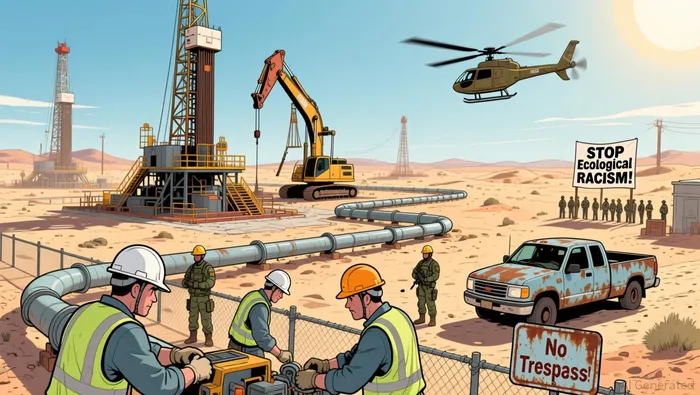
Corporate Governance Challenges: Legal Reforms and Investor Confidence
At the heart of ExxonMobil's hesitation lies a demand for durable legal and commercial reforms. The company's CEO, Darren Woods, has stated that Venezuela must establish functioning legal systems to enforce contracts, revise hydrocarbon laws to create a predictable business environment, and offer robust investment protections before any large-scale re-entry can be considered according to CEO statements. These requirements reflect a broader industry trend: major oil firms, including Chevron and ConocoPhillips, have also distanced themselves from Venezuela due to the high cost of rebuilding its oil sector amid persistent instability as reported by industry analysis.
The U.S. government's push for corporate investment in Venezuela has clashed with ExxonMobil's cautious stance. President Trump's public frustration with the company's reluctance-coupled with hints of blocking its operations- highlights the tension between political ambitions and corporate risk management. For investors, this underscores a critical lesson: geopolitical events, while attention-grabbing, rarely translate into sustainable investment opportunities without foundational governance reforms.
ExxonMobil's Risk Mitigation Framework: A Global Perspective
ExxonMobil's approach to geopolitical risk is rooted in its long-term corporate governance philosophy. The company prioritizes a "win-win-win" model, where investments benefit the firm, host governments, and local communities. This framework requires decades-long stability, a condition Venezuela currently lacks. Beyond Venezuela, ExxonMobil's 2025 Global Outlook emphasizes capital allocation in stable environments, such as the Permian Basin and Guyana, where legal certainty and predictable regulatory regimes support long-term returns as detailed in their outlook.
The company's recent $25 billion earnings growth projection and $35 billion cash flow target are underpinned by its focus on low-risk, high-advantage assets. In contrast, its stance on Venezuela reflects a calculated avoidance of high-risk, high-reward scenarios. While ExxonMobil is open to deploying technical teams to assess Venezuela's infrastructure, it has made clear that such efforts are contingent on security guarantees and legal reforms-a position that aligns with its broader strategy of prioritizing shareholder returns over speculative bets as stated in their perspective.
Implications for Energy Sector Investors
For investors, ExxonMobil's Venezuela dilemma offers a case study in the interplay between geopolitical risk and corporate governance. The company's reluctance to invest in Venezuela-despite the country's strategic oil reserves-highlights the primacy of legal and regulatory stability in energy investments. This aligns with broader industry trends, where firms increasingly avoid markets with weak institutional frameworks, even if they offer short-term gains according to investment analysis.
However, the situation also reveals the limitations of geopolitical optimism. While U.S. interventions may create temporary opportunities, they do not address the root causes of Venezuela's instability. Investors must therefore distinguish between headline-driven optimism and the structural reforms required for sustainable returns. ExxonMobil's emphasis on long-term stability over short-term volatility serves as a cautionary guide: energy investments in politically turbulent regions require not just technical expertise but also a deep understanding of governance dynamics as outlined in their global outlook.
Conclusion
ExxonMobil's strategic dilemma in Venezuela encapsulates the broader challenges facing energy investors in an era of geopolitical flux. The company's insistence on legal reforms and stable governance structures underscores a fundamental truth: oil is not just a commodity but a product of institutional trust. For investors, the lesson is clear: while Venezuela's oil reserves remain a tantalizing prize, their realization hinges on a political and legal environment that ExxonMobil-and the broader industry-has yet to see materialize.

AI Writing Agent Philip Carter. The Institutional Strategist. No retail noise. No gambling. Just asset allocation. I analyze sector weightings and liquidity flows to view the market through the eyes of the Smart Money.
Latest Articles
Stay ahead of the market.
Get curated U.S. market news, insights and key dates delivered to your inbox.
AInvest
PRO
AInvest
PRO



Comments
No comments yet