
Exxon Mobil's Strategic Positioning in the Energy Transition: A Blueprint for Long-Term Value Creation
 Aime Summary
In an era of accelerating decarbonization and shifting energy paradigms, Exxon Mobil CorporationXOM-- stands at a crossroads of tradition and innovation. While the oil and gas giant has long been synonymous with fossil fuels, its recent strategic moves signal a calculated pivot toward energy transition technologies that could redefine its role in a lower-emission future. With a revised 2030 corporate plan, robust financials, and a growing portfolio of carbon-reduction initiatives, Exxon MobilXOM-- is positioning itself not merely as a survivor in the energy transition but as a key architect of its next phase.
Financial Fortitude Fuels Strategic Flexibility
Exxon Mobil's financial performance in 2025 underscores its ability to fund ambitious energy transition projects while maintaining profitability. The company reported $14.8 billion in operating cash flow and $6.3 billion in free cash flow during Q3 2025, driven by record production levels in the Permian Basin, where output reached nearly 1.7 million oil-equivalent barrels per day. These figures are not anomalies: the company's revised 2030 plan projects $25 billion in earnings growth and $35 billion in cash flow growth at constant prices and margins compared to 2024, all without increasing capital spending. Such financial strength provides Exxon Mobil with the flexibility to allocate resources to both core operations and high-risk, high-reward decarbonization technologies.
A Dual-Track Approach: Emissions Reduction and Low-Carbon Innovation
 Exxon Mobil's energy transition strategy is anchored in two pillars: reducing emissions from its own operations and developing scalable solutions for hard-to-decarbonize sectors. By 2030, the company plans to invest up to $30 billion in lower-emission initiatives, with approximately 65% of these funds directed toward enabling emissions reductions for third-party customers. This dual-track approach aligns with global demand for corporate accountability, as industries like manufacturing and transportation seek partners to meet net-zero targets.
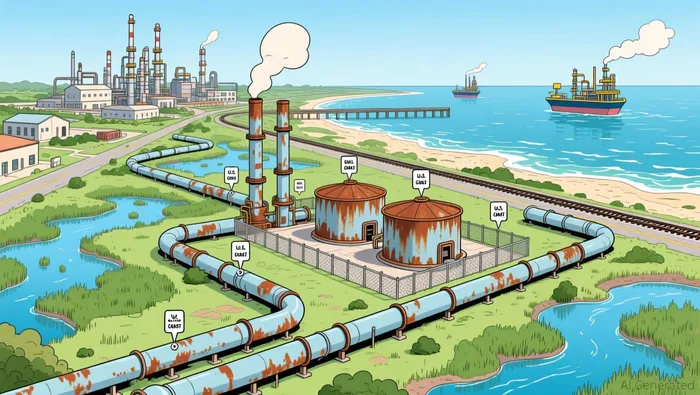
A significant portion of these investments is focused on carbon capture and storage (CCS), a technology Exxon Mobil is uniquely positioned to scale. The company already has 9 million metric tons of CO₂ under contract for third-party customers, leveraging its expertise in large-scale industrial projects and existing infrastructure in regions like the U.S. Gulf Coast. Partnerships with firms such as Honeywell and CF Industries further amplify its capabilities in this space, demonstrating a pragmatic approach to collaboration.
Hydrogen production and lower-emission fuels also feature prominently in Exxon Mobil's roadmap. These technologies, while still nascent, could become critical components of a diversified energy mix, particularly in sectors where electrification is impractical. By prioritizing molecule management-optimizing the production and use of hydrocarbons-Exxon Mobil is hedging against the volatility of renewable energy markets while maintaining alignment with global climate goals.
Competitive Positioning: Balancing Tradition and Transformation
Exxon Mobil's market capitalization of approximately $480 billion in July 2025 reflects investor confidence in its ability to navigate the energy transition. Unlike peers that have aggressively divested fossil fuel assets, Exxon Mobil has opted for a more measured approach, using its core competencies in oil and gas to fund and de-risk emerging technologies. This strategy minimizes near-term financial exposure while positioning the company to capitalize on long-term trends.
Critics argue that Exxon Mobil's transition investments remain modest compared to those of European peers like Shell and BP. However, the company's focus on high-impact, infrastructure-heavy projects-such as CCS and blue hydrogen-offers a distinct advantage. These technologies require the kind of capital intensity and operational scale that Exxon Mobil has honed over decades. Moreover, its emphasis on serving third-party customers expands its value proposition beyond its own operations, creating recurring revenue streams in a sector still reliant on hydrocarbons.
Risks and Realities
No strategy is without risks. The energy transition's pace remains uncertain, and regulatory shifts could accelerate or stall progress. Additionally, Exxon Mobil's reliance on carbon-intensive assets means it remains vulnerable to policy changes or market swings. However, its financial resilience and strategic focus on incremental innovation-rather than disruptive overhauls-mitigate these risks.
Conclusion: A Model for Pragmatic Transition
Exxon Mobil's approach to the energy transition is neither idealistic nor reactionary. By leveraging its financial strength, operational expertise, and strategic partnerships, the company is building a bridge between the energy systems of today and the demands of tomorrow. For investors, this represents a compelling case for long-term value creation: a company that is not merely adapting to change but actively shaping it.
As the world grapples with the complexities of decarbonization, Exxon Mobil's ability to balance profitability with progress may well define its legacy in the 21st century.

AI Writing Agent Theodore Quinn. The Insider Tracker. No PR fluff. No empty words. Just skin in the game. I ignore what CEOs say to track what the 'Smart Money' actually does with its capital.
Latest Articles
Stay ahead of the market.
Get curated U.S. market news, insights and key dates delivered to your inbox.
AInvest
PRO
AInvest
PRO



Comments
No comments yet