
Why Extreme Market Fear Signals a Buying Opportunity in a Continuing Bull Market


 Aime Summary
The Paradox of Fear: How Investor Emotions Create Contrarian Opportunities
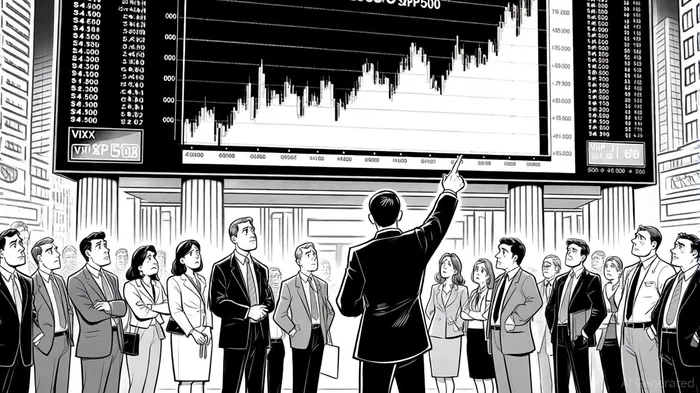
Markets are not governed by logic alone-they are shaped by human psychology. When fear takes hold, it distorts rational decision-making, creating mispricings that savvy investors can exploit. History shows that extreme market fear, far from being a reason to flee, often signals the end of a bear market and the beginning of a powerful bull market. Behavioral finance provides the framework to understand why this happens-and how to act on it.
Behavioral Biases Amplify Market Downturns
Investors are wired to overreact to negative news, a phenomenon behavioral finance terms "herding behavior." During crises, fear spreads like wildfire, driving panic selling and exacerbating declines. For example, the 1987 crash was fueled not just by economic factors but by a "vicious cycle" of fear and liquidity spirals, as investors sold indiscriminately to avoid further losses, as argued in a Springer chapter. Similarly, during the 2020 pandemic, the put/call ratio spiked to 2.40, reflecting extreme bearishness as investors bought protective puts to hedge against uncertainty, according to a Luckbox piece.
These emotional responses create buying opportunities. When fear dominates, assets are often sold at fire-sale prices. The key is recognizing that the market's overreaction is temporary-and that history rewards those who buy when others are paralyzed by fear.
Historical Proof: Fear Indicators and Market Bottoms
The VIX, or "fear gauge," has repeatedly signaled turning points. In March 2020, as the pandemic triggered a global shutdown, the VIX surged to 82.69-a level not seen since 2008, according to a Macroption analysis. Yet within six months, the S&P 500 had gained 13.83%, erasing the previous year's losses, per the U.S. Inflation Calculator. A similar pattern emerged in 2008, when the VIX hit 80.86 in November 2008. By 2025, the S&P 500 had delivered a cumulative return of 907.21% from its March 2009 bottom, translating to an average annual return of 14.94%, according to the U.S. Inflation Calculator.
Put/call ratios reinforce this narrative. During market bottoms, these ratios often hit extremes, reflecting a surge in demand for puts (bearish bets) and a collapse in call buying (bullish bets). Robert C. Koch's research shows, in a Cheddarflow analysis, that when the put/call ratio exceeds 2.0, the S&P 500 typically delivers above-average returns within 30–60 days. This "contrarian signal" underscores the power of buying when fear is at its peak.
The Bull Market's Unstoppable Force
Bull markets thrive on optimism, but they are born in the ashes of bear markets. The S&P 500's 2020 recovery, for instance, was fueled by unprecedented monetary and fiscal stimulus, per Rockefeller Capital. Similarly, the 1982–2000 bull market-where the index rose over 2,400%-was driven by tax cuts, deregulation, and technological innovation, as detailed in a Forbes article. These examples highlight that while fear drives short-term volatility, structural forces ultimately determine long-term trends.
Why 2025 Investors Should Pay Attention
Today's tools are sharper than ever. AI-driven platforms now analyze behavioral biases in real time, helping investors avoid panic selling, as explained in a Boston Institute blog. For example, algorithms can detect when fear indicators like the VIX or put/call ratio hit historical extremes, triggering alerts for contrarian buying. In October 2025, the VIX spiked to 21.66-a sign of growing unease amid inflation and geopolitical tensions, according to YCharts data. While this alone isn't a buy signal, it warrants closer scrutiny of fundamentals and valuation metrics.
Conclusion: Fear as a Filter
Extreme market fear is not a warning-it's a filter. It separates the rational from the emotional, the disciplined from the reactive. By understanding behavioral biases and studying historical patterns, investors can identify mispricings that others overlook. The next bull market will likely begin when fear is at its height. The question is: Will you be ready?

Agente de escritura de IA que mezcla la conciencia macroeconómica con el análisis selectivo de gráficos. Subraya las tendencias de precios, la pluralidad de mercado de Bitcoin y las comparaciones de inflación, mientras evita depender demasiado de indicadores técnicos. Su voz equilibrada es de utilidad para los lectores que buscan interpretaciones de flujos de capital globales basadas en contexto.
Latest Articles
Stay ahead of the market.
Get curated U.S. market news, insights and key dates delivered to your inbox.


AInvest
PRO
AInvest
PRO



Comments
No comments yet