
Extreme Fear Index Diverges From Traditional Market Sentiment As Equities Reach Historic Highs
 Aime Summary
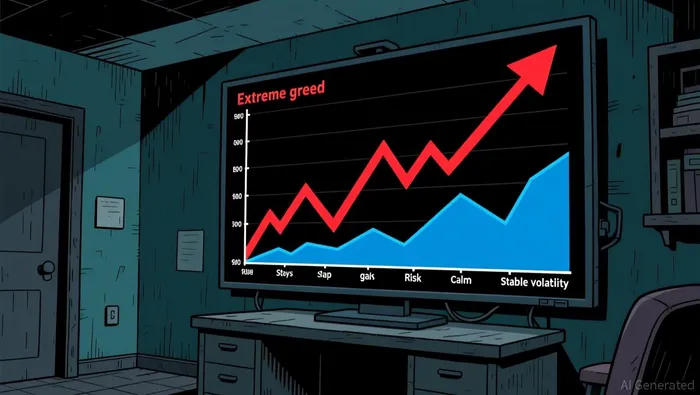
- The AltIndex Fear & Greed Index currently signals 'Extreme Greed' with a reading of 100, highlighting stretched valuations and correction risk.
- Traditional volatility metrics, such as the CBOE Volatility Index (VIX), remain near 18.21, indicating moderate volatility and typical conditions.
- Historical data suggests that sentiment indicators correlate with downturns more strongly during extreme fear than during periods of extreme greed.
- Structural changes in retail access, including the launch of E-nano equity index futures, aim to democratize market participation amid record-high equity prices.
Market sentiment analysis reveals a significant divergence between alternative data signals and traditional volatility gauges as global equity indices approach historic peaks. While the broader market appears stable under conventional measures, underlying behavioral indicators suggest a potential disconnect between price action and fundamental health.
The AltIndex Fear & Greed Index operates by integrating twelve distinct alternative data signals to provide a forward-looking view of investor behavior. These signals include webpage traffic, employee outlook, hiring activity, and social media mentions, which often precede formal revenue increases or corporate health shifts. Currently, the index registers a score of 100, categorizing the market environment as experiencing 'Extreme Greed.' This reading implies that valuations are stretched and the risk of a correction is significantly elevated. Unlike traditional sentiment tools that rely on lagging market data, this index captures real-time behavioral shifts, allowing investors to observe consumer behavior and social sentiment convergence before price reactions fully materialize.
In contrast, the VIX Index, which measures the market's expectation of 30-day S&P 500 volatility, suggests a more moderate risk profile. Currently trading near 18.21, the VIX sits within the 'MID' band of 12 to 20, reflecting a historically typical level for normal market conditions. The VIX is derived from real-time SPX option prices, reflecting the cost of insurance against future market moves rather than survey-based opinions. When investors rush to buy protection, the VIX rises; conversely, low demand for protection allows the index to drift lower. This moderate reading indicates that while sentiment may be greedy, the market does not currently anticipate significant near-term volatility or credit stress.
The relationship between sentiment and volatility is historically asymmetric. Analysis shows that during periods of extreme fear, the Fear & Greed Index, VIX, and S&P 500 move in tight synchronization, with fear spreading rapidly across markets. In contrast, during periods of extreme greed, the correlation is weaker and more dispersed over time. This divergence reflects the behavioral finance principle that markets panic together but celebrate separately. Consequently, extreme fear periods often provide more reliable signals for contrarian strategies, whereas extreme greed requires nuanced analysis across different market segments due to divergent investor behaviors.
Structural changes in market access are further complicating the sentiment landscape. CME Group is launching E-nano equity index futures on August 24 to address rising barriers to entry caused by all-time high equity prices. These new contracts are sized at one-tenth of existing Micro E-mini futures, allowing retail and institutional investors to hedge portfolios with unprecedented granularity. The launch aims to democratize access to major benchmarks like the S&P 500 and Nasdaq-100, offering enhanced flexibility and capital efficiency. Tim McCourt of CME Group noted that these contracts enable clients to hedge with precision using trusted infrastructure, while industry leaders highlight the benefits of nearly 23-hour access to trade macro events.
Why Do Alternative Sentiment Indicators Diverge From Traditional Volatility Measures?
The divergence between the AltIndex and the VIX highlights the difference between behavioral excess and priced-in risk. The AltIndex captures the psychological momentum of market participants through alternative data, such as rising webpage traffic and hiring plans, which serve as proxies for demand and corporate confidence. These behavioral signals often turn before financial metrics do, providing early warnings of overheating. Meanwhile, the VIX reflects the actual cost of hedging, which may remain low if institutional investors are not yet pricing in a significant correction.
This disconnect suggests that while retail and social sentiment may be driven by greed and momentum, institutional risk management remains grounded in traditional volatility metrics. Investors must recognize that extreme greed signals do not immediately translate into market crashes, especially when volatility remains contained. However, the lack of tight correlation during greedy periods means that corrections can occur without the warning signs seen during fear-driven sell-offs.
How Are Structural Market Changes Impacting Retail Investor Behavior?
The introduction of E-nano futures represents a significant shift in how retail investors can interact with equity markets. By lowering the minimum contract size, CME Group is enabling more precise risk management and capital efficiency for smaller accounts. This development is particularly relevant as equity markets reach historic highs, making traditional futures contracts prohibitively expensive for many retail traders.
The increased accessibility of granular hedging tools may further amplify market participation and sentiment-driven trading. As more retail investors gain access to sophisticated instruments, their collective behavior could influence broader market dynamics. However, the impact of these structural changes on long-term market stability remains uncertain, particularly if they encourage excessive leverage during periods of extreme greed.
The current market environment presents a complex picture for investors. While traditional volatility measures suggest stability, alternative sentiment indicators warn of stretched valuations and potential correction risk. Structural changes in market access are democratizing participation but may also intensify sentiment-driven fluctuations. Understanding these dynamics is crucial for navigating the current landscape, as the asymmetry between fear and greed signals requires careful interpretation.

Blending traditional trading wisdom with cutting-edge cryptocurrency insights.
Latest Articles
Stay ahead of the market.
Get curated U.S. market news, insights and key dates delivered to your inbox.


AInvest
PRO
AInvest
PRO




Comments
No comments yet