
U.S. Export Price Index Rebounds: Sector-Specific Opportunities in a Shifting Global Trade Landscape
 Aime Summary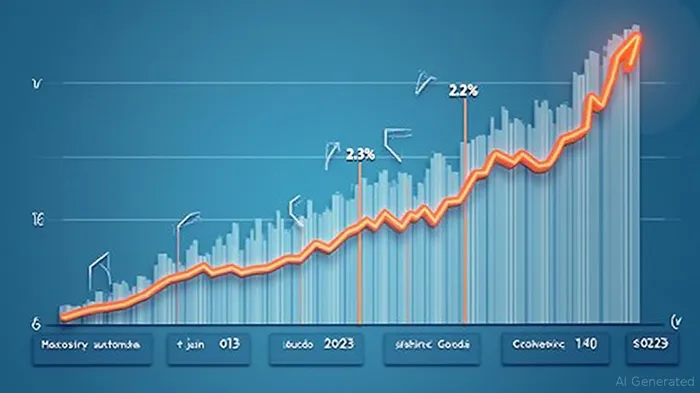
The U.S. Export Price Index has emerged from a prolonged slump, posting a 2.2% year-over-year increase in July 2025—the largest 12-month gain since January 2023. This rebound, driven by resilient nonagricultural and agricultural sectors, signals a shift in global trade dynamics. For investors, the data reveals a nuanced picture: while the broader export environment is stabilizing, sector-specific trends offer distinct opportunities for those who can navigate the nuances of supply chains, commodity cycles, and trade policy shifts.
Agricultural Exports: Nuts, Meat, and the Soybean Dilemma
Agricultural exports surged 3.4% YoY in July 2025, fueled by robust demand for nuts and meat. This outperformance contrasts with the 10.31% decline in May 2023, underscoring the sector's adaptability. Companies like Cal-Maine Foods (CALM) and Blue Buffalo (BUFF)—which supply protein-rich products—have seen renewed demand in Asia and the Middle East. Meanwhile, the decline in soybean prices, driven by oversupply in South America, has created a divergence within the sector. Investors should consider hedging against soybean volatility while overweighting firms in the nut and meat value chains.
Nonagricultural Exports: Automotive and Capital Goods Lead the Charge
Nonagricultural exports rose 2.0% YoY, with automotive vehicles contributing a 0.7% monthly gain in July—the largest since April 2024. This reflects strong global demand for U.S.-made electric vehicles (EVs) and hybrid models. TeslaTSLA-- (TSLA) and traditional automakers like Ford (F) have benefited from favorable exchange rates and supply chain normalization. Capital goods861083--, including industrial machinery and agricultural equipment, also saw a 0.2% monthly increase, driven by infrastructure spending in Europe and Southeast Asia.
Industrial Supplies and Materials: A Tale of Two Markets
The nonagricultural industrial supplies and materials category saw a 0.1% monthly decline in July, but its YoY growth of 2.0% highlights long-term resilience. This sector is bifurcated: while steel and aluminum prices face downward pressure due to Chinese overcapacity, specialty chemicals and semiconductors remain strong. Firms like Dow (DOW) and ASML (ASML) are capitalizing on niche markets, particularly in clean energy and advanced manufacturing.
Consumer Goods: A Modest but Steady Climb
Consumer goods export prices rose 0.2% in July, reflecting steady demand for U.S. consumer electronics and apparel. However, this growth is tempered by rising competition from Vietnam and Mexico. Investors should focus on companies with strong brand equity and supply chain agility, such as Apple (AAPL) and Nike (NKE), which have diversified production to mitigate risks.
Strategic Investment Opportunities
- Agricultural ETFs and Commodity Producers: Consider ETFs like the iShares Global Agriculture Index (PDBC) to capitalize on the meat and nut boom while hedging against soybean volatility.
- Automotive and EV Supply Chains: Position in EV battery manufacturers and Tier 1 suppliers, such as Lithium Americas (LAC) and Bosch (BOSS), to benefit from the global shift toward electrification.
- Capital Goods and Industrial Tech: Invest in firms like Caterpillar (CAT) and 3M (MMM), which are leveraging AI and automation to enhance productivity in industrial markets.
- Currency-Hedged Exporters: Prioritize companies with natural hedges against dollar strength, such as Coca-Cola (KO) and McDonald's (MCD), which derive significant revenue from international markets.
Conclusion: Navigating the New Normal
The U.S. Export Price Index's recovery from its 2023 trough underscores the adaptability of American exporters. While global trade remains fragmented, sector-specific strengths—particularly in agriculture, automotive, and capital goods—present compelling opportunities. Investors who align their portfolios with these trends, while remaining mindful of geopolitical and currency risks, are well-positioned to capitalize on the evolving export landscape.

Stay ahead of the market.
Get curated U.S. market news, insights and key dates delivered to your inbox.
AInvest
PRO
AInvest
PRO



Comments
No comments yet