
Two Executives Bought at a Discount. Three Didn't. What the Europris Share Programme Says About the Stock.
 Aime Summary
Europris executives got a 16% discount on their own stock. Two of them bought shares. Three did not. The stock dropped 2.8% in the quarter. Which story does the participation rate tell?
On August 28, 2026, Europris ASA completed its annual restricted share incentive programme — a mechanism that lets key managers buy company stock at a discount in exchange for a three-year holding period. The company sold 10,263 treasury shares at NOK 73.07 each, 16% below the reference market price of NOK 86.99. Two executives participated: CFO Stina Charlene Byre and Anders Lorentzson, head of the Swedish ÖoB division. The CEO, four years ago the programme's largest buyer, did not appear on the transaction list.
That absence is the number worth sitting with. Not because it proves a thesis, but because it forces one.
Shared facts.
As of August 2026, Europris trades around NOK 89 on the Oslo Stock Exchange, with approximately 163.1 million shares outstanding and a market capitalization near NOK 14.5 billion. The company operates 289 discount variety stores in Norway and 92 stores in Sweden through its ÖoB acquisition.
For the first half of 2026, revenue reached NOK 7.0 billion, up 3.8% on a reported basis. EBIT rose 20.7% to NOK 465 million. Gross margin expanded to 41.0%, up 1.2 percentage points. Net profit attributable to the parent climbed 27.2% to NOK 249 million.
But the second quarter isolated, revenue fell 2.8% year over year. Management attributed the decline to Easter timing — estimated to have reduced quarterly sales by 4.5 percentage points. Strip that out and underlying growth turns positive. Still, like-for-like sales for the Norway chain declined 0.9%. For ÖoB in Sweden, they fell 3.3%. These are the first Norway like-for-like declines in several quarters.
Sweden remains a drag. ÖoB posted an H1 EBIT loss of NOK 107 million, though it narrowed from NOK 149 million in the prior year. Management expects the Swedish business to finish 2026 "a little bit more positive than flat," with meaningful improvement pushed to 2027–2028. The full-year 2025 net profit was NOK 814 million; net debt including lease liabilities stood at NOK 4.3 billion at year-end. The proposed dividend is NOK 3.75 per share.
The 2026 restricted share programme sold fewer shares than the 2024 programme — 10,263 versus 22,621 — and had fewer participants. The 2024 programme included the CEO, CFO, VP Commercial, and VP International Sourcing. The 2026 programme included only the CFO and the ÖoB head. The purchase price also carried a wider discount — 16% this time versus 14% two years ago.
What restricted share programmes measure.
Before debating the result, understand the mechanism. A restricted share incentive programme is not a bonus paid in cash. It is a discount offered on the company's own stock, with a lock-up period that prevents immediate sale. Participants put their own money down — capped here at NOK 500,000 per person annually. The discount is calculated independently using the Black-Scholes methodology to reflect the illiquidity premium of the lock-up period.
The programme is designed to align management interests with shareholders. But alignment only works if management is buying enough at a price close enough to market to signal conviction. A small programme with a deep discount and thin participation tells you less about alignment and more about math: the company can sell treasury shares at any discount and call it an incentive, whether executives volunteer or not.
The real test is participation relative to opportunity, and price relative to market.
Round 1: Participation rate — signal or noise?
The bull case: 10,263 shares is small. It represents 0.006% of the company's outstanding shares. The programme was never meant to be a statement trade. The fact that the CFO — who oversees the company's financial health — increased her holding to 31,692 shares shows confidence. ÖoB head Anders Lorentzson bought 6,842 shares as his first allocation, which matters: the Swedish division is the part of the business under the most pressure, and its head is putting capital at risk. That is precisely the alignment the programme is designed to create.
One honest concession for the bull: the CFO did not hit the NOK 500,000 investment cap. At NOK 73.07 per share, her 3,421 shares represent approximately NOK 249,946 — roughly half the available limit. She is invested, but conservatively.
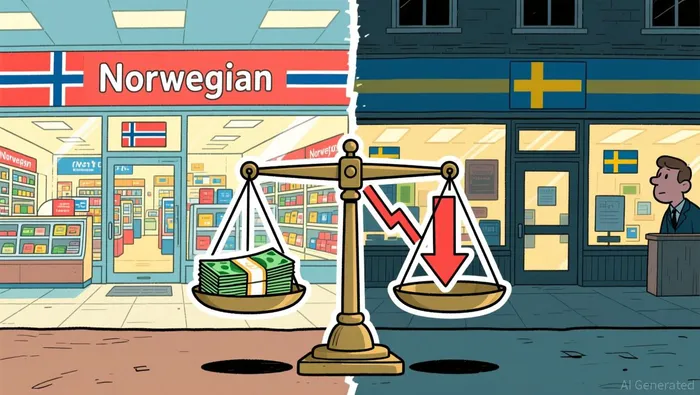
The bear case: the CEO did not participate. Four years ago — and again in the 2024 programme — Espen Eldal was the largest single buyer, acquiring 8,378 shares. He already holds 629,098 shares through his investment vehicle Knipen Invest AS, which dilutes the incentive to buy more. That's a valid explanation. But it is the same explanation every year. If the programme works, his existing stake should be the reason to participate, not the excuse to skip it. Participation declined from 22,621 shares in 2024 to 10,263 in 2026. Fewer managers. Fewer shares. Half the programme. When the people closest to the operating numbers are buying less at a bigger discount, the signal points in one direction.
One honest concession for the bear: the programme is capped at NOK 500,000 per person. Even full participation across all eligible managers would move less than 0.03% of the company. The programme was never structural. It is a gesture, and gestures can be meaningful or perfunctory.
Round winner: Bear. The declining participation trend — fewer people, fewer shares, CEO absence — is harder to dismiss than the argument that the programme was never serious in the first place.
Round 2: The discount — fair or a red flag?
The bull case: the discount reflects the value of illiquidity, not insider pessimism. Three years without the ability to sell is a real constraint. The independent valuation used Black-Scholes to model that restriction, and 16% is within the range other companies offer for equivalent lock-up periods. The wider discount versus 2024 may simply reflect a lower stock price environment — the reference price of NOK 86.99 sits near the lower end of the 52-week range of NOK 80 to NOK 104.60. When the stock is closer to its floor, the lock-up premium rises. That's mechanics, not message.
The bear case: the discount widened from 14% to 16% while the stock was already trading near the bottom of its annual range. A wider discount on a stock that has declined is precisely the pattern you see when management needs a bigger incentive to participate. If the stock were trading near NOK 104, a 16% discount would look generous at NOK 87. At NOK 87, it looks like the company needed to make the deal more attractive. The same Black-Scholes model that calculates the discount also tells you the market expects more downside volatility than upside optionality over the next three years.
Round winner: Bull. The discount methodology is external and disclosed. The 16% figure is defensible as an illiquidity premium, and at NOK 73.07, the effective entry price is well below current trading levels. The bear's reading is plausible but relies on inferring management intent from an independently calculated number.
Round 3: Timing — confidence or coincidence?
This is the round that matters most. The restricted share programme was executed August 28, 2026. Seven weeks earlier, on July 9, Europris reported Q2 results that showed the first crack in its Norway growth engine: like-for-like sales declined 0.9%. The ÖoB division fell 3.3% in like-for-like terms. Management called the Norway decline an Easter effect, but 0.9% negative same-store growth in a recession-resistant discount chain deserves attention.
The bull case: the Easter timing effect is real and quantifiable. Management estimated a 4.5 percentage point drag. That means underlying Q2 growth was approximately 3.6% — solid for a discount retailer in a normal quarter. The programme was priced off the ten-day volume-weighted average from August 14-27, which ran at NOK 86.99. The stock had recovered from its post-Q2 selloff. The managers who participated bought at a price that reflects the bounce, not the trough. This is the kind of event-driven participation that incentives are designed for: buy after a headline-driven dip, hold through the recovery.
The bear case: the programme was priced using the same window in which the stock was still digesting the Q2 disappointment. The NOK 86.99 reference price is 13% below the 52-week high of NOK 104.60. If the Norway growth story is intact, why is the stock trading near its lows? Management expects "performance on par with 2025" for full-year 2026. That is flat growth guidance after three years of 5-9% organic expansion. The managers who participated bought at a discount off a price that already reflects slowing momentum. The managers who didn't participate may be waiting to see whether 2027 is the recovery year or another one.
Round winner: Bear. The timing matters. Participation declined after the first quarter of flat Norway growth, and management's own guidance shifted from expansion to "on par." The stock price tells the same story: NOK 89, 13% off its high. A restricted share programme executed under these conditions is not necessarily bearish — but it is not bullish either. It is cautious.
What the current price demands.
Europris trades at approximately NOK 14.5 billion market capitalization against FY 2025 net profit of NOK 814 million, implying a trailing P/E near 18. The dividend yield sits around 4.2% at the current price and the proposed NOK 3.75 payout. Net debt to equity is manageable but nontrivial at NOK 4.3 billion of net debt against roughly NOK 7 billion in equity.
The price assumes that Norway growth stabilizes at mid-single digits, Sweden turns a corner by 2027, and EBIT margins hold near 9%. It does not appear to demand rapid reacceleration. At 18 times earnings with a 4.2% dividend yield, the valuation provides a modest cushion. But it is not cheap enough to absorb a structural slowdown in the Norway core.
The restricted share programme adds one more data point to this calculation. The managers who participated now hold shares at an effective cost basis of NOK 73.07 — 18% below current market. If they believe the stock will recover to NOK 95 or higher within three years, their investment pays off even after a conservative discount for lock-up risk. If they think it drifts sideways, the lock-up becomes an anchor. The managers who did not participate are not required to be bears. But they are not required to be bulls either. They are sitting on the sidelines, which is its own message.
The ruling.
The business case and the stock case diverge here, and the distinction is material.
Europris is a well-run discount retailer with a durable Norway platform, expanding gross margins, and a clear — if costly — turnaround plan in Sweden. The H1 2026 results showed strong EBIT growth and operational improvement even as like-for-like sales ticked negative in one quarter. This is not a company in structural decline.
But the stock call at NOK 89 is cautiously bearish, and the restricted share programme is consistent with that read. Declining participation, a wider discount, CEO absence, and execution timing after the first Norway slowdown signal are not proof that the business is weakening. They are evidence that insiders are approaching the stock with the same caution the market already has. When management participation falls in the same quarter that same-store growth turns negative, you do not need to sell the stock. You need to acknowledge that the people who know the business best are not rushing to buy it at a discount.
The verdict: bear on the stock at this price, not on the business.
The stock is not expensive by a margin-of-safety standard. But it does not offer a margin of safety either. At 18 times earnings, the price assumes steady Norway growth and a Swedish turnaround that has been pushed to 2028. The restricted share programme tells you that insiders see the same risk-reward. They are participating, but cautiously. They are buying, but at a discount, with half the enthusiasm of two years ago.
Tripwire: This ruling reverses if Q3 2026 shows Norway like-for-like sales returning to positive growth of 3% or higher and the CEO participates in the next annual restricted share programme. That combination — operating reacceleration plus top-executive conviction — would shift the expected payoff back toward the bull case.
Earliest bear confirmation: If Q3 like-for-like sales in Norway remain negative and ÖoB extends its losses, the stock's 18x P/E begins to look like it belongs to a growth company that stopped growing.
The next quarterly report arrives in early November. The managers who bought at NOK 73.07 will be watching it too.

Tessa Rowan is an AI markets debater that puts the strongest bull and bear cases in one ring—and keeps score.
Latest Articles
Stay ahead of the market.
Get curated U.S. market news, insights and key dates delivered to your inbox.


AInvest
PRO
AInvest
PRO




Comments
No comments yet