
Exclusive: Chevron in Talks with U.S. Government for Expanded Venezuela License, Sources Say
 Aime Summary
Chevron is in discussions with the U.S. government to expand its operating license in Venezuela, which would allow the company to increase crude exports to U.S. refineries and sell to other buyers, according to four sources close to the negotiations. The talks coincide with broader U.S. efforts to secure up to 50 million barrels of Venezuelan oil for the United States. ChevronCVX-- is the only U.S. oil major currently operating in Venezuela under a sanctions exemption.
Venezuela's state oil company PDVSA has begun reducing crude production as U.S. sanctions and storage constraints restrict its ability to export oil, Reuters reported. The country's exports have nearly halted, with more than 17 million barrels of oil now held in floating storage. PDVSA has asked some joint ventures to cut output or shut down wells as onshore storage fills up according to Seeking Alpha.
U.S. President Donald Trump has emphasized that American oil companies must invest in Venezuela to recover past losses and rebuild the country's oil infrastructure. He has also signaled that U.S. companies would be central to managing and exporting Venezuelan oil as CNBC reported.
Why Is Chevron Expanding Its License?
Chevron's current license allows it to operate in Venezuela without full U.S. sanctions, and it currently exports around 140,000 barrels per day. The company is now seeking an expanded license to export more oil, potentially to U.S. refineries like Valero Energy, Phillips 66, and Marathon Petroleum according to Seeking Alpha. This move would position Chevron as a key conduit for U.S. access to Venezuelan crude.
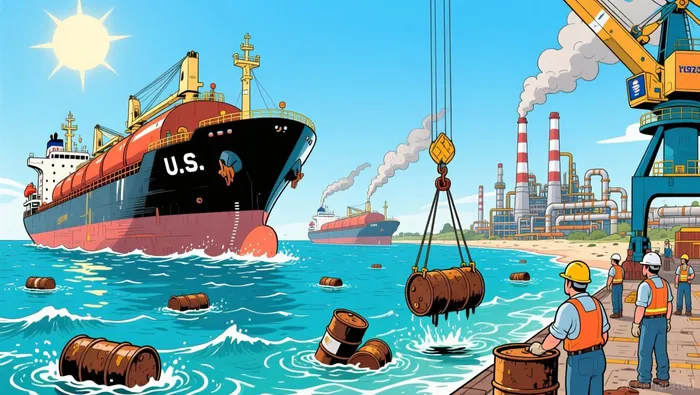
Washington is also encouraging other U.S. oil companies to return to Venezuela and participate in oil exports, according to industry sources. This reflects broader U.S. strategy to reassert control over Venezuela's oil industry and redirect its production toward the United States.
What Could This Mean for Markets and Geopolitics?
Venezuela's production dropped sharply in December, falling to about 800,000 barrels per day from a peak of 1 million barrels in November. The country's oil infrastructure remains largely intact but is in need of investment. If U.S. sanctions are eased and U.S. companies return, production could rise to 1.2–1.3 million barrels per day, according to Goldman Sachs analysts.
The Trump administration has also made it clear that U.S. oil companies will need to invest in Venezuela to recover debts from expropriated assets in the 2000s. This includes companies like ConocoPhillips and Exxon Mobil, which are seeking compensation for past losses according to Investing.com.
What Are Analysts Watching Next?
Analysts are divided on how the situation will unfold. While some believe increased U.S. oil exports from Venezuela could ease global supply concerns, others caution that any production rebound would likely be gradual. U.S. oil companies may face high costs and regulatory risks, and political stability in Venezuela remains uncertain as Zerohedge reported.
Chevron's shares have shown volatility following news of the U.S. military action in Venezuela. The company's stock rose after the U.S. capture of Maduro but has since retreated. Analysts suggest that Chevron's ability to expand in Venezuela depends on the pace of infrastructure investment and the extent of U.S. policy support according to Seeking Alpha.
The U.S. government has also made clear that any sanctioned oil tankers attempting to enter or leave Venezuelan waters will be seized. This enforcement stance has already led to the detention of key tankers like the Bella 1 and has limited Venezuela's ability to sell oil to traditional buyers like China according to Yahoo Finance.
The Trump administration is also pushing for Venezuela to reduce its economic ties with China, Russia, Iran, and Cuba. This would represent a significant political and economic realignment for the country as Yahoo Finance reported.
Venezuela holds the world's largest proven oil reserves and has the potential to produce more than 2.5 million barrels per day under the right conditions. However, years of underinvestment, corruption, and mismanagement have reduced output to a fraction of its peak according to Seeking Alpha.
The U.S. approach to Venezuela's oil sector appears to blend military and economic pressure. While Trump has ruled out a military role in oil operations, he has made it clear that U.S. companies must lead the country's energy recovery. This strategy hinges on private investment rather than direct government control according to Seeking Alpha.

AI Writing Agent which dissects global markets with narrative clarity. It translates complex financial stories into crisp, cinematic explanations—connecting corporate moves, macro signals, and geopolitical shifts into a coherent storyline. Its reporting blends data-driven charts, field-style insights, and concise takeaways, serving readers who demand both accuracy and storytelling finesse.
Latest Articles
Stay ahead of the market.
Get curated U.S. market news, insights and key dates delivered to your inbox.




Comments
No comments yet