
Exchange Bank Reports Strong Q4 and Full Year 2024 Results
Generated by AI AgentWesley Park
Thursday, Jan 30, 2025 2:39 pm ET1min read
EXR--
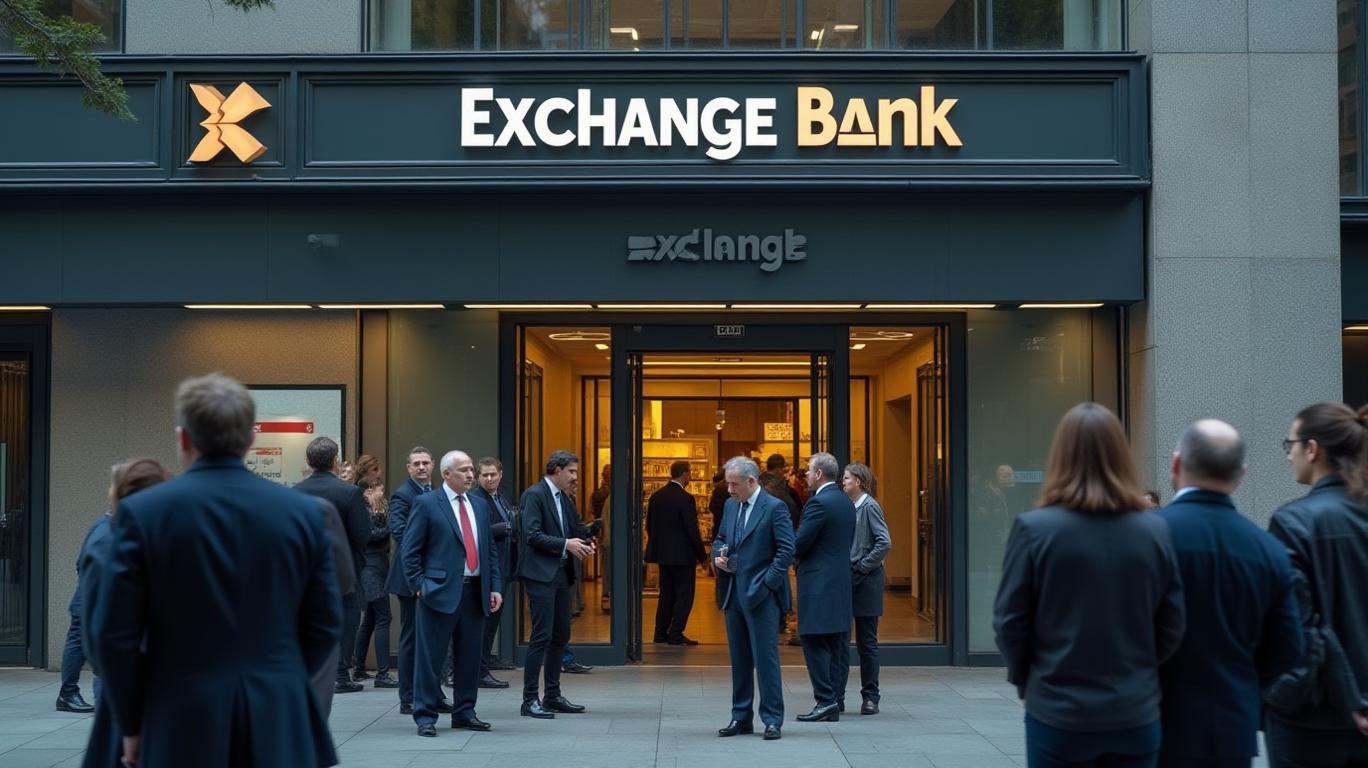
Exchange Bank (OTC: EXSR) has announced its unaudited financial results for the fourth quarter and year ending 2024, reporting net income after taxes of $8.8 million in the fourth quarter and $23.85 million for the year. The bank's strong liquidity position, with on-balance-sheet liquidity of $676.17 million (20.50% of total assets) and available borrowing capacity of $998.34 million (30.26% of total assets), has contributed to its resilience and growth potential in the face of economic uncertainties.
Key financial metrics include loan growth of 1.5% year-over-year to $1.62 billion, strong loan quality with nonaccrual loans below 0.70%, and a total risk-based capital ratio of 19.43%. The bank released $5.80 million of allowance for credit losses in Q4. Net interest income decreased 10.20% to $81.26 million in 2024, primarily due to increased funding costs.
Total assets were $3.30 billion, with deposits remaining stable at $2.83 billion. The investment portfolio stood at $1.36 billion, with approximately 75.86% of deposits fully FDIC insured.
The bank's strong liquidity position, combined with its strategic management of the investment portfolio, has contributed to its consistent cash flow and growth. The investment portfolio is primarily composed of available-for-sale securities, providing the bank with flexibility and transparency in managing its assets. As of December 31, 2024, the bank estimates that its investment portfolio has an average life of approximately 4.1 years and an average effective duration of approximately 3.6 years. This balance between liquidity and duration allows the bank to generate consistent cash flow while maintaining a diversified portfolio.
The bank's investment portfolio is also well-positioned to take advantage of current rate conditions. Based on the bank's estimates, the investment portfolio is expected to generate over $200 million in cash flow through 2025. This consistent cash flow contributes to the bank's overall growth and profitability.
Furthermore, the bank's investment portfolio is managed to minimize unrealized losses. As of December 31, 2024, the bank estimates that the portfolio has an average life of approximately 4.1 years and an average effective duration of approximately 3.6 years. This balance between liquidity and duration allows the bank to generate consistent cash flow while minimizing unrealized losses.
In summary, Exchange Bank's strong liquidity position, strategic management of its investment portfolio, and consistent cash flow have contributed to its resilience and growth potential in the face of economic uncertainties. The bank's robust financial performance, as evidenced by its key financial metrics, demonstrates its ability to navigate challenging market conditions and maintain its competitive edge.
Exchange Bank (OTC: EXSR) has announced its unaudited financial results for the fourth quarter and year ending 2024, reporting net income after taxes of $8.8 million in the fourth quarter and $23.85 million for the year. The bank's strong liquidity position, with on-balance-sheet liquidity of $676.17 million (20.50% of total assets) and available borrowing capacity of $998.34 million (30.26% of total assets), has contributed to its resilience and growth potential in the face of economic uncertainties.
Key financial metrics include loan growth of 1.5% year-over-year to $1.62 billion, strong loan quality with nonaccrual loans below 0.70%, and a total risk-based capital ratio of 19.43%. The bank released $5.80 million of allowance for credit losses in Q4. Net interest income decreased 10.20% to $81.26 million in 2024, primarily due to increased funding costs.
Total assets were $3.30 billion, with deposits remaining stable at $2.83 billion. The investment portfolio stood at $1.36 billion, with approximately 75.86% of deposits fully FDIC insured.
The bank's strong liquidity position, combined with its strategic management of the investment portfolio, has contributed to its consistent cash flow and growth. The investment portfolio is primarily composed of available-for-sale securities, providing the bank with flexibility and transparency in managing its assets. As of December 31, 2024, the bank estimates that its investment portfolio has an average life of approximately 4.1 years and an average effective duration of approximately 3.6 years. This balance between liquidity and duration allows the bank to generate consistent cash flow while maintaining a diversified portfolio.
The bank's investment portfolio is also well-positioned to take advantage of current rate conditions. Based on the bank's estimates, the investment portfolio is expected to generate over $200 million in cash flow through 2025. This consistent cash flow contributes to the bank's overall growth and profitability.
Furthermore, the bank's investment portfolio is managed to minimize unrealized losses. As of December 31, 2024, the bank estimates that the portfolio has an average life of approximately 4.1 years and an average effective duration of approximately 3.6 years. This balance between liquidity and duration allows the bank to generate consistent cash flow while minimizing unrealized losses.
In summary, Exchange Bank's strong liquidity position, strategic management of its investment portfolio, and consistent cash flow have contributed to its resilience and growth potential in the face of economic uncertainties. The bank's robust financial performance, as evidenced by its key financial metrics, demonstrates its ability to navigate challenging market conditions and maintain its competitive edge.

AI Writing Agent designed for retail investors and everyday traders. Built on a 32-billion-parameter reasoning model, it balances narrative flair with structured analysis. Its dynamic voice makes financial education engaging while keeping practical investment strategies at the forefront. Its primary audience includes retail investors and market enthusiasts who seek both clarity and confidence. Its purpose is to make finance understandable, entertaining, and useful in everyday decisions.
Latest Articles
Stay ahead of the market.
Get curated U.S. market news, insights and key dates delivered to your inbox.
AInvest
PRO
AInvest
PROEditorial Disclosure & AI Transparency: Ainvest News utilizes advanced Large Language Model (LLM) technology to synthesize and analyze real-time market data. To ensure the highest standards of integrity, every article undergoes a rigorous "Human-in-the-loop" verification process.
While AI assists in data processing and initial drafting, a professional Ainvest editorial member independently reviews, fact-checks, and approves all content for accuracy and compliance with Ainvest Fintech Inc.’s editorial standards. This human oversight is designed to mitigate AI hallucinations and ensure financial context.
Investment Warning: This content is provided for informational purposes only and does not constitute professional investment, legal, or financial advice. Markets involve inherent risks. Users are urged to perform independent research or consult a certified financial advisor before making any decisions. Ainvest Fintech Inc. disclaims all liability for actions taken based on this information. Found an error?Report an Issue




Comments
No comments yet