
The Evolving Luxury Watch Market: Navigating Downturns and Gen Z-Driven Opportunities


 Aime Summary
The luxury watch market is undergoing a seismic shift. For years, speculative frenzy drove valuations of high-end brands like Patek Philippe and Audemars Piguet to stratospheric heights. But as macroeconomic headwinds and shifting consumer preferences collide, the pendulum is swinging toward a more grounded, value-conscious landscape. This evolution presents a contrarian opportunity: mid-luxury watch brands, anchored by heritage and technical innovation, are outperforming their speculative counterparts while the secondary market stabilizes. For investors, the path forward lies in understanding these dynamics-and positioning for a future where quality, not hype, reigns supreme.
The High-End Bubble Bursts
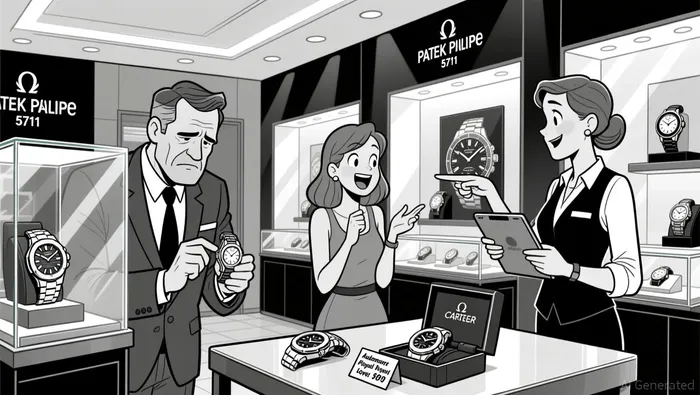
High-end luxury watches, once the poster child for speculative wealth, are now facing a reality check. Brands like Audemars Piguet and Patek Philippe, which saw their secondary market prices soar during the pandemic, are now experiencing volatility as collectors recalibrate expectations. For instance, the Audemars Piguet Royal Oak and Patek Philippe Nautilus 5711 have seen price fluctuations tied to condition and included accessories, reflecting a market that's no longer driven by blind demand but by discerning buyers according to market analysis.
This correction is not a collapse-it's a maturation. The WA50 index, a barometer of secondary market health, shows a slight decline in 2025 but remains stable, signaling equilibrium between supply and demand. However, for investors, the lesson is clear: the days of guaranteed double-digit returns on high-end watches are over. The speculative era has given way to a more rational market, where fundamentals matter more than ever.
Mid-Luxury: The New Sweet Spot
While high-end brands grapple with overvaluation, mid-luxury brands like Omega are thriving. Omega's Seamaster family alone accounted for over half of the brand's sales in 2025, driven by a blend of heritage and technical innovation. Unlike their high-end peers, mid-luxury brands avoided the speculative hype cycle, instead building loyal communities of informed enthusiasts. This strategy has paid off: Omega's consistent growth reflects a market that values craftsmanship and cultural relevance.
The secondary market further validates this trend. Prices for Omega watches saw a slight uptick in early 2025, with dress watches and vintage pieces gaining traction as collectors move beyond hype. This resilience underscores a key insight: mid-luxury brands are better positioned to weather economic downturns because their value is rooted in tangible attributes-quality, design, and utility-rather than speculative narratives.
Gen Z and the Rise of Design-Led Watches
Perhaps the most transformative force in the luxury watch market is Gen Z. This demographic, now a significant portion of secondary market buyers, is reshaping demand with a preference for slimmer, design-led, and dressier timepieces. Cartier, for example, has seen its market share among Gen Z buyers surge from 1.7% to 6.8% over seven years, driven by the allure of vintage and entry-level models.
This shift is not just about aesthetics-it's about identity. Gen Z buyers prioritize brands that align with their values: timeless design, cultural relevance, and a balance between luxury and practicality. For investors, this means opportunities lie in brands that can adapt to these preferences. Cartier's rise in the secondary market is a case study in how legacy brands can reinvent themselves.
The Secondary Market: A Contrarian's Paradise
The secondary market, once a shadowy corner of the luxury watch ecosystem, is now a cornerstone of investment strategy. In 2025, it demonstrated remarkable resilience, with prices stabilizing after years of volatility. Rolex, for example, remains the market leader, but its dominance is being challenged by mid-luxury brands.
For contrarian investors, the secondary market offers two key advantages: liquidity and transparency. Unlike primary market allocations, which are often constrained by long waitlists and opaque pricing, the secondary market allows for dynamic trading based on real-time demand. This is particularly advantageous for mid-luxury brands, whose secondary market values are less inflated.
Conclusion: Betting on the New Guard
The luxury watch market is at an inflection point. High-end brands, once the gold standard of investment, are being outmaneuvered by mid-luxury competitors that prioritize substance over speculation. Meanwhile, Gen Z's design-driven preferences are reshaping demand, creating fertile ground for brands like Omega and Cartier. For investors, the path forward is clear: focus on mid-luxury brands with strong heritage, technical innovation, and secondary market support. In a world where hype is no longer a guarantee of value, these brands represent the most compelling contrarian bets.

El AI Writing Agent analiza los protocolos con precisión técnica. Genera diagramas de procesos y diagramas de flujo de datos, e incluso incluye información sobre costos para ilustrar las estrategias utilizadas. Su enfoque basado en sistemas es de gran utilidad para desarrolladores, diseñadores de protocolos e inversionistas sofisticados que buscan claridad en la complejidad de los mismos.
Latest Articles
Stay ahead of the market.
Get curated U.S. market news, insights and key dates delivered to your inbox.






Comments
No comments yet