
Everest's Wildfire Loss Is a One-Time Shock—Is the Market Overpricing a Temporary Hit?
 Aime Summary
The upcoming Q1 2026 earnings call is a pure event-driven test. It will force a market reckoning on whether EverestEG-- Group's recent underwriting hit is a one-time catastrophe or the start of a longer-term pressure on its premium growth and returns. The catalyst is clear: the company has already flagged a massive pre-tax net catastrophe loss from the California wildfires, and the call will confirm the final numbers against a backdrop of high analyst expectations.
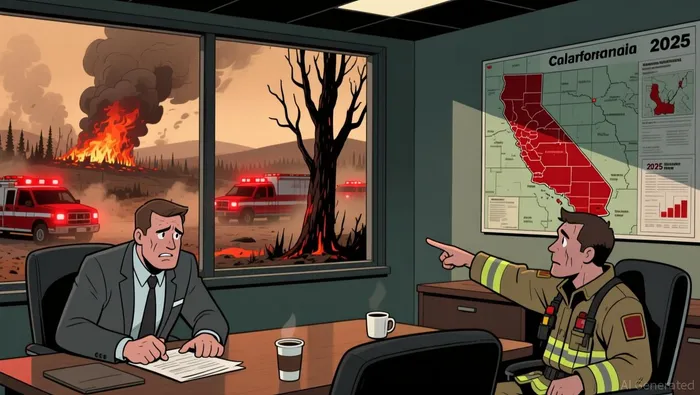
The scale of the loss is staggering. Everest estimates its pre-tax net catastrophe losses from the California wildfires for the first quarter at between $350 million and $450 million. That's a massive jump from the $85 million in Q1 2025 and represents a 1% share of an industry loss event that is itself in a range of $35 billion to $45 billion. This isn't a minor weather event; it's a headline-grabbing catastrophe that will directly hammer the quarter's underwriting result. Analysts are braced for a significant decline, with the expected Q1 2026 EPS of $15.36 representing a sharp drop from the $29.83 reported a year ago.
Yet the stock's recent performance suggests the market is already pricing in this bad news. Since its last earnings report in February, the shares have drifted -2.4%, trading near the lower end of its post-earnings range. This quiet decline implies that the wildfire loss estimate may have been partially discounted. The setup now hinges on the quality of the loss and the company's operating resilience. If the $350-$450 million hit is indeed a one-time event, and if Everest's strong growth in property and specialty lines continues to offset pressure in other areas, the stock could see a relief rally. The deep valuation and the fact that the company still generated positive net income last quarter despite the loss provide a floor. The call will tell us if this is a temporary mispricing or the start of a more extended reset.
Financial Mechanics: Separating the Catastrophe Hit from Core Strength
The wildfire loss is a massive headline number, but it's a single line item. The real story for investors is what happens beneath it. The company's financial mechanics show a business with clear strengths that are being masked by this event.
First, look at the bottom line. Despite the catastrophe hit, Everest still generated positive net income of $210 million last quarter. More importantly, its net operating income of $276 million is the truest measure of core underwriting performance. That figure, while down from a year ago, demonstrates that the underlying operations are still profitable and generating substantial cash flow. This is the signal the market must focus on, not the noise of the one-time loss.
The premium growth breakdown tells a similar story of resilience. Group-wide gross written premiums fell 2% year-over-year to $4.4 billion. But that aggregate number hides a powerful shift in mix. The company saw strong double-digit growth in property and specialty lines across both its reinsurance and insurance segments. This growth was enough to offset reductions in casualty lines, showing disciplined portfolio management. The market's focus should be on this strategic pivot, not the overall premium decline.
Finally, the company's financial strength and capital return provide a critical buffer. Everest posted a record net investment income of $2.1 billion for the full year, a key source of non-operating earnings. It also maintained a commitment to returning capital to shareholders, repurchasing $397 million of common shares during the quarter. This capital discipline, even in the face of a major loss, underscores the balance sheet's robustness and management's confidence in the business's long-term cash-generating ability.
The bottom line is that the wildfire event is a severe but isolated shock to the income statement. The core business-its premium mix, operating profitability, and capital return-is showing clear strength. For the event-driven strategist, the setup is to watch for this underlying resilience to re-emerge in the post-earnings narrative.
Valuation and the Immediate Risk/Reward Setup
The market's reaction to the wildfire event has created a classic event-driven setup. The stock's valuation now sits at a deep discount relative to its expected earnings growth, but the key question is whether this is a mispricing or a rational repricing of systemic risk.
On a pure valuation basis, the numbers are compelling. Everest trades at a forward P/E of 7.28 with a PEG ratio of 0.24. This implies the market is pricing in a significant earnings decline for the quarter, which is accurate, but the discount to its expected growth rate is extreme. For context, the company's earnings are forecast to grow from $47.93 to $62.48 per share next year. That's a 30%+ growth rate, yet the stock's forward multiple is less than 7.5x. This disconnect between current price and near-term growth prospects is the core of the potential opportunity.
Yet this discount is not happening in a vacuum. The losses are part of a broader industry shock. Everest's results mirror those of its peers, with Arch Capital and Chubb also reporting a drop in first-quarter profit from the same California wildfires. This peer context is critical. It suggests the event is a severe but shared industry-wide headwind, not a unique operational failure at Everest. The market is punishing the entire sector for a common catastrophe, which can create a temporary mispricing if the underlying business models prove resilient.
The immediate risk, therefore, is not just the one-time loss, but whether this is a sign of a new normal. The company's combined ratio widened to 102.7% for the quarter, a stark move from 88.8% a year ago. This indicates the company paid out more in claims than it earned in premiums, a direct hit from the catastrophe. The key for the event-driven strategist is to assess if this is a one-quarter anomaly or the start of a longer-term pressure on the reinsurance pricing cycle. The evidence shows the industry is facing elevated natural catastrophe losses alongside social inflation and climate change, which could sustain pressure on returns.
The bottom line is a high-risk, high-reward setup. The valuation is deeply discounted, and the peer losses suggest the pain is shared. The catalyst is the earnings call itself, which will confirm the magnitude of the hit and, more importantly, the company's forward guidance on pricing and catastrophe frequency. If Everest can signal that its core property and specialty growth will quickly offset the loss, and that the reinsurance cycle remains favorable, the stock could see a sharp relief rally from these depressed levels. If the call suggests the cycle is turning, the discount may deepen. For now, the market is pricing in a severe but temporary shock.
Catalysts and Watchpoints for the Post-Earnings Trade
The earnings call is the catalyst, but the post-trade setup depends on specific data points and commentary. Here's the tactical checklist for traders.
First, management's guidance on the California wildfire loss recovery is critical. The company has already flagged a massive hit, but the call will confirm the final numbers and, more importantly, any updates on the U.S. casualty remediation plan. This plan is key to understanding if the company is proactively managing its risk profile in a challenging regulatory environment. A clear update here would signal operational discipline and help define the timeline for the loss to be fully absorbed.
Second, monitor the combined ratio for the reinsurance segment. This is the truest gauge of pricing power and underwriting discipline. The segment's combined ratio was 91.7% last year. A significant widening in Q1 2026 would confirm the pressure from the catastrophe and attritional losses, while a stabilization or improvement would be a strong signal that the core business is holding firm. Watch the breakdown between the attritional combined ratio and the catastrophe impact to separate the noise from the trend.
The primary catalyst for the trade will be whether the Q1 2026 results show a return to pre-catastrophe profitability or if the event's tail is longer than expected. The market has already priced in a severe loss, but the relief rally hinges on the quality of the loss and the company's ability to demonstrate resilience. If the call confirms the $350-$450 million hit but also highlights strong growth in property and specialty lines and a disciplined capital return, the stock could see a sharp relief rally. If management suggests the reinsurance pricing cycle is turning or that catastrophe frequency is becoming a new normal, the discount may deepen. The setup is binary: a clean loss confirmation with a resilient forward view could spark a move up, while any hint of a prolonged reset would likely keep the stock under pressure.

El agente de escritura AI, Oliver Blake. Un estratega basado en eventos. Sin excesos ni esperas innecesarias. Solo un catalizador que ayuda a distinguir las malas precios temporales de los cambios fundamentales en el mercado.
Latest Articles
Stay ahead of the market.
Get curated U.S. market news, insights and key dates delivered to your inbox.
AInvest
PRO
AInvest
PRO



Comments
No comments yet