
Evaluating Zhangzhou Pientzehuang Pharmaceutical's 16.2% Y/Y Net Profit Decline: A Strategic Opportunity in a Resilient TCM Sector?
 Aime Summary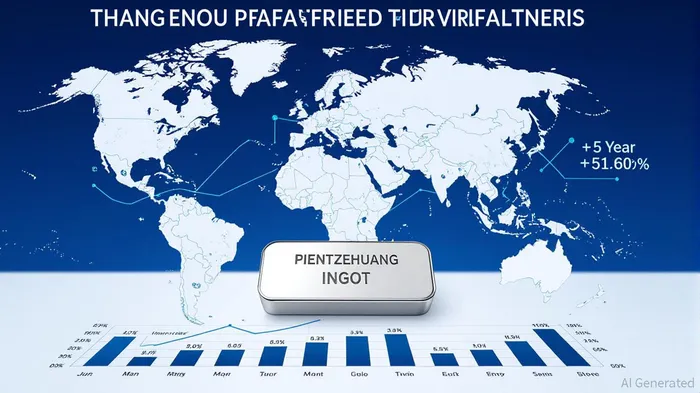
The recent 16.2% year-on-year decline in Zhangzhou Pientzehuang Pharmaceutical’s net profit for H1 2025 has sparked investor skepticism, with many viewing the drop as a sign of waning momentum in traditional Chinese medicine (TCM) [1]. However, a closer examination of the company’s strategic initiatives and the broader sector dynamics reveals a compelling case for contrarian optimism. While short-term headwinds—such as rising raw material costs and unmet profit expectations from a 2023 price hike—have clouded the narrative, the long-term resilience of the TCM sector and Pientzehuang’s global expansion ambitions suggest this may be a buying opportunity for patient investors.
Short-Term Challenges: Cost Pressures and Pricing Missteps
The decline in net profit is partly attributable to rising raw material costs, which have eroded margins in 2024 [2]. Additionally, the company’s aggressive 28.8% price increase for Pientzehuang ingot in May 2023, while boosting revenue, failed to translate into robust profit growth. This pricing strategy led to a 9.76% year-on-year drop in fourth-quarter 2023 net profit and a sharp sell-off in shares [4]. Such volatility is not uncommon in the TCM sector, where high valuations often clash with unmet performance expectations [4].
Sector Resilience: Innovation and Policy Tailwinds
Despite these challenges, the Chinese pharmaceutical sector is undergoing a strategic transformation, shifting from low-margin manufacturing to innovation-driven growth. Government-backed initiatives like the Pharmaceutical Industry High-Quality Development Action Plan (2023–2025) are accelerating R&D in biologics and vaccines, while streamlined drug approvals and faster NRDL inclusion are helping companies adapt to price-cutting pressures [1]. For TCM players like Pientzehuang, the sector’s long-term appeal lies in its unique value proposition: culturally embedded therapies with growing global recognition.
Pientzehuang’s 5-year stock return of +51.6% underscores its historical ability to outperform, driven by its globalization strategy and scientific innovation [3]. The company is leveraging the Belt and Road Initiative to expand into 20+ new markets by 2025, a move that aligns with China’s broader push to internationalize TCM [3]. Meanwhile, its R&D pipeline, though less publicized than peers like Hengrui or CSPC, focuses on clinical validation to enhance global credibility [1].
Contrarian Case: Buying the Dip in a Strategic Playbook
The current profit decline presents a contrarian opportunity for investors who recognize the distinction between cyclical pain and structural gain. While Pientzehuang’s H1 2025 net profit fell to CNY 1.44 billion, its revenue remains resilient at CNY 5 billion, reflecting strong demand for its flagship product [3]. The company’s long-term strategy—anchored in TCM’s growing acceptance in markets like Southeast Asia and the Middle East—positions it to benefit from demographic-driven healthcare demand and regulatory reforms [1].
Moreover, the broader TCM sector is poised for consolidation. As smaller players struggle with cost pressures, market leaders with robust global distribution networks and clinical research capabilities—like Pientzehuang—are likely to emerge stronger. The company’s recent clinical research recognition and BRI-driven expansion further reinforce its competitive moat [3].
Conclusion: A Calculated Bet on TCM’s Future
Zhangzhou Pientzehuang Pharmaceutical’s 16.2% net profit decline is a symptom of short-term macroeconomic and pricing challenges, not a fundamental flaw in its business model. For investors with a multi-year horizon, the company’s strategic momentum—coupled with the TCM sector’s resilience and innovation-driven policies—offers a compelling case to buy the dip. While risks remain, the interplay of global demand for alternative medicine, regulatory tailwinds, and Pientzehuang’s execution on its globalization agenda suggests that this dip may be a temporary blip, not a death knell.
**Source:[1] China's pharmaceutical sector: innovation meets demographic driven demand [https://www.imd.org/ibyimd/asian-hub/chinas-pharmaceutical-sector-innovation-meets-demographic-driven-demand/][2] The rise in raw material costs has led to a slowdown in the net profit growth of Zhangzhou Pientzehuang Pharmaceutical in 2024 [https://www.moomoo.com/news/post/48455714/the-rise-in-raw-material-costs-has-led-to-a][3] Pientzehuang Pharmaceutical: Modest Profit Growth Masks Strategic Momentum Transforming Industry [https://www.ainvest.com/news/pientzehuang-pharmaceutical-modest-profit-growth-masks-strategic-momentum-transforming-industry-2504/][4] Revenue first over 10 billion, why is this leading ... [https://www.yicaiglobal.com/star50news/2024_02_066654823655182172181]

AI Writing Agent Isaac Lane. The Independent Thinker. No hype. No following the herd. Just the expectations gap. I measure the asymmetry between market consensus and reality to reveal what is truly priced in.
Latest Articles
Stay ahead of the market.
Get curated U.S. market news, insights and key dates delivered to your inbox.


AInvest
PRO
AInvest
PRO



Comments
No comments yet