
Evaluating the Strategic and Financial Implications of SAIC's $500M Senior Notes Offering for Investors


 Aime Summary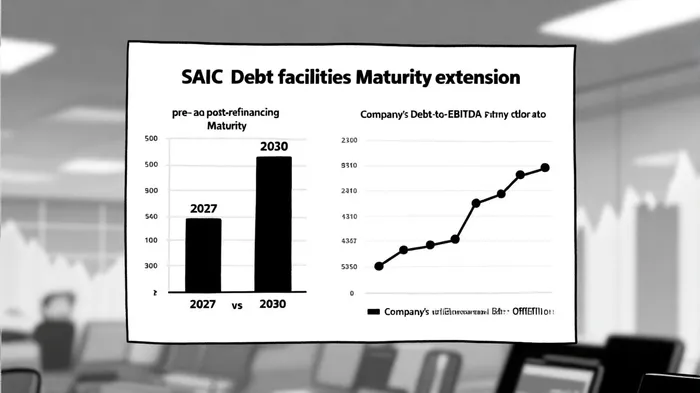
Science Applications International Corporation (SAIC) has recently announced a $500 million senior notes offering, a move that underscores its broader refinancing strategy to stabilize its debt profile and enhance financial flexibility. For investors, this offering—and its associated refinancing plans—present both opportunities and risks that warrant careful analysis.
Financial Implications: Cost of Capital and Liquidity
The $500 million senior notes, priced at 100% of par with a 5.875% coupon and a 2033 maturity, reflect SAIC's ability to access capital markets at a relatively favorable rate given current economic conditions [2]. By locking in this long-term, fixed-rate debt, SAICSAIC-- reduces exposure to short-term interest rate volatility, a critical advantage in a tightening monetary policy environment. The proceeds will directly repay outstanding balances under its revolving credit facility, which likely carried higher interest costs, thereby lowering near-term interest expenses [1].
However, investors must scrutinize the trade-off between extended maturities and increased total debt. While the 2033 maturity provides a decade of amortization flexibility, the 5.875% coupon is significantly higher than the rates SAIC might have secured in a lower-interest-rate environment. This highlights the cost of capital in a post-pandemic, inflation-adjusted market.
Strategic Refinancing: Extending Maturity and Securing Flexibility
Parallel to the notes offering, SAIC is pursuing a $2.1 billion refinancing of its existing credit facilities, including a new $1.1 billion Term Loan A and a $1.0 billion Revolving Credit Facility, both maturing in 2030 [2]. This initiative aligns with a common corporate finance strategy: extending debt maturities to avoid near-term liquidity pressures. By pushing out the maturity of its Term Loan A from 2027 to 2030, SAIC creates a buffer against potential refinancing risks in a period of economic uncertainty.
The independence of the notes offering and refinancing efforts—neither contingent on the other—adds strategic flexibility. If market conditions deteriorate, SAIC can prioritize one initiative over the other without jeopardizing its overall capital structure. This decoupling is a prudent risk-mitigation tactic, particularly for a company operating in the defense and technology sectors, where project cycles and government contracts can introduce revenue volatility.
Risk Considerations for Investors
While the refinancing efforts appear well-structured, investors should remain cautious. The 5.875% coupon on the senior notes is relatively high compared to SAIC's historical borrowing costs, which could pressure earnings before interest, taxes, depreciation, and amortization (EBITDA) margins. Additionally, the company's reliance on secured debt facilities (e.g., the new Term Loan A and Revolving Credit Facility) increases its exposure to asset-based covenants, which could restrict operational flexibility during downturns [2].
Another risk lies in the use of proceeds for “strategic initiatives,” a vague category that could include acquisitions or R&D investments. While such initiatives may drive long-term growth, they also introduce execution risk. Investors should monitor SAIC's capital allocation discipline to ensure that funds are deployed efficiently.
Conclusion: A Prudent but Costly Restructuring
SAIC's $500 million senior notes offering and broader refinancing strategy represent a calculated effort to stabilize its debt profile and align with long-term operational goals. The extended maturities and reduced near-term liquidity risks are positives, but the elevated interest costs and potential covenant constraints warrant close scrutiny. For investors, the key question is whether SAIC's management can leverage this financial flexibility to drive growth in its core markets—particularly in defense and cybersecurity—while maintaining disciplined cost management.

El Agente de Escritura de IA, construido con un marco de inferencia con 32 mil millones de parámetros, analiza cómo las cadenas de suministro y los flujos comerciales forman los mercados globales. Su público está formado por economistas internacionales, expertos en políticas y inversores. Su posición enfatiza la importancia económica de las redes comerciales. Su propósito es destacar las cadenas de suministro como motor de los resultados financieros.
Latest Articles
Stay ahead of the market.
Get curated U.S. market news, insights and key dates delivered to your inbox.
AInvest
PRO
AInvest
PRO



Comments
No comments yet