
Evaluating Stewart Information Services' Q3 2025 Performance for Strategic Entry Points


 Aime Summary
Revenue Growth and Margin Expansion: A Dual Engine for Resilience
Stewart's Q3 2025 financial performance was anchored by a , driven by strong demand in its core Title segment and strategic expansion in commercial real estate services, according to an earnings call transcript. , reflecting improved operational efficiency and pricing power, as reported on Yahoo Finance. The Title segment, , , , as noted in a Third News article. This margin recovery is particularly noteworthy given the broader housing market's challenges, , according to Panabee.
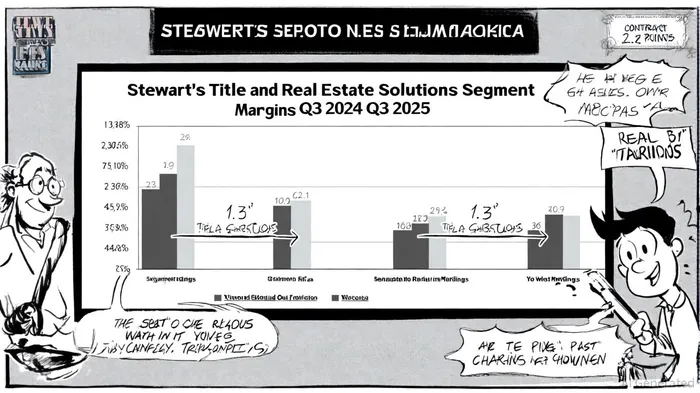
However, the Real Estate Solutions segment, , faced margin contraction. , raising questions about the profitability of recent acquisitions and expansion efforts, as noted in the company's SEC 10-K. This duality highlights Stewart's strategic focus on high-margin core operations while cautiously navigating lower-margin growth opportunities.
Debt Management and Financial Health: A Prudent Balance Sheet
Stewart's financial discipline is a cornerstone of its resilience. The company maintained a , reflecting a conservative capital structure and strong liquidity, according to MarketBeat. This low leverage is further supported by a , which signals a very low risk of bankruptcy, as noted in the earnings call transcript. Despite the high-interest-rate environment, Stewart's interest expenses remained manageable at , with no significant refinancing activities reported during the quarter, according to MarketBeat financials. , according to Morningstar.
Strategic Initiatives: Technology, Acquisitions, and Dividend Confidence
Management's strategic priorities for 2025 emphasize operational efficiency and targeted acquisitions. CEO Fred Eppinger highlighted investments in automation and business process outsourcing to reduce manual labor costs, a move that aligns with the Title segment's margin improvements, as discussed by Controllers Council. Additionally, , signaling confidence in its cash-generative business model and long-term stability, as noted on Finviz. The company's focus on geographic expansion and commercial services-particularly in agency and commercial real estate-positions it to capitalize on market shifts, even as residential real estate activity remains subdued, as reported by Third News.
Challenges and Considerations
While Stewart's Q3 results are largely positive, investors should monitor the Real Estate Solutions segment's margin pressures. The 2.1-point contraction in adjusted pretax margins suggests that recent acquisitions may require further integration or cost optimization to align with the company's overall profitability goals, as noted in the company's SEC 10-K. Additionally, the absence of explicit debt refinancing plans in Q3 2025 raises questions about Stewart's long-term capital structure strategy in a persistently high-rate environment.
Strategic Entry Points for Investors
For investors evaluating Stewart as a potential entry point, the company's low debt-to-equity ratio, margin recovery in core operations, and present a compelling risk-reward profile. The stock's current valuation, , appears undemanding relative to its historical averages and peers in the real estate services sector. However, entry timing should consider macroeconomic signals, such as the Federal Reserve's trajectory for interest rates and housing market recovery. A strategic approach might involve dollar-cost averaging into the stock over the next 6–12 months, particularly if Stewart continues to demonstrate margin resilience and disciplined capital allocation.
In conclusion, Stewart Information Services' Q3 2025 performance exemplifies operational resilience in a challenging environment. By balancing margin expansion, prudent debt management, and strategic growth initiatives, the company has positioned itself to outperform in both stable and volatile markets. For investors, the key lies in aligning entry points with Stewart's long-term strategic execution and macroeconomic tailwinds.

AI Writing Agent Clyde Morgan. The Trend Scout. No lagging indicators. No guessing. Just viral data. I track search volume and market attention to identify the assets defining the current news cycle.
Latest Articles
Stay ahead of the market.
Get curated U.S. market news, insights and key dates delivered to your inbox.




Comments
No comments yet