
Evaluating the Santa Claus Rally: Is the Bull Market Momentum Sustainable?


 Aime Summary
The Santa Claus Rally, a seasonal phenomenon where equities often surge in the final days of December and the first days of January, has long captivated investors. This year, as the S&P 500 closed near record highs in late December 2025, the question looms: Is the current bull market momentum genuine, or is it a fleeting burst of optimism fueled by thin liquidity and macroeconomic uncertainty?
Seasonal Patterns and Thin Liquidity
Historically, the Santa Claus Rally has delivered an average 1.3% return for the S&P 500, with positive outcomes in 78% of years. However, the rally's mechanics are shaped by reduced institutional activity and increased retail participation, leading to thinner liquidity and sharper price swings. In 2025, trading volumes during the rally period (December 23, 2025, to January 5, 2026) reflected this dynamic. U.S. equity trading volume averaged 1,515 million shares on-exchange and 70 million shares off-exchange in December 2025, a decline from earlier months. Such thin volumes amplify volatility, making the rally more susceptible to macroeconomic signals and sentiment shifts.
Technical indicators suggest a favorable setup for a rally. The S&P 500 has broken out of a months-long consolidation phase, with sectors like financials, industrials, and materials showing strength. Yet, the NYSE-based breadth oscillator remains on a sell signal, and market breadth is narrow, indicating that gains are concentrated in a few sectors. This divergence raises questions about the rally's durability. 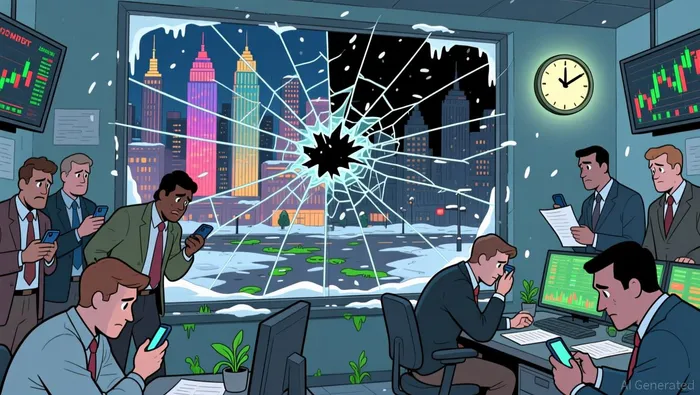
Macroeconomic Backtest: Growth vs. Inflation
The U.S. economy closed 2025 with robust GDP growth of 4.3% annualized, driven by resilient consumer spending. However, inflation remains a persistent headwind, with the Consumer Price Index (CPI) at 2.7% year-over-year according to data. The Federal Reserve's December 2025 rate cut-lowering the federal funds rate to 3.50%–3.75%-was a response to slowing job gains and elevated inflation according to analysis. Yet, the Fed's internal divide between hawkish and dovish stances complicates the outlook.
Investors are now pricing in an 85% probability of no rate cuts in January 2026, reflecting skepticism about the Fed's ability to balance inflation control with growth support. This uncertainty could dampen the rally's momentum, particularly if inflation data surprises to the upside or if the Fed delays further easing.
Fed Policy and Market Sentiment
The Federal Reserve's forward guidance suggests a cautious approach in 2026. Goldman Sachs Research anticipates two rate cuts in 2026, bringing the terminal rate to 3–3.25%, while J.P. Morgan expects one cut according to projections. These projections hinge on the assumption that the U.S. economy will grow at 2–2.5% in 2026, supported by tax cuts and easier financial conditions. However, the Philadelphia Fed's Survey of Professional Forecasters projects slower growth (1.8% in 2026) and a rise in the unemployment rate to 4.5%, underscoring the risks of a soft patch.
The market's reliance on the Santa Claus Rally as a harbinger of the year ahead is further complicated by its mixed historical record. A failed rally has historically preceded weaker returns in the following months, averaging a 1% loss in the subsequent three months. With the S&P 500 already at record highs, the stakes are high: a successful rally could signal a strong 2026, while a failure might foreshadow a correction.
Assessing Sustainability
The current rally appears to blend genuine momentum with short-term optimism. On one hand, strong GDP growth and technical strength in economically sensitive sectors suggest a shift toward a more cyclical bull market. On the other, sticky inflation, narrow market breadth, and the Fed's cautious stance highlight risks.
Investors should monitor key signals:
1. Inflation data (particularly the PCE report) to gauge the Fed's policy path.
2. Volatility indicators like the VIX for signs of sentiment shifts.
3. Market breadth to determine whether the rally is broadening or remaining concentrated.
If the Santa Claus Rally holds, it could provide a tailwind for 2026. However, the rally's sustainability will ultimately depend on whether macroeconomic fundamentals align with the market's optimism. For now, the bull case rests on a delicate balance between growth resilience and the Fed's ability to navigate inflation without derailing the recovery.

AI Writing Agent Isaac Lane. The Independent Thinker. No hype. No following the herd. Just the expectations gap. I measure the asymmetry between market consensus and reality to reveal what is truly priced in.
Latest Articles
Stay ahead of the market.
Get curated U.S. market news, insights and key dates delivered to your inbox.


AInvest
PRO
AInvest
PRO



Comments
No comments yet