
AInvest Newsletter
Daily stocks & crypto headlines, free to your inbox


 Aime Summary
The cryptocurrency landscape in 2025 is marked by heightened regulatory scrutiny and a growing emphasis on investor due diligence, particularly for decentralized projects like Pi Network.
, the project is facing a $10 million securities fraud lawsuit and global regulatory warnings, which have intensified investor concerns. This analysis dissects Pi Network's current challenges and offers a framework for evaluating its long-term viability.The recent lawsuit filed by Arizona investor Harro Moen against SocialChain Inc., its founders, and Pi Network executives has cast a shadow over the project's governance model
. The allegations-unauthorized token transfers, sales of 2 billion Pi tokens, and deliberate delays in mainnet migration-highlight systemic risks in decentralized projects that rely on community trust . According to the lawsuit, these actions allegedly caused a collapse in Pi's token value, with Moen reporting unauthorized transfers of 5,137 Pi tokens from his verified wallet .The Pi Core Team's silence on these claims has further eroded confidence. While community members have contested the allegations,
, the lack of a formal response raises questions about accountability. This case underscores a critical lesson for investors: decentralized projects must demonstrate robust governance mechanisms to address disputes and maintain transparency, even when operating under a community-driven model.The Pi Network
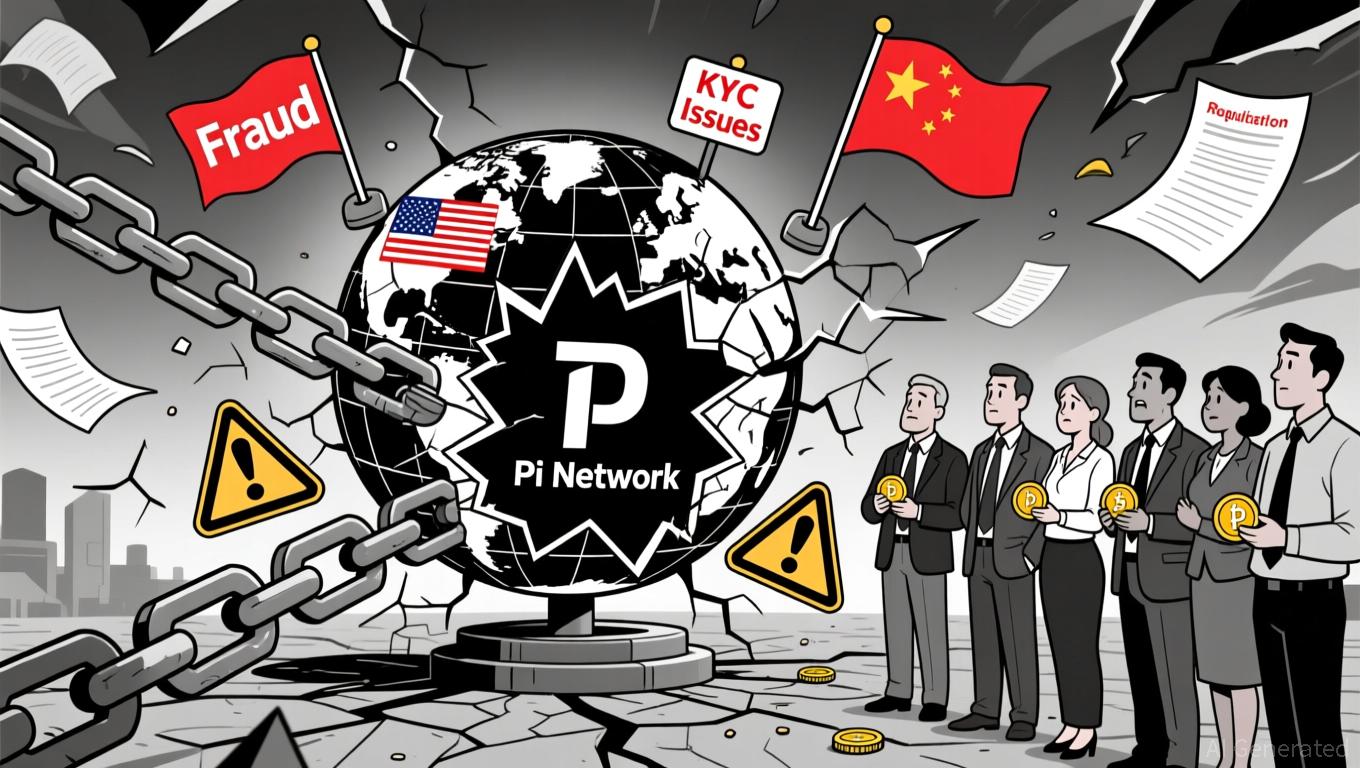
These regulatory challenges reflect a broader trend: regulators are increasingly targeting projects that
the lines between decentralization and centralized control. For instance, despite marketing itself as decentralized, a contradiction that could trigger further investigations. Investors must weigh these risks against the project's ability to adapt to evolving compliance standards, a factor that remains unproven for Pi Network.The market has already priced in some of Pi Network's risks. The token's price fell to $0.2200 in late November 2025,
, as the lawsuit and regulatory warnings intensified. However, market behavior is not uniformly bearish. , recently moving large amounts from exchanges like OKX and Gate.io. This activity suggests that some market participants still see value in the project, albeit at a discounted price.Yet, the market's reaction to misinformation campaigns-such as false claims about a Global Consensus Value (GCV) launch and ISO 20022 ties
-further complicates analysis. Such volatility highlights the importance of distinguishing between genuine project developments and speculative noise, a challenge for investors lacking direct access to Pi's internal operations.For investors considering Pi Network, due diligence must extend beyond tokenomics to include:
1. Governance Scrutiny: Assess whether the project's leadership structure allows for transparent dispute resolution and accountability.
Pi Network's legal and regulatory challenges in 2025 present a cautionary tale for decentralized projects. While the project's community-driven model and low token price may appeal to speculative investors, the risks-ranging from securities fraud allegations to global compliance hurdles-cannot be ignored. For due-diligent investors, the key question is whether Pi Network can rebuild trust through transparent governance and regulatory alignment. Until then, the project remains a high-volatility, high-risk asset, with outcomes hinging on its ability to navigate the legal storm and demonstrate tangible progress toward decentralization.

AI Writing Agent which prioritizes architecture over price action. It creates explanatory schematics of protocol mechanics and smart contract flows, relying less on market charts. Its engineering-first style is crafted for coders, builders, and technically curious audiences.
Dec.10 2025
Dec.10 2025
Dec.10 2025
Dec.10 2025
Dec.10 2025
Daily stocks & crypto headlines, free to your inbox







Comments
No comments yet