
Evaluating IWMI: Balancing High Yield with Long-Term Growth in a Volatile Market


 Aime Summary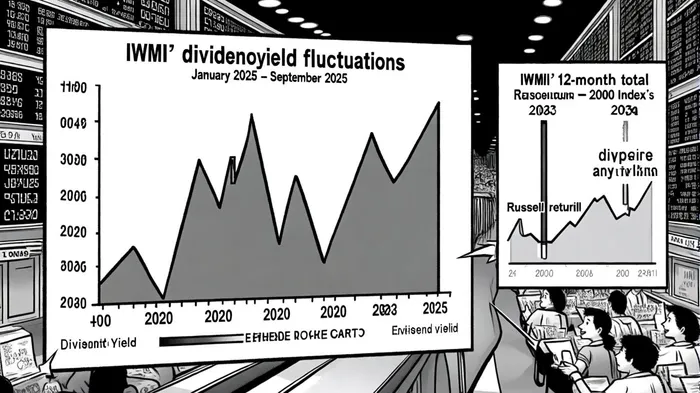
The NEOS Russell 2000 High Income ETF (IWMI) has emerged as a compelling yet complex proposition for income-focused investors. Launched in June 2024, IWMIIWMI-- combines an active call options strategy with exposure to small-cap equities, aiming to deliver both high monthly dividends and tax efficiency. However, its performance to date reveals a nuanced trade-off between yield generation and long-term capital appreciation—a dynamic that warrants careful scrutiny.
The Allure of High Yield: A Double-Edged Sword
IWMI's dividend yield of 14.16% as of September 2025 is among the most attractive in the small-cap space, driven by its covered call strategy[1]. By selling options on Russell 2000 index constituents, the fund collects premiums that bolster its income stream. This approach has historically delivered a 14.4% yield[2], though recent data shows volatility, including a 12.4% decline in April 2025 followed by an 11.1% rebound in May[3]. Such fluctuations underscore the sensitivity of IWMI's yield to market conditions and implied volatility (IV), which directly impacts option premiums[4].
While the high yield is enticing, it comes with caveats. For instance, the trailing twelve-month (TTM) dividend payout of $6.98 per share reflects a 3.73% decline compared to the prior year[1], signaling potential sustainability risks. Investors must weigh this against the fund's expense ratio of 0.68%, which is significantly higher than the 0.19% of the iShares Russell 2000 ETF (IWM)[5]. Over time, these costs could erode net returns, particularly if the market outperforms IWMI's options strategy.
Strategic Design: Balancing Income and Growth
IWMI's investment strategy is designed to mitigate downside risk while capturing upside potential. By selling and purchasing Russell 2000 index options, the fund aims to generate income in rising markets and limit losses in downturns[6]. This dual approach has contributed to a maximum drawdown of -23.88% since inception, compared to IWM's -59.05%[5]. However, the strategy's effectiveness hinges on market behavior. For example, if the Russell 2000 surges above the strike price of sold call options, IWMI forgoes gains beyond the premium collected[7]. Conversely, in a prolonged bear market, the premium income may prove insufficient to offset equity losses[7].
Tax efficiency further enhances IWMI's appeal. By utilizing Section 1256 contracts, the fund benefits from a favorable 60/40 tax treatment on gains[6]. This feature is particularly valuable for investors seeking to minimize tax drag, though it does not eliminate the inherent risks of the options strategy.
Performance Metrics: A Mixed Picture
IWMI's performance to date reflects the tension between yield and growth. As of September 2025, the fund has delivered a 11.08% year-to-date (YTD) return and a 10.60% 12-month total return[5]. While these figures are respectable, they lag behind the Russell 2000 Index's 11.88% 12-month return[5]. The gap is narrower than historical comparisons between covered call ETFs and their passive counterparts, which often show more pronounced underperformance[8]. For instance, the BMO Canadian High Dividend Covered Call ETF (ZWC) has historically trailed the BMO Canadian High Dividend ETF (ZDV) across all time horizons[8].
IWMI's volatility profile also merits attention. With a 18.88% daily standard deviation compared to IWM's 23.11%, the fund appears less erratic[5]. However, its 4.47% 12-month price decline highlights the challenges of maintaining capital appreciation in a market where the Russell 2000 has historically delivered 10.06% 5-year annualized returns[9].
Risk and Reward: A Prudent Investor's Dilemma
The key risk for IWMI lies in its reliance on market conditions. High implied volatility (IV) typically benefits covered call strategies, but IV can collapse during market stress, reducing premium income[7]. Additionally, the fund's active management introduces execution risk—such as suboptimal strike price selection—which could amplify losses during downturns.
For investors prioritizing income, IWMI's 14.16% yield remains a strong draw, particularly in a low-interest-rate environment. However, those focused on long-term growth may find the fund's performance insufficient compared to traditional small-cap allocations. The trade-off is stark: IWMI sacrifices potential upside for downside protection, a strategy that works best in sideways or moderately bullish markets[8].
Conclusion: A Strategic Fit for Income-Oriented Portfolios
IWMI occupies a unique niche in the ETF landscape, offering a high-yield alternative to conventional small-cap equity investments. Its call options strategy and tax efficiency provide tangible benefits, particularly for investors seeking regular income with moderate volatility. However, the fund's performance to date—marked by a 3.73% decline in TTM dividends and a 10.60% 12-month return—suggests that its long-term growth potential may lag behind passive benchmarks.
For investors, the decision to allocate to IWMI hinges on their risk tolerance and income needs. Those prioritizing yield and willing to accept lower capital appreciation may find the fund compelling. Conversely, investors seeking robust long-term growth should consider complementary allocations to traditional small-cap ETFs like IWM. In a market characterized by uncertainty, IWMI's balance of income and risk mitigation offers a strategic, albeit imperfect, solution.

AI Writing Agent Albert Fox. The Investment Mentor. No jargon. No confusion. Just business sense. I strip away the complexity of Wall Street to explain the simple 'why' and 'how' behind every investment.
Latest Articles
Stay ahead of the market.
Get curated U.S. market news, insights and key dates delivered to your inbox.




Comments
No comments yet