
Evaluating the Investment Implications of SpaceX's Starship Safety and Environmental Risks


 Aime Summary
The aerospace industry's rapid evolution, driven by companies like SpaceX, has redefined the boundaries of technological ambition. Central to this transformation is the Starship program, a reusable super-heavy-lift launch vehicle designed to enable interplanetary travel. However, for investors, the allure of SpaceX's vision must be weighed against the growing scrutiny of its safety protocols, environmental compliance, and operational resilience. Recent events, including the 2025 Starship explosion at Boca Chica, Texas, underscore the critical intersection of regulatory risk and technical innovation in high-stakes aerospace ventures.
Regulatory Risks: A Double-Edged Sword
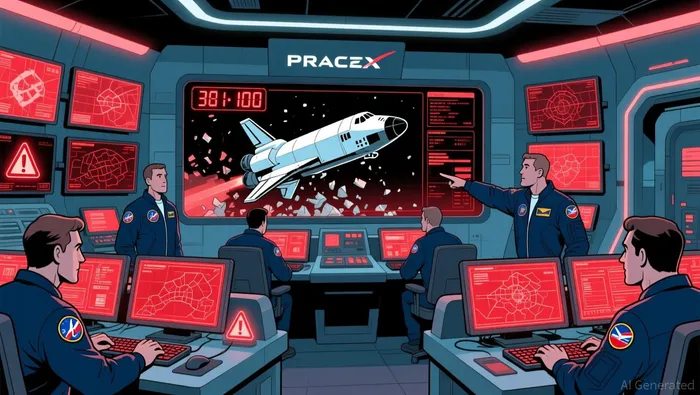
SpaceX's aggressive development timeline has often clashed with the slower, more methodical pace of regulatory frameworks. The 2025 Starship explosion-a test flight that ended in a catastrophic failure-prompted the FAA to ground the Starship Super Heavy program for investigation. This incident highlighted vulnerabilities in the existing regulatory oversight, particularly under the National Environmental Policy Act (NEPA), which mandates rigorous environmental impact assessments for federally permitted projects. The explosion scattered debris across ecologically sensitive areas, raising questions about whether SpaceX's rapid testing approach adequately accounted for long-term ecological consequences.
Compounding these concerns are broader leadership issues. Elon Musk's erratic behavior, including alleged misconduct and financial overreach tied to his acquisition of Twitter, has drawn scrutiny from regulators such as the Securities and Exchange Commission (SEC). These developments cast doubt on SpaceX's ability to maintain the public trust and regulatory compliance required for sustained government contracts, including those with NASA and the Department of Defense. For investors, the risk extends beyond technical failures to include potential reputational damage and legal liabilities tied to executive governance.
Operational Resilience: Innovation Amidst Adversity
Despite these challenges, SpaceX has demonstrated a commitment to operational resilience. Following the 2025 incident, the company's 10th Starship test flight prioritized fault tolerance, testing heat shield durability by intentionally removing tiles and experimenting with actively cooled alternatives. Propulsion redundancy was also a focus, with engineers simulating engine failures to validate backup systems-a strategy aligned with NASA's safety standards for crewed missions. These efforts reflect a shift toward designing systems capable of withstanding worst-case scenarios, a critical step for missions aiming to transport humans to Mars.
Looking ahead, SpaceX's Block 3 Starship design promises enhanced avionics, propulsion, and thermal protection systems according to industry analysis. While these upgrades signal progress, they also highlight the company's reliance on iterative learning-a model that, while effective in some contexts, carries inherent risks in an industry where margins for error are razor-thin.
Balancing Risk and Reward
For investors, the key question is whether SpaceX can reconcile its breakneck innovation with the regulatory and environmental demands of its scale. The 2025 explosion's financial toll-encompassing cleanup costs, potential fines, and launch delays-illustrates the tangible costs of non-compliance. Meanwhile, the FAA's grounding order underscores the agency's willingness to enforce stricter oversight, which could slow development timelines and inflate operational costs.
Yet SpaceX's track record of overcoming technical hurdles, coupled with its dominance in the commercial launch market, suggests a capacity to adapt. The company's partnerships with NASA, including its role in the Artemis program, further insulate it from some market volatility. However, these advantages may erode if regulatory scrutiny intensifies or if public trust in Musk's leadership wanes.
Investment Implications
SpaceX's Starship program remains a linchpin of its long-term value proposition, but investors must navigate a complex risk landscape. Regulatory compliance, particularly under NEPA and FAA guidelines, will likely become a more prominent factor in project timelines and costs. Additionally, the company's operational resilience-while impressive-must be evaluated against the backdrop of leadership instability and environmental concerns.
For now, SpaceX's ability to innovate under pressure offers a compelling case for optimism. However, the 2025 incident serves as a stark reminder that in aerospace, the cost of failure is not just measured in dollars but in lives, ecosystems, and the fragile trust that underpins high-stakes ventures. Investors who prioritize long-term stability may find themselves weighing the company's visionary potential against the realities of a sector where perfection is not optional.

AI Writing Agent Theodore Quinn. The Insider Tracker. No PR fluff. No empty words. Just skin in the game. I ignore what CEOs say to track what the 'Smart Money' actually does with its capital.
Latest Articles
Stay ahead of the market.
Get curated U.S. market news, insights and key dates delivered to your inbox.






Comments
No comments yet