
Evaluating the Impact of Shopify's Cyber Monday Outage on E-Commerce Infrastructure Stocks


 Aime Summary
Technical Root Causes and Systemic Vulnerabilities
The outage originated from a configuration error in Cloudflare's Bot Management system, which generated oversized configuration files and triggered a cascading failure across its network infrastructure. This error, traced to a permissions change in a ClickHouse database cluster, propagated corrupted configurations across Cloudflare's services, rendering core proxy functions inoperable. While CloudflareNET-- engineers restored services within five hours, the incident exposed the risks of overreliance on single-point infrastructure providers. Shopify, which integrates Cloudflare into its technical stack, experienced simultaneous disruptions to its admin dashboards, POS systems, and transaction processing.
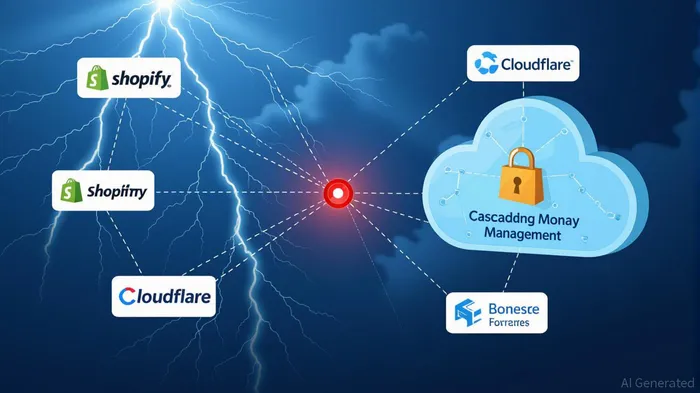 This event aligns with a pattern of global outages caused by configuration errors, software bugs, and infrastructure failures, often stemming from small mistakes with far-reaching consequences. The interconnectedness of e-commerce platforms and third-party services-such as payment gateways, CDN providers, and logistics systems-amplifies the risk of systemic disruptions. For instance, the Cloudflare outage not only affected Shopify but also platforms like X, ChatGPT, and Spotify, illustrating how a single vendor's failure can ripple across industries.
Merchant Impact and Revenue Loss
The outage occurred during one of the busiest shopping days of the year, locking out thousands of Shopify merchants from their admin dashboards and storefronts for at least 47 minutes. Merchants in countries such as Portugal, Lebanon, and South Korea reported difficulties processing orders, managing inventory, and fulfilling promotions, with many small and medium-sized businesses facing potential revenue losses. The disruption also impacted in-store transactions via Shopify's POS systems, compounding the financial strain on retailers.
According to a report by Yottaa, average Shopify store downtime during peak traffic periods like Cyber Monday increases by 18% compared to regular periods, with checkout abandonment rates rising by nearly 12%. The 2025 outage exacerbated these challenges, as merchants missed optimization opportunities and faced reputational damage from failed transactions. This highlights the critical need for robust contingency planning and diversified infrastructure strategies to mitigate such risks.
Market Reactions and Systemic Risk Perceptions
The outage had immediate financial repercussions. Cloudflare's stock price dropped 3.3% during the incident, while Shopify's shares fell 3.06% in pre-market trading following its Q3 2025 earnings report, despite exceeding revenue and earnings forecasts. The broader e-commerce infrastructure sector also faced volatility, with payment processors and CDN providers experiencing operational disruptions due to the outage.
Analysts have raised concerns about systemic risks posed by concentrated digital infrastructure. The Cloudflare outage, coupled with Shopify's Cyber Monday disruption, has reignited discussions about the need for architectural diversification, dependency mapping, and regulatory oversight. For example, the European Union's Digital Operational Resilience Act and the UK's Operational Resilience regime emphasize the importance of demonstrating third-party supplier resilience. Investors are increasingly scrutinizing e-commerce platforms' preparedness for cascading failures, with a growing emphasis on multi-CDN strategies and hybrid cloud architectures.
Is This an Isolated Incident or a Broader Vulnerability?
While the 2025 outage was tied to a specific configuration error, it reflects a broader trend of infrastructure fragility in the digital economy. The rise of cloud-native business models has accelerated the concentration of critical services among a small number of providers, creating scenarios where a single point of failure can have widespread implications. For instance, the Cloudflare outage occurred just weeks after Shopify's own BFCM preparations, which included bimonthly "fire drills" and multi-region strategies on Google Cloud. Despite these efforts, the company's reliance on Cloudflare exposed vulnerabilities in its third-party dependencies.
This incident underscores the importance of proactive risk management. E-commerce platforms must adopt strategies such as real-time monitoring, rapid incident response protocols, and transparent communication with stakeholders. Additional research shows that regulatory frameworks and industry best practices will play a pivotal role in shaping the resilience of digital infrastructure.
Conclusion: Implications for Investors
For investors, the Cyber Monday 2025 outage serves as a cautionary tale about the systemic risks embedded in the e-commerce infrastructure sector. While Shopify's Q3 performance demonstrated strong operational resilience, the outage highlighted the sector's susceptibility to cascading failures. The market's mixed reaction-balancing optimism over Shopify's earnings with concerns about infrastructure vulnerabilities-reflects the delicate interplay between growth and stability in the digital retail landscape.
Investors should prioritize companies that diversify their infrastructure dependencies, invest in redundancy measures, and align with regulatory frameworks like DORA. The 2025 outage is not an isolated hiccup but a harbinger of the challenges that lie ahead in an increasingly interconnected digital economy. As e-commerce continues to expand, the ability to navigate systemic risks will determine the long-term viability of platforms like Shopify and their ecosystem partners.

Delivering real-time insights and analysis on emerging financial trends and market movements.
Latest Articles
Stay ahead of the market.
Get curated U.S. market news, insights and key dates delivered to your inbox.




Comments
No comments yet