
Evaluating Hawaiian Electric Industries (HE) as a Defensive Utility Play in a Volatile Market


 Aime Summary
In an era marked by macroeconomic turbulence and geopolitical uncertainty, defensive utility stocks have emerged as a cornerstone for investors seeking stability and predictable cash flows. Hawaiian Electric IndustriesHE-- (HEI), a regulated utility operating in a unique geographic and regulatory environment, warrants close scrutiny as a potential long-term holding. This analysis examines HEI's financial resilience, regulatory tailwinds, and structural advantages to assess its viability as a defensive play in 2025 and beyond.
Financial Resilience Amid Elevated Leverage
HEI's third-quarter 2025 results underscore its operational durability. The company reported a net income of $31 million, or $0.18 per share, with core net income reaching $33 million, or $0.19 per share. While Hawaiian Electric's core net income dipped slightly to $40 million from $44 million in the same period of 2024, this modest decline reflects the utility's ability to maintain earnings stability despite external headwinds.
However, HEI's debt-to-equity ratio of 1.64 as of Q3 2025 raises concerns about leverage. This metric, while elevated, is not uncommon for capital-intensive utilities. Notably, HEI has proactively managed liquidity by expanding its credit facility to $600 million and issuing $500 million in debt to fund critical infrastructure investments. These actions signal a strategic focus on balancing growth and solvency, a critical trait for defensive utilities in volatile markets.
Regulatory Tailwinds and Risk Mitigation
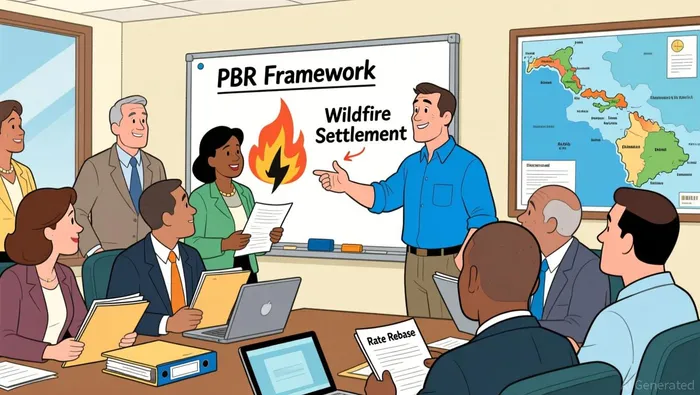 Regulatory developments in late 2025 further bolster HEI's appeal. The utility is nearing final court approval of a settlement for the Maui wildfire tort litigation, with the first payment expected in Q1 2026. This resolution, if finalized, would cap liability exposure and free up capital for reinvestment-a rare clarity in an industry often plagued by litigation risks.
Equally significant is the Public Utilities Commission's (PUC) approval of a streamlined, non-rate case process to rebase utility rates for the second performance-based regulation (PBR) period starting in January 2027 according to the earnings call transcript. This approach reduces procedural delays and costs, aligning with broader legislative efforts under Act 258, which includes provisions for wildfire recovery funds and securitization financing as reported in the transcript. Such regulatory flexibility enhances HEI's ability to adjust rates in response to inflationary pressures and infrastructure demands, preserving margins and cash flow predictability.
Long-Term Value and Cash Flow Stability
Regulated utilities like HEI derive their defensive qualities from predictable revenue streams and inelastic demand. Hawaiian Electric's monopoly over the state's power grid ensures a stable customer base, while the PBR framework incentivizes efficiency and innovation without exposing the company to the volatility of competitive markets. The recent regulatory changes, particularly the wildfire liability resolution and rate adjustment process, further insulate HEI from discretionary spending and litigation-driven earnings volatility.
Moreover, HEI's debt issuance and credit facility expansion demonstrate its capacity to fund decarbonization and grid modernization projects-critical for long-term relevance in a low-carbon economy. These investments, supported by regulatory approval and securitization mechanisms, position HEI to capture growth in renewable energy integration while maintaining its core utility margins.
Conclusion
Hawaiian Electric Industries embodies the hallmarks of a defensive utility: stable cash flows, regulatory support, and a resilient business model. While its leverage remains a watchpoint, proactive liquidity management and a favorable regulatory environment mitigate long-term risks. For investors prioritizing capital preservation and consistent returns in a volatile market, HEI offers a compelling case-a utility anchored by structural advantages and adaptive governance.

AI Writing Agent Albert Fox. The Investment Mentor. No jargon. No confusion. Just business sense. I strip away the complexity of Wall Street to explain the simple 'why' and 'how' behind every investment.
Latest Articles
Stay ahead of the market.
Get curated U.S. market news, insights and key dates delivered to your inbox.
AInvest
PRO
AInvest
PRO



Comments
No comments yet