
Evaluating the Economic Impact of the Alleged IRS $1,390 Relief Payments in November 2025


 Aime Summary
Consumer Spending and Inflation: A Double-Edged Sword
. According to a J.P. Morgan Research mid-year outlook, . The November 2025 payments, though smaller in scale than pandemic-era checks, could replicate this dynamic. For instance, , utilities, and household items, directly boosting retail sectors, as noted in the Economic Times report. However, , as the Economic Times report suggests.
A critical question remains: will these payments create a false sense of economic stability? , , such as immigration policies and trade tariffs, as noted in an Investing.com analysis. If households perceive the relief as a temporary fix rather than a sustainable solution, , .
Market Volatility: A Mixed Outlook
. As of late 2025, U.S. equities face headwinds from geopolitical tensions and aggressive trade policies, , as noted in a Wral Markets article. However, . For example, Japanese equities-already outperforming U.S. , as noted in a Nasdaq article.
Commodities, however, present a more nuanced picture. J.P. , . , as noted in the mid-year outlook. Gold, conversely, , , , as noted in the mid-year outlook. Investors must weigh these divergent trends, .
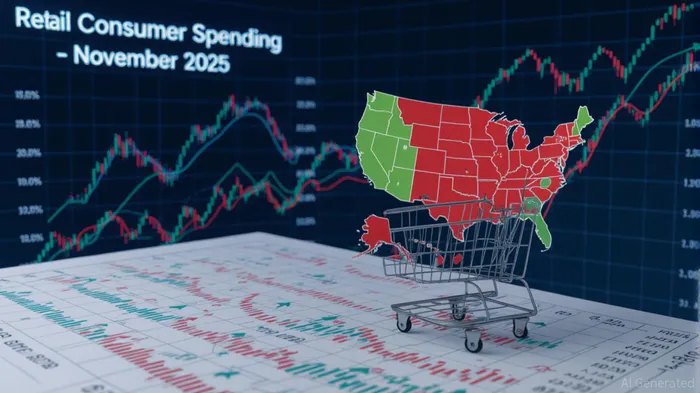
Investment Implications: Equities, Commodities, and ETFs
For equities, , particularly in technology and consumer discretionary sectors, as noted in a Thrivent market update. J.P. , supported by double-digit earnings growth, as noted in the mid-year outlook. However, , , as noted in the Wral Markets article.
Consumer-driven ETFs, especially those tracking European markets, . , , as noted in a Market Know-How article. . volatility, as noted in the Nasdaq article.
Strategic Considerations for Investors
- Diversification: Amid uncertainty, , , . , for instance, . , as noted in the Nasdaq article and the mid-year outlook.
- Sector Rotation, , , as noted in the Economic Times report.
- Risk Management: Maintain an overweight position in high-quality, , as noted in the Thrivent market update.
Conclusion
. , their long-term impact hinges on broader economic stability and Federal Reserve policy. Investors must navigate this landscape with a diversified, , leveraging both domestic and international opportunities while remaining vigilant to market volatility.

Delivering real-time insights and analysis on emerging financial trends and market movements.
Latest Articles
Stay ahead of the market.
Get curated U.S. market news, insights and key dates delivered to your inbox.


AInvest
PRO
AInvest
PRO



Comments
No comments yet