
Evaluating COAI's Sharp Price Drop: Is This a Buying Opportunity or a Cautionary Signal?


 Aime Summary
Short-Term Volatility and Market Sentiment
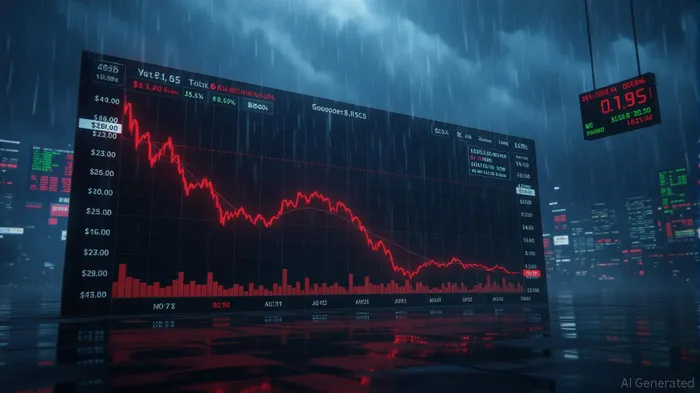
COAI's price drop was not a gradual correction but a catastrophic collapse. A single-day plunge from $44.90 to $14 in October 2025, followed by a further 88% decline by December, underscores extreme volatility. Analysts attribute this to synchronized trading patterns from 60 wallets, suggesting potential manipulation. Market sentiment turned decisively bearish after the Federal Reserve's 25 basis point rate cut in Q3 2025 triggered a "buy the rumor, sell the news" dynamic, exacerbating short-term instability. By November, COAI's 96.72% drop over 30 days reflected a loss of confidence in the project's ability to recover.
Underlying Fundamentals and Governance Risks
COAI's tokenomics, while ambitious, reveal critical vulnerabilities. The platform's "Proof of Intelligence" mechanism and community incentives (58.5% token allocation) aim to foster collaboration, but 88% of the supply remains concentrated in just ten wallets. This centralization raises red flags about liquidity and manipulation, mirroring systemic risks observed in the 2008 financial crisis. Compounding these issues, governance failures at COAI's parent company, C3.ai, further eroded trust. A $116.8 million loss in Q1 2025, leadership turmoil, and a class-action lawsuit highlighted operational fragility. Meanwhile, the CLARITY Act's failure to clarify regulatory status for AI tokens left the sector in legal limbo, deterring institutional capital.
Macroeconomic Pressures and Sector Shifts
Broader macroeconomic factors amplified COAI's decline. U.S. government shutdowns delayed key economic data, creating policy uncertainty and complicating expectations for Fed rate decisions. Inflationary pressures, though easing to 2.1% in October, continued to dampen risk appetite. Simultaneously, investors shifted capital toward stable AI equities like Microsoft and Nvidia, which demonstrated stronger financial performance and clearer regulatory positioning. Global clean energy investment reached $3.3 trillion in 2025, further diverting funds from speculative AI-linked assets. These trends underscore a market prioritizing transparency and long-term value over hype-driven speculation.
Strategic Risk Assessment and Recovery Potential
Despite the dire short-term outlook, some analysts argue COAI may be undervalued. C3.ai's resilient business model-84% of its revenue from recurring subscriptions-suggests long-term potential. However, recovery hinges on addressing governance flaws, regulatory clarity, and liquidity constraints. SK Group Chairman Chey Tae-won acknowledges AI's transformative potential but warns of overvaluation risks, predicting a market correction as fundamentals lag valuations. The token's four-year supply unlock schedule also aligns with adoption timelines, offering a glimmer of hope if the ecosystem stabilizes.
Conclusion: A Cautionary Signal with Conditional Opportunities
COAI's collapse is best viewed as a cautionary signal rather than a straightforward buying opportunity. While the project's vision for a decentralized AI ecosystem remains compelling, its structural weaknesses-concentrated ownership, governance instability, and regulatory ambiguity-pose existential risks. Investors must weigh the possibility of a rebound against the likelihood of further deterioration. For COAI to regain traction, it must demonstrate robust governance reforms, transparent token distribution, and alignment with evolving regulatory frameworks. Until then, the token remains a high-risk bet, suited only for those with a deep understanding of the sector's volatility and a tolerance for systemic uncertainty.

La combinación de la sabiduría tradicional en el comercio con las perspectivas más actuales sobre las criptomonedas.
Latest Articles
Stay ahead of the market.
Get curated U.S. market news, insights and key dates delivered to your inbox.






Comments
No comments yet