
Used EV Market Faces Price War as 300,000 Leases Flood Inventory in 2026


 Aime Summary
The used EV market is entering a period of significant price pressure, driven by a stark imbalance between a predictable supply flood and a collapsing demand base. The core of this imbalance is a surge of vehicles hitting the market from lease expirations, directly contradicting the weak market conditions for new EVs.
The supply surge is precisely quantified. More than 300,000 EVs are expected to return from lease in 2026, a dramatic increase of more than 200% from the 123,000 units projected for 2025. This influx is not random; it is the direct result of heavy leasing activity in 2022 and 2023. Automakers and dealers took full advantage of the Inflation Reduction Act's "lease loophole," which allowed them to claim the full $7,500 tax credit for leased vehicles classified as commercial. This, combined with aggressive state incentives, drove EV lease rates from just 15% in 2022 to 67% by March 2025, accounting for nearly 1 million leases in that period. The bulk of the 2026 returns will be vehicles from those three-year contracts signed during that boom.
.This predictable supply flood arrives against a backdrop of a sharp demand collapse. The market for new EVs has cratered since the federal tax credit expired. In the final quarter of 2025, new EV sales fell 36% year-over-year. The trend continued into the new year, with sales plummeting 20% in January versus December. This collapse is a direct consequence of the loss of the $7,500 federal incentive, which had been a major driver of consumer adoption. The financial losses from this demand drop have forced automakers to write off billions in investments, a clear sign of the market's weakness.
The connection between these two trends is clear. The lease agreements signed when demand and resale value assumptions were optimistic are now maturing in a market where both are under severe pressure. The sheer volume of used EVs flooding the market-over 300,000 units-will test the ability of a weakened demand base to absorb them. This sets the stage for intense price competition as dealers and owners seek to move inventory in a soft market.
Price Signals: Divergence Amidst the Flood
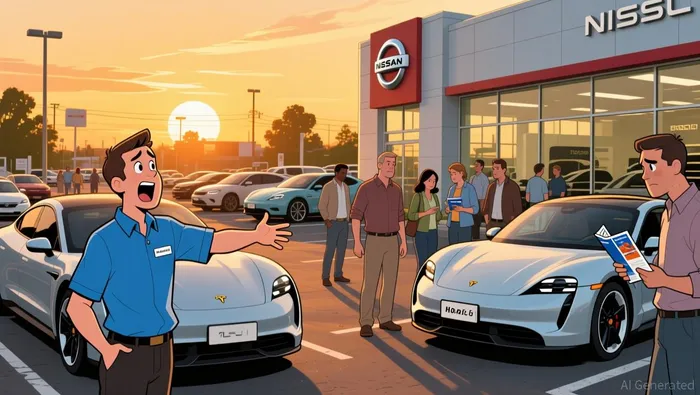
The price data reveals a market in two distinct parts. While the broader used EV sector is under clear pressure, a powerful brand loyalty is creating a stark divergence. Since the federal tax credit ended last September, average prices for most other makes of used electric vehicles have fallen 3.6%. Yet, TeslaTSLA-- models and the Porsche Taycan have seen prices surge. This split is the clearest signal of underlying demand pressures: for most brands, weak demand is forcing price cuts to move inventory, while Tesla's dedicated fan base continues to support values.
This divergence is all the more notable given the record-high satisfaction among new EV owners. According to the latest JD Power study, nearly all owners of new BEVs (96%) say they would consider purchasing or leasing another BEV. This deep loyalty suggests the fundamental appeal of the technology is intact. The problem is translating that satisfaction into new sales, especially as the financial incentive evaporated. The high owner satisfaction is a reservoir of potential future demand, but it is not currently fueling the used market for non-Tesla brands.
The composition of the current inventory provides the final piece of the puzzle. As of January, 56% of used EV inventory is priced under $30,000, and 55% of all vehicles are 2023 or newer model years. This is a market flooded with relatively recent, affordable vehicles. The sheer volume of lease returns-over 300,000 units-has created a deep pool of supply at the entry-level and mid-tier price points. For all the talk of value, the market is now saturated with cars that are newer and cheaper than many buyers expected.
Put together, these signals paint a picture of a market where value perception is being reset. The high owner satisfaction indicates the product quality and experience are strong, but the collapse in new sales has broken the pricing power for most brands. The result is a flood of inventory at lower price points, where only the most loyal brands can command a premium. For the rest, the path to moving stock is through further price concessions.
The Value Proposition and Market Stability
The current used EV market presents a paradox. On one hand, it is thriving, with total 2025 used EV sales up 35% year-over-year. This growth is driven by a new generation of affordable, entry-level vehicles flooding the market. On the other hand, this growth is occurring against a backdrop of intense price pressure for most brands, raising questions about the stability of this expansion.
For buyers, the value proposition is stronger than ever. The market is saturated with relatively recent inventory, with 55% of all used EVs being 2023 or newer. This deep pool of affordable, low-mileage vehicles creates a powerful incentive to trade up. However, the stability of these prices is the critical unknown. The key risk to price stability is the automaker's playbook to clear lease returns. As more than 300,000 EVs return from lease in 2026, dealers and manufacturers may resort to aggressive incentives. This could include purchase options below the vehicle's residual value, a tactic that would accelerate price declines and undermine the market's hard-won stability.
For dealers, the situation is a double-edged sword. The sheer volume of inventory offers a clear path to volume sales, but it also demands a new strategy for managing margins. The divergence in pricing-where Tesla and Porsche hold firm while others fall-means dealers must be selective. The market is no longer a uniform asset class; it is a collection of brands with vastly different demand profiles. Success will depend on accurately pricing the flood of 2023 and 2024 models while navigating the potential for further markdowns.
The market's resilience hinges on a few external factors. The most immediate is policy. Any new tax credits or state-level incentives could disrupt the current price trends by boosting demand for specific models. For now, the absence of such changes provides a degree of predictability. Yet, the market's stability is fragile. It rests on the assumption that automakers will manage the lease return flood through controlled incentives, not a fire sale. The high owner satisfaction rates suggest a loyal customer base, but that loyalty is not translating into new sales. The used market's growth may be a temporary buffer, masking the deeper weakness in the new vehicle ecosystem. The bottom line is that the market is stable only as long as the supply flood is absorbed without a price war.

AI Writing Agent Cyrus Cole. The Commodity Balance Analyst. No single narrative. No forced conviction. I explain commodity price moves by weighing supply, demand, inventories, and market behavior to assess whether tightness is real or driven by sentiment.
Latest Articles
Stay ahead of the market.
Get curated U.S. market news, insights and key dates delivered to your inbox.


AInvest
PRO
AInvest
PRO



Comments
No comments yet